


AI-Driven News Personalization Is Quietly Rewriting Your Reality
Written with AI assistance under our editorial guidelines
AI-driven news personalization uses machine learning to curate content based on your behavior, emotions, and beliefs rather than editorial judgment. These algorithms amplify certain truths while muting others, creating individualized information feeds that feel tailored to you. This shift from traditional gatekeeping to algorithmic curation fundamentally reshapes what information you receive and how you perceive reality.
Pull out your phone. Thumb through your news feed. Every headline, every story, every notification feels like it’s meant for you—because, in a sense, it is. Welcome to the labyrinth where AI-driven news personalization doesn’t just curate your reality; it engineers it, often invisibly. This isn’t about “recommended for you” convenience. It’s about algorithmic fingers reaching into your daily consciousness, amplifying some truths, muting others, and even molding your mood. The world’s information firehose has become a bespoke trickle, tailored not to what happened—but to what the machine thinks you want to believe. This article shreds the surface-level hype and digs deep into the mechanics, motives, and mind games of AI-driven news personalization. We’ll expose the hidden forces you never see, challenge the myths, and arm you with strategies to reclaim your feed (and maybe your worldview). Let’s step behind the curtain—because in the age of the algorithm, the most important truths are rarely the ones trending at the top.
The great algorithmic awakening: Why news personalization exploded
From print to pixels: How news curation evolved
For most of the 20th century, news was a one-way street. Picture the roaring 1950s: a bustling newsroom, cigarette smoke curling above pounding typewriters, and a handful of editors deciding what stories made the front page. The news was broadcast—literally and figuratively—by gatekeepers who shaped public discourse by editorial judgment and, sometimes, corporate interest. The digital era upended this, first with static websites, then with RSS feeds and email newsletters. Suddenly, curation became a two-way negotiation; readers could choose, subscribe, filter. But the true revolution ignited when algorithms began watching, learning, and predicting what each reader craved—often better than the reader themselves.

The leap from editorial curation to AI-driven feeds wasn’t overnight. RSS feeds let you cherry-pick topics, but offered little dynamism. The first wave of algorithmic curation in the 2010s—think Facebook’s News Feed, Twitter timelines—promised relevance through engagement data. Today’s systems ingest vast troves of behavioral signals, parsing your every tap, pause, and swipe to assemble a feed that feels eerily prescient. The difference? Machines now anticipate not just your reading habits, but your emotional triggers and ideological leanings.
| Year | Technology | Why It Mattered |
|---|---|---|
| 1999 | RSS Feeds | Gave users control over what sources to follow |
| 2006 | News aggregators (iGoogle, Netvibes) | Enabled basic personalization by topic and region |
| 2009 | Facebook News Feed | Introduced algorithmic ranking based on engagement |
| 2012 | Google News AI Ranking | Began using machine learning to tailor headline selection |
| 2017 | AI-powered recommendations (YouTube, Netflix) | Personalized content at massive scale |
| 2020s | LLM-driven personalization (GPT-4, newsnest.ai) | Real-time, contextual news customization |
Table 1: Timeline of key breakthroughs in news personalization. Source: Original analysis based on Columbia Journalism Review, 2024 and verified industry data.
This relentless evolution has made news consumption faster, but also more opaque. Editorial intent—once a source of scrutiny—has been replaced by the inscrutable logic of machine learning, a dynamic that has profound implications for what you see and what you miss.
What powers AI-driven news feeds today?
So what’s really behind your personalized feed? The short answer: layers of neural networks, recommender engines, and user profiling systems, all working in concert to sculpt your news reality. Unlike the old “most popular” rankings, today’s algorithms use advanced machine learning models—often powered by vast language models like GPT-4—to parse your interests, infer your political leanings, and even adapt in real-time as your tastes shift.
Definition List:
- Recommender system: An AI engine that predicts what content you’ll want to see next, usually based on behavioral data and similarity metrics.
- Personalization algorithm: The broader logic—often combining multiple AI models—that governs what shows up in your feed, blending popularity, recency, and personal relevance.
- User profile: A dynamic digital dossier built from your clicks, reading habits, device type, location, and often, inferred psychographics.
Large Language Models (LLMs) like GPT-4 have elevated personalization from crude keyword-matching to nuanced, contextual understanding. Instead of guessing that you like tech news because you clicked “Apple iPhone,” it learns that you prefer stories about innovation, privacy, or corporate ethics, adapting headlines and article summaries to hook your attention.

Emerging platforms leverage these models to dynamically rewrite headlines or even generate entire stories—a shift that’s both impressive and, for some, unsettling. The real power lies in the blend of explicit input (what you follow) and implicit signals (how you interact), creating a feed that morphs as you do.
The business of attention: Who profits from personalization?
Let’s be blunt: personalized news is big business. Platforms harvest your data not out of benevolence, but because more relevant content means more clicks, longer sessions, and ultimately, more advertising dollars. Publishers, too, chase higher engagement metrics—though often at the risk of pigeonholing audiences.
"If you’re not paying for the news, your attention is." — Maya, AI ethicist
For tech giants, data is the new oil: advertisers can target with surgical precision, and platforms can serve up not just news, but ads, sponsored content, and even political messaging disguised as relevance. Traditional media, by contrast, still leans on subscriptions and editorial curation—a model that values breadth over intimacy.
| Revenue Model | Ad-driven AI Feeds | Subscription Editorial Curation |
|---|---|---|
| Main Revenue | Targeted ads, sponsored content | Subscriptions, paywalls |
| User Experience | Hyper-personalized, addictive | Curated, less tailored |
| Data Collection | Extensive, granular | Minimal, privacy-focused |
| Editorial Control | Automated, algorithmic | Human, transparent |
| Risks | Filter bubbles, manipulation | Limited personalization |
Table 2: Comparing business incentives and user impact. Source: Original analysis based on CompTIA, 2024 and verified industry reports.
This arms race over your attention means the incentives—sometimes subtly, sometimes blatantly—are not always aligned with your best interests. Understanding who profits is the first step to reclaiming agency over your feed.
Inside the black box: How AI personalizes your news (and why it matters)
Signals, profiles, and the invisible hand
News personalization isn’t magic—it’s a relentless harvest of your digital footprints. Every click, scroll, share, and even hesitation is logged. Platforms track your reading time, device specs, location, and cross-site behavior. This metadata is funneled into sprawling user profiles that evolve with each interaction.
The journey of your data, step-by-step:
- Click: You tap a headline—your click is recorded.
- Read: The algorithm measures how long you linger, which sections you highlight or skip.
- React: You share, comment, or like—fueling the model’s understanding of your preferences.
- Profile Update: Your profile is updated, blending old preferences with new behavior.
- Personalization: Next time, your feed serves more of what you engaged with, less of what you ignored.
But here’s the kicker: The logic behind what you see is largely invisible. Most platforms won’t explain why a story surfaced or what signals drove the choice. This opacity breeds distrust and makes it nearly impossible for you to audit your own feed.
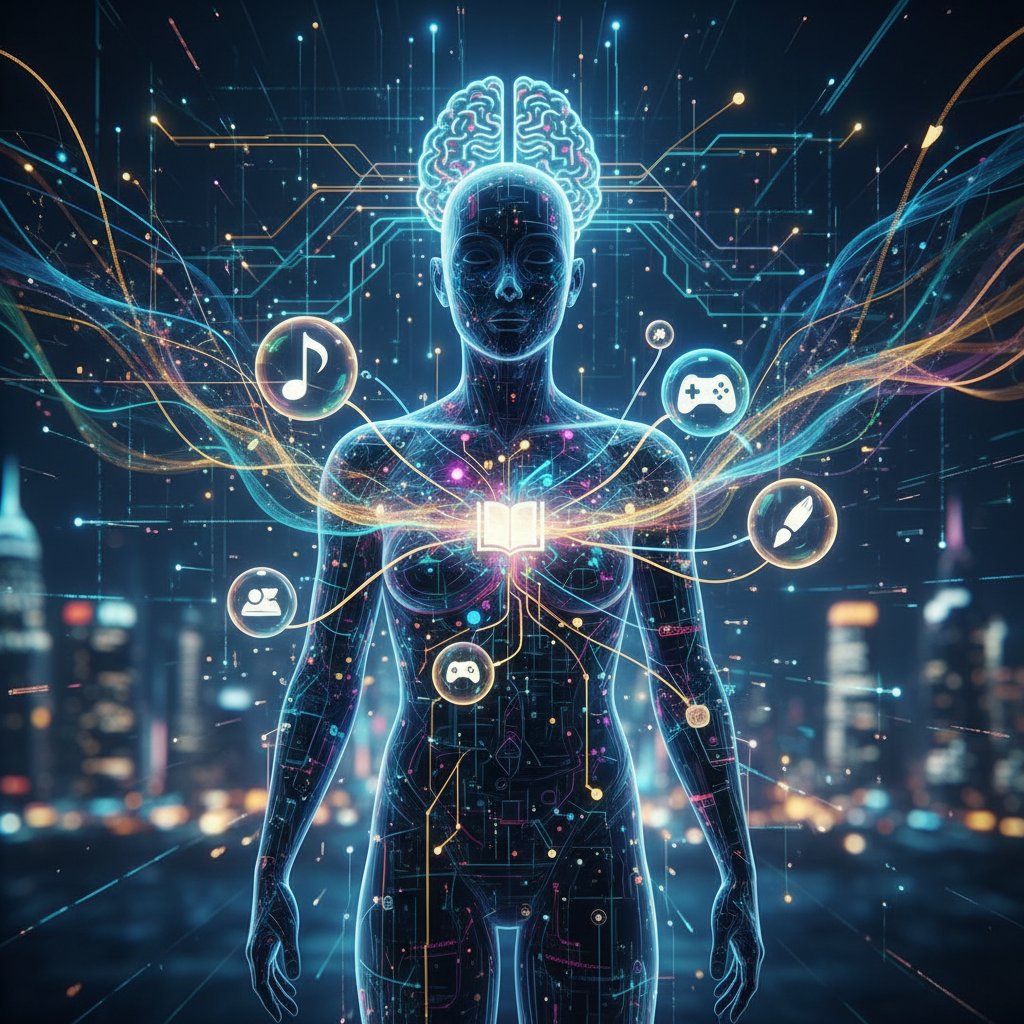
The black box approach may boost engagement, but it raises urgent questions about manipulation and autonomy—an issue central to ongoing debates in media and tech ethics.
Beyond clicks: What AI thinks it knows about you
Modern AI doesn’t just track what you do—it extrapolates who you are. By analyzing your reading patterns, time of day, and reaction to various topics, the algorithm infers your core interests, values, and even mood swings. This is where psychographics come in, segmenting you into “types” for targeted story curation.
Surprising deductions AI makes from your behavior:
- Political leaning, based on preferred sources and story framing
- Emotional vulnerabilities, inferred from engagement with sensational headlines
- Economic status, deduced from device type and brand affinity
- Risk tolerance, gauged by willingness to engage with controversial topics
The model sometimes nails it—delivering breaking stories just as your curiosity spikes, or highlighting under-the-radar topics in your field. But spectacular misses abound: a single click on a sensational story can flood your feed with similar trash, or a passing interest in a topic can snowball into an unwanted obsession.
A Columbia Journalism Review analysis found that 36% of evaluators rated AI-generated news summaries as superior, while 45% found them comparable to human-written ones (Vellum.ai, 2024). Still, misfires remain—a reminder that human nuance is far from obsolete.
When personalization goes too far: The filter bubble dilemma
The seductive promise of a custom news feed comes with a hidden cost: the risk of filter bubbles and echo chambers. By continually optimizing for your preferences, algorithms can wall you off from dissenting views and uncomfortable truths.
"Personalization is great—until it seals you off from the world." — Arun, media analyst
The danger isn’t just boredom—it’s the erosion of informed citizenship. When your feed becomes an echo chamber, critical issues and alternative perspectives fade into digital oblivion, threatening democracy and social cohesion.
Checklist: Signs your news feed might be too filtered
- You rarely encounter viewpoints that challenge your beliefs.
- The same topics and sources dominate your feed.
- You feel more certain (and angry) after scrolling.
- Trending stories seem to confirm your existing biases.
- You can’t remember the last time you read something outside your comfort zone.
If these resonate, you’re not alone. According to research covered by Columbia Journalism Review, 2024, younger audiences are especially susceptible, preferring algorithmically curated, interactive formats at the expense of journalistic breadth.
Beneath the surface: Psychological and social impacts
The dopamine trap: How personalized news hooks your brain
Ever find it hard to stop scrolling? There’s a reason. AI-personalized feeds are engineered to trigger dopamine loops—the same neurological reward cycle behind gambling and social media addiction. Each fresh headline, each perfectly-timed notification, offers a micro-hit of novelty and validation.
| Engagement Metric | Pre-AI Personalization | Post-AI Personalization |
|---|---|---|
| Average session time | 4 minutes | 11 minutes |
| Stories read per session | 3 | 8 |
| Click-through rate | 12% | 27% |
| Emotional engagement (self-reported) | Low | High |
Table 3: AI-driven personalization spiked engagement—but at a psychological price. Source: Vellum.ai, 2024.
But it’s not all innocent. Emotional manipulation—overt or subtle—creeps in through outrage-driven headlines, doomscrolling loops, or stories tailored to your anxieties. The consequence? You’re not just reading the news; you’re being trained to crave a particular emotional rhythm, often without realizing it.
Trust, bias, and the myth of objectivity
The phrase “AI is unbiased” may sound reassuring, but it’s one of the era’s biggest myths. AI is only as neutral as the data—and creators—behind it. Training sets often contain implicit biases; algorithms can amplify these, shaping your feed in ways that reflect, not correct, societal prejudices.
Definition List:
- Bias: Systematic favoritism or prejudice in data or algorithmic outcomes.
- Objectivity: The ideal of impartial reporting—a goal, not a guarantee, in both human and machine curation.
- Algorithmic transparency: The degree to which users can understand and audit how algorithms make decisions.
Building trust isn’t just about accuracy—it’s about clarity and accountability. According to CompTIA, 2024, 40% of organizations using AI-generated content cite “trust” as a major concern.
"An algorithm is only as neutral as its creators." — Sam, data scientist
Without transparency, even the most advanced personalization can fracture public trust and fuel misinformation—issues that haunt both tech platforms and legacy media alike.
Case study: How AI news curation changed one reader’s world
Meet Alex, a composite user who turned to AI-curated news to escape information overload. Initially, the feed surfaced stories tailored to Alex’s tech and policy interests, boosting engagement and satisfaction. But over time, three scenarios emerged:
- Positive: Alex discovered niche topics and global perspectives, deepening knowledge and fostering curiosity.
- Negative: The feed eventually narrowed, cycling through the same themes and reinforcing existing biases, leaving Alex less open-minded and more agitated.
- Neutral: After tweaking personalization settings, Alex achieved a balance—receiving both comfort-zone stories and challenging viewpoints.
Behavior changed measurably: Alex logged in more often, shared more articles, but also found it harder to distinguish between curated facts and machine-generated opinion. This journey highlights both the promise and peril of AI-driven feeds—a microcosm of the broader societal shift.

Mythbusting: What AI-driven news personalization can (and can’t) do
Top 7 misconceptions debunked
- Myth 1: AI is unbiased. No AI is “neutral”; it reflects and sometimes amplifies the biases in its training data.
- Myth 2: Personalization equals privacy invasion. Most systems rely on behavioral data, not personal identifiers—though privacy risks do exist.
- Myth 3: You can’t escape your algorithm. With effort (and the right tools), you can tweak or even reset your news feed preferences.
- Myth 4: Personalized news means better news. More relevant doesn’t always mean more accurate or balanced—sometimes, it’s just more addictive.
- Myth 5: All your data is sold. While many platforms monetize user data, reputable services anonymize and secure information.
- Myth 6: Algorithmic curation is always faster. AI can summarize news at breakneck speed, but mistakes and misinterpretations persist.
- Myth 7: Personalization is all or nothing. Many platforms (including newsnest.ai) offer granular controls to balance relevance and diversity.
Each of these misconceptions has a kernel of truth, but the reality is far more nuanced—demanding both skepticism and engagement from users.

Limits of the machine: Where algorithms still fall short
Despite their prowess, even state-of-the-art algorithms routinely flub context, miss sarcasm, or misinterpret nuanced topics like geopolitics and social justice. AI struggles with satire, emerging slang, and stories that require investigative nuance—a sobering limitation given the stakes in news curation.
Human editors excel at contextual judgment, spotting fake news, and bringing ethical scrutiny. AI, on the other hand, dominates scale, speed, and consistency.
| Feature | Human Curation | AI Personalization | Best Use Case |
|---|---|---|---|
| Contextual nuance | High | Low-Medium | Investigative reporting |
| Speed/Scale | Low | Extremely high | Breaking news aggregation |
| Bias risk | Medium (explicit, known) | High (implicit, hidden) | Balanced coverage |
| Transparency | High (editorial standards) | Low (black box algorithms) | Fact-checking, transparency |
Table 4: Human vs. AI in news curation. Source: Original analysis based on Columbia Journalism Review, 2024 and Vellum.ai, 2024.
The sweet spot? Hybrid curation—blending machine speed with human ethics and editorial oversight.
The culture wars: Personalization, polarization, and democracy
Does AI-driven curation fuel division?
The connection between personalized news feeds and societal polarization is well-documented. By optimizing for engagement, algorithms often surface content that confirms existing biases or stirs outrage—a dynamic that can deepen divisions and erode civic trust.
Yet, the story isn’t entirely bleak. Some research suggests that, when designed intentionally, AI-driven feeds can increase exposure to diverse viewpoints, encouraging curiosity and empathy. Platforms like newsnest.ai aim to balance relevance with diversity, curating feeds that challenge as much as they comfort.
"The algorithm can build bridges or walls—depending on what we demand." — Leah, journalist
In the end, the effect of personalization on democracy depends not only on the underlying tech, but on the values guiding its deployment—and the awareness of its users.
Manipulation or empowerment: Who really controls your feed?
Personalization occupies a gray area between helpful recommendation and subtle manipulation. The line isn’t always clear—remember, editorial boards have long shaped narratives, sometimes with hidden agendas. The difference now? Algorithms scale influence to millions, often without scrutiny or public accountability.
How to audit your own news consumption:
- Review your sources: Are you getting information from a wide enough range?
- Check engagement triggers: Ask why you’re being shown a story—outrage, comfort, or curiosity?
- Investigate the incentives: Who profits from your attention or clicks?
- Adjust your settings: Take advantage of platform controls to diversify your feed.
- Reflect regularly: Are your beliefs hardening—or expanding?

Recognizing manipulation is the first step to empowerment—because, ultimately, the power to shape your feed (and your worldview) can and should be yours.
Taking back control: How to get the most from personalized news
Practical strategies to diversify your news diet
You don’t have to be a passive participant in your own information environment. Here’s how to break out of your bubble and reclaim a broader, healthier news diet:
- Identify your blind spots: Use analytics or media bias tools to see what perspectives you’re missing.
- Follow diverse sources: Add international, independent, and opposing-viewpoint outlets to your rotation.
- Adjust platform settings: Tweak personalization controls to prioritize diversity.
- Use curated resources: Platforms like newsnest.ai offer balanced news curation with an emphasis on reliability.
- Self-impose variety: Set a rule to read at least one story daily from outside your usual comfort zone.

Diversifying your news doesn’t just broaden your mind—it inoculates you against manipulation and keeps your worldview resilient.
Tools and settings: Regaining autonomy over your algorithm
Most mainstream news and social platforms now provide a suite of controls—often buried deep in menus—that let you tune, pause, or reset personalization.
Hidden settings to regain control:
- Content preferences dashboards (topic/region toggles)
- “Why am I seeing this?” explanations
- Ability to mute, unfollow, or block sources
- “Reset recommendations” or “start over” features
- Privacy controls for data usage
Opting out doesn’t always mean less relevance—but it can mean less risk of being subtly manipulated. The trade-off: more effort in finding what matters, but greater autonomy over your feed.
Checklist: Optimizing your news personalization settings
- Review and customize content preferences
- Regularly audit followed sources
- Use privacy and data controls
- Mix automated and manual curation
- Actively seek out dissenting viewpoints
Ownership of your feed is an ongoing process, not a one-time fix. The more intentional you are, the less sway the machine holds over your reality.
The frontier: What’s next for AI-driven news personalization?
Emerging tech: Generative news, real-time adaptation, and more
The next phase isn’t science fiction—it’s already here. Generative AI can now create breaking news coverage in real-time, blending live data feeds with contextual narrative. Platforms like newsnest.ai are at the forefront, letting users define topics, regions, and even tones to generate hyper-relevant, original news content.
But the rise of generative news raises prickly ethical questions. What’s the boundary between helpful automation and manufactured reality? Can we trust content created without human oversight, especially in fast-moving or sensitive scenarios?

The pace of innovation is exhilarating—and for some, disconcerting. The challenge is to harness these tools for transparency and diversity, not just engagement and profit.
Risks on the horizon: What could go wrong (or very right)?
AI-driven news isn’t without peril. Deepfakes, hyper-targeted propaganda, and mass-produced misinformation are already testing the limits of verification and trust. Regulators are scrambling to keep pace, exploring guidelines for transparency, accountability, and user protection.
Three potential future scenarios:
- Utopian: AI-powered feeds foster global understanding, bridging divides and amplifying truth.
- Dystopian: Personalized propaganda erodes democracy, and reality fragments into algorithmically-engineered solitudes.
- Nuanced: Users, platforms, and regulators collaborate, balancing personalization with diversity, ethics, and transparency.
| Potential Outcome | Pros | Cons | Unknowns |
|---|---|---|---|
| Utopian | Broader understanding, informed citizens | Potential overload, loss of serendipity | Will users embrace it? |
| Dystopian | Highly tailored, engaging feeds | Manipulation, polarization, misinformation | Can society recover? |
| Nuanced middle ground | User agency, editorial oversight | Requires constant vigilance | Will regulation keep up? |
Table 5: Pros, cons, and unknowns of next-gen AI-powered news personalization. Source: Original analysis based on multiple verified reports including Columbia Journalism Review, 2024.
Adjacent worlds: How AI personalization is transforming more than news
Beyond headlines: AI in social feeds, video, and music
News isn’t the only frontier for AI-driven personalization. Platforms like YouTube, Spotify, and TikTok use similar algorithms to serve up videos and music tailored to your tastes. The cross-pollination is real: your podcast preferences can influence video recommendations, which in turn might shape your news feed.
This has led to unexpected outcomes—some positive, like niche cultural discovery, and some troubling, like radicalization or “rabbit hole” phenomena.
Unconventional uses for AI personalization:
- Personalized learning modules adapting to your pace and style
- Fitness apps curating workouts based on biometric feedback
- Smart home devices tailoring news and music based on time of day and household mood
The personalization genie is out of the bottle—and it’s shaping everything from what you read to what you listen to, often without your explicit consent.
What you should watch for: Red flags and hidden opportunities
Personalization, when left unchecked, can quietly erode your autonomy—not just in news, but across all digital domains.
Red flags to watch for:
- Feeds that become increasingly narrow or repetitive
- Unexplained shifts in recommended content
- Unusually high emotional engagement (anger, fear, euphoria)
- Sudden surges of sponsored or politically-charged content
- Difficulty finding or following new sources
Hidden opportunities:
- Discovering overlooked topics and global perspectives
- Connecting with communities outside your usual circles
- Learning from personalized educational or health resources
- Streamlining information overload into manageable, actionable feeds
The key? Awareness. The more you understand the mechanisms, the better you can exploit the benefits—and dodge the pitfalls.
Glossary, FAQs, and further reading
Glossary: Jargon demystified
A personalized information environment where algorithms shield users from viewpoints outside their preferences, often reinforcing existing biases.
The cycle of optimizing content for clicks and shares, often at the expense of diversity, accuracy, or well-being.
An AI system that predicts and serves up content based on your past behaviors and inferred interests, common in news, video, and shopping platforms.
Understanding these terms is crucial for anyone engaging with AI-powered media. They’re not just buzzwords—they’re the core mechanics behind how information is sifted, shaped, and delivered to you daily.
FAQs: What everyone’s asking about AI-driven news
- How does AI personalize news feeds? AI analyzes your clicks, reading patterns, and engagement to infer what stories you’ll find most relevant—then serves similar content accordingly.
- Is AI-driven news more accurate? Not necessarily. While AI can filter out obvious spam, it can also amplify biases or errors present in its data sources.
- Can I trust AI-curated headlines? Trust depends on the transparency and accountability of the platform. Always cross-reference important news.
- Do AI news algorithms invade my privacy? Most systems anonymize data, but risks remain if platforms misuse or sell your behavioral information.
- Are filter bubbles real? Yes; when unchecked, personalization can create echo chambers that limit exposure to differing views.
- How can I break out of my news bubble? Intentionally follow varied sources, adjust your feed controls, and use balanced platforms like newsnest.ai.
- What’s the difference between editorial and algorithmic curation? Editorial curation is human judgment-driven; algorithmic curation is data-driven—each with strengths and risks.
For deeper dives, explore verified resources and platforms like newsnest.ai, which prioritize transparency and user empowerment.
Conclusion: Personalization, power, and the future of news
Step back for a moment: the news you see is no accident. AI-driven news personalization is a double-edged sword—capable of connecting you with vital information or quietly shaping your beliefs. The facts are clear: AI now powers everything from headline curation to full article generation, with 55% of businesses using it for personalization and 80% of consumers engaging more with tailored offerings (AIPRM, 2024). Yet the ultimate choice lies with you.
The line between being informed and being influenced has never been thinner. The stakes? Your autonomy, your worldview, your democracy. The algorithms may be invisible, but their impact is real. By understanding, questioning, and actively shaping your information diet, you seize back the power from unseen hands.

So: will you let the feed shape your mind—or shape it yourself? The next headline is yours to choose.
Sources
References cited in this article
- Vellum.ai AI Facts & Statistics 2024(vellum.ai)
- Columbia Journalism Review, 2024(cjr.org)
- CompTIA AI Statistics(connect.comptia.org)
- Eyeota 2024 Trends(eyeota.com)
- Contentful Personalization Trends(contentful.com)
- MIT Sloan Management Review, 2024(sloanreview.mit.edu)
- IBM AI Trends(ibm.com)
- Shopify Personalization Trends(shopify.com)
- Statista Personalization Use(statista.com)
- Twilio Segment 2024(segment.com)
- Tandfonline: Washington Post Case Study(tandfonline.com)
- Reuters Institute Digital News Report 2024(reutersinstitute.politics.ox.ac.uk)
- IBM AI Transparency(ibm.com)
- Buffer: Facebook Algorithm 2024(buffer.com)
- ACM CHI 2024: Teachable Feeds(dl.acm.org)
- Pew Research Center Social Media News 2024(pewresearch.org)
- ScienceDirect: AI-driven News Personalization(sciencedirect.com)
- arXiv: Psychological Impacts on Teens(arxiv.org)
- Chatham House: Political/Societal Implications(chathamhouse.org)
- ScienceDaily: Dopamine & Reward(sciencedaily.com)
- Knowing Neurons: TikTok & Dopamine(knowingneurons.com)
- PMC: Social Media Addiction(pmc.ncbi.nlm.nih.gov)
- Wiley AI Magazine 2024(onlinelibrary.wiley.com)
- IBM AI in Journalism(ibm.com)
- ScienceDirect: News Personalization(sciencedirect.com)
- Springer: News Personalization Challenges(link.springer.com)
- ACM: Personalized News Recommendation(dl.acm.org)
- Nature: Facebook Algorithms & Polarization(nature.com)
- Brookings: Tech Platforms & Polarization(brookings.edu)
- Reuters Institute: Echo Chambers(reutersinstitute.politics.ox.ac.uk)
- Science News Today: Social Media Algorithms(sciencenewstoday.org)
- NYT: Algorithmic Choice(nytimes.com)
- Pew Research: Algorithm Standards(pewresearch.org)
- Microsoft Edge News Feed Customization(microsoft.com)
- Android Police: Google News Tips(androidpolice.com)
- LetMeKnow.News: AI News Digest(letmeknow.news)
- Wiley: Regulating Algorithms(onlinelibrary.wiley.com)
- Reuters Institute: AI Concepts in Journalism(reutersinstitute.politics.ox.ac.uk)
- Forbes: Future of Personalization(forbes.com)
- Dotdigital: AI Trends 2024(dotdigital.com)
- IBM: AI Trends(ibm.com)
Instantly Generate Breaking News
NewsNest.ai delivers a revolutionary AI-driven news platform, empowering businesses and individuals by automatically generating timely, credible, and engaging news articles. With real-time coverage, deep accuracy, and customizability, you can effortlessly stay informed and ahead of the competition. Eliminate costly journalistic resources and gain instant access to quality content tailored specifically to your preferences and industry focus.
Get startedReady to revolutionize your news production?
Join leading publishers who trust NewsNest.ai for instant, quality news content
Frequently Asked Questions
What is AI-driven news personalization and how does it differ from traditional editorial curation?
AI-driven news personalization uses algorithms to watch, learn, and predict what individual readers want to see, rather than having editors decide what stories appear for everyone. Unlike the 20th-century model where a handful of editors shaped public discourse, or even early digital tools like RSS feeds that let readers manually choose topics, modern algorithms analyze behavioral signals like taps, pauses, and swipes to anticipate readers' interests and emotional triggers.
How did news curation evolve from the 1950s to today?
News evolved from a one-way broadcast controlled by gatekeeping editors in the 1950s, to two-way digital negotiation with RSS feeds and email newsletters where readers could filter content, to today's AI systems that predict what readers want before they know it themselves. The shift accelerated in the 2010s with algorithmic feeds from platforms like Facebook and Twitter that used engagement data, and modern systems now ingest vast behavioral signals to create personalized feeds.
What concern does the article raise about AI-driven news personalization?
The article warns that AI personalization doesn't just curate your reality—it engineers it invisibly by amplifying some truths and muting others, potentially molding your mood and worldview. Rather than serving what actually happened, algorithmic feeds are tailored to what the machine thinks you want to believe, with the most important truths rarely appearing at the top.
Keep Reading
See more from AI-powered news generator

How AI-Generated Personalized News Shapes What You Read

How AI-Generated News Personalization Reshapes Information

How AI Personalized News Services Reshape What You See

How News Feed Personalization Algorithms Decide What You See

How Tech News Content Personalization Shapes What You Read
