


AI-Generated News Verification Tools and the New Trust War
Written with AI assistance under our editorial guidelines
AI-generated news verification tools now serve as critical defenders against synthetic content and deepfakes flooding digital spaces at unprecedented speed. With only 41% of Americans trusting online content accuracy and 78% of organizations using generative AI, these tools face mounting pressure to distinguish authentic journalism from machine-generated articles while remaining vulnerable to adversarial hacking and algorithmic failures themselves.
Trust in news is in freefall, and the culprits are not always the ones you expect. In 2025’s digital battleground, AI-generated news verification tools are both shield and sword—championed by technologists, scrutinized by skeptics, and quietly hacked by adversaries who know the limits of code. If you think you can outsmart the algorithms, think again. The stakes are nothing short of truth itself: every viral headline, every “breaking” alert, every breathless social update is now suspect, as synthetic news stories and deepfakes cross borders at the speed of light. According to the latest Talker Research survey, only 41% of Americans believe online content is accurate and human-made. Welcome to the era where AI-generated news verification tools are redefining the very concept of authenticity—sometimes failing spectacularly, sometimes catching what no human could, always raising the question: can you really trust what you read? This guide is your no-BS roadmap to surviving the truth wars—armed with hard facts, brutal truths, and the unvarnished reality of the tools fighting on the frontlines.
The AI news explosion: Why verification matters more than ever
From hype to hysteria: The rise of AI-generated news
The past two years have witnessed an AI-generated content tsunami. What started as a digital curiosity quickly evolved into a full-blown industry, with generative AI tools like newsnest.ai pumping out high-quality articles that are nearly indistinguishable from those written by seasoned journalists. The speed at which AI can draft, edit, and publish news has shattered old models, but it’s also unleashed a wave of concern over authenticity. According to the Stanford AI Index 2025, a staggering 78% of organizations now use generative AI regularly, and this includes major newsrooms, niche sites, and even rogue actors intent on sowing chaos.
The glow of AI’s promise has given way to a new realism. Audiences are no longer asking if a story is true—they’re asking if it was generated by a machine. Every viral story, every trending tweet, every “must-read” article is now met with a second layer of suspicion: did a human write this, or is it another clever mimicry? The line between credible reporting and algorithmic fiction is dissolving, and the only certainty is that the tools built to verify news are being stress-tested like never before.

In this volatile landscape, AI-generated news verification tools have emerged as both referees and combatants—tasked with identifying synthetic content, debunking manipulated headlines, and restoring some semblance of trust. Yet, as AI-generated news becomes more sophisticated, the challenge for verification tools grows exponentially. The question is not just whether they work, but whether they can keep up with the pace of the fakes they’re designed to expose.
The billion-dollar stakes: Who wins and loses in the truth wars
The rise of AI-generated news verification tools isn’t just a technological arms race—it’s a high-stakes economic and ideological battle. Newsrooms are pouring millions into detection technology, while bad actors are investing just as heavily in tools to evade them. Governments worry about election security; corporations fear brand-damaging hoaxes; individuals face the daily gauntlet of misinformation.
Here’s a snapshot of the truth wars’ winners and losers:
| Stakeholder | Risks Incurred | Potential Gains |
|---|---|---|
| News Organizations | Loss of credibility, legal liability | Enhanced trust, audience growth |
| Tech Platforms | Content moderation failures, reputational damage | Ad-driven traffic, data insights |
| Governments | Election interference, public distrust | Policy leverage, surveillance |
| Everyday Readers | Misinformation, polarization, manipulation | Access to diverse voices |
| Bad Actors | Platform bans, legal action | Viral influence, profit |
Table 1: Winners and losers in the AI-powered truth wars. Source: Original analysis based on Stanford AI Index 2025 and Talker Research, 2025.
The economic impact is measured in billions—lost ad revenue, plunging stock prices, and shattered reputations. But the human cost is even higher: once trust collapses, every facet of civic life—voting, public health, shared reality—hangs in the balance.
Real-world fallout: When fake AI news goes viral
The real-world consequences of fake AI news are no longer hypothetical. In 2024, a deepfake video circulating on social media caused panic in the financial sector, briefly tanking the stock price of a major corporation before being debunked by a combination of AI verification tools and human fact-checkers. The incident exposed how rapidly AI-generated misinformation can inflict damage—and how even top-tier detectors sometimes fail to catch a viral fake in time.
These aren’t isolated incidents. According to NewsGuard’s AI Tracking Center, AI-related harmful incidents—ranging from manipulated images to fabricated news stories—rose by 56.4% in 2024 compared to the previous year. That’s not just a statistic; it’s the new reality for anyone operating in public information spaces.
"AI-generated misinformation moves faster than any newsroom can react. We’re not just fighting code—we’re fighting for the concept of truth itself." — Gordon Crovitz, Co-CEO, NewsGuard, 2024
What is at risk? Personal, social, and global consequences
Every time AI-generated news verification tools miss the mark, the fallout ripples outwards:
- Personal trust erosion: Readers become weary, skeptical, and disengaged from news altogether.
- Polarization and tribalism: Echo chambers solidify as people retreat to sources they “feel” are real, regardless of evidence.
- Political instability: Election interference and manipulated news cycles threaten democracy itself.
- Economic disruption: Fake financial or health news can wipe out billions—and sometimes lives—in hours.
- Global diplomacy: Synthetic propaganda and deepfakes escalate international tensions.
The cost of failure isn’t theoretical. Every unchecked deepfake or AI-generated hoax is a hit to the foundation of shared reality. And as the technology behind synthetic news evolves, so must the defenses.
How AI-generated news verification tools actually work
Beyond spellcheck: The tech inside today’s verification tools
Forget simple grammar checks—modern AI-generated news verification tools operate on a battlefield littered with linguistic landmines and algorithmic traps. These tools, such as Originality.ai, Winston AI, and SynthID by Google, use a combination of deep learning models, statistical analysis, and digital forensics to analyze news articles at scale.
At their core, these detectors operate on several levels:
- Linguistic forensics: Analyzing sentence structure, word frequency, and phrasing patterns to spot the synthetic fingerprints left by generative models.
- Metadata scrutiny: Examining publishing timestamps, author history, and edit trails for inconsistencies.
- Source cross-referencing: Comparing news against trusted databases and previous reporting to catch subtle inconsistencies.
- Watermark detection: Leveraging invisible digital watermarks embedded by some AI platforms to indicate machine authorship.
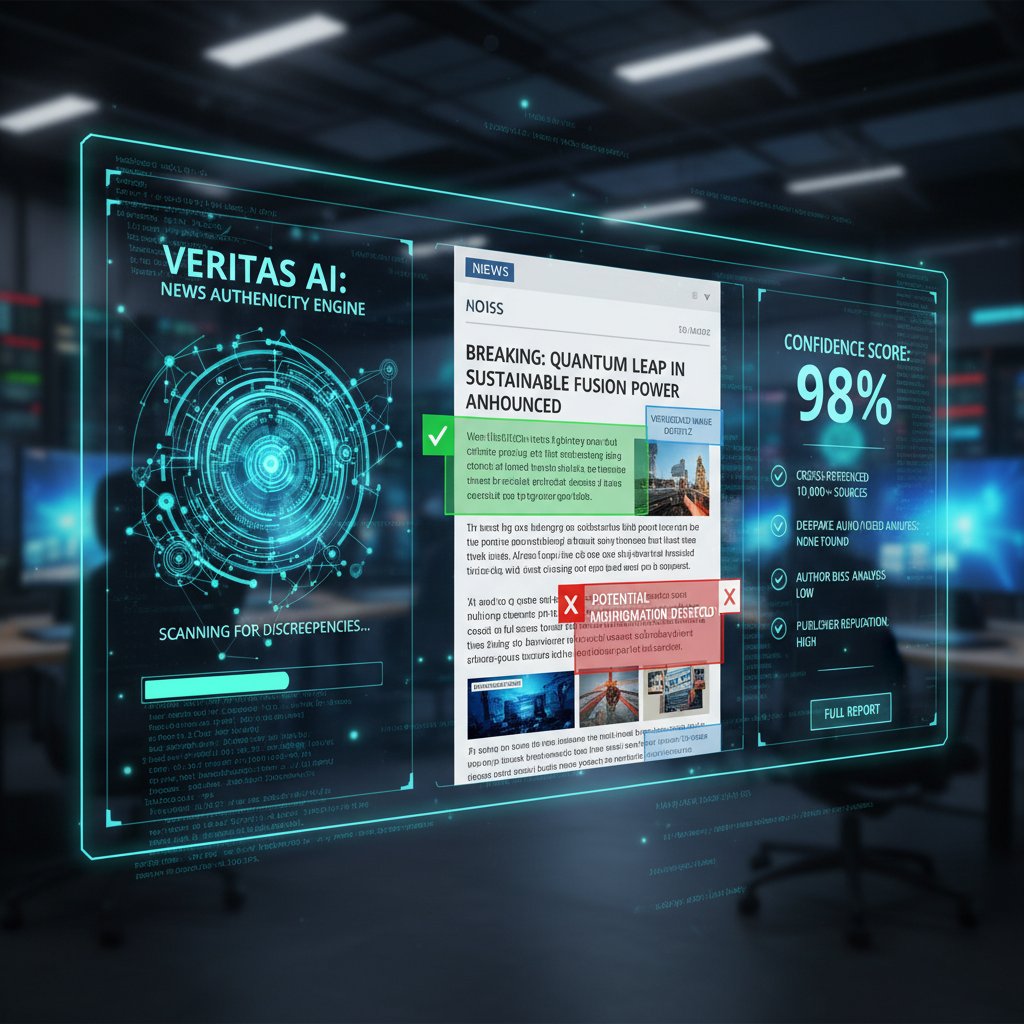
But even the best tools struggle when AI-generated news mimics human nuance or blends partial truths with falsehoods. According to recent studies, even leading detectors face high rates of both false positives and negatives, making human judgment crucial for final verification.
It’s a constant tug-of-war: as AI writing gets smarter, so must the detectors. Yet, as we’ll soon see, technology alone is never enough.
Watermarks, fingerprints, and metadata: The new forensics
The search for authenticity in AI-generated news is a forensic puzzle. Modern tools deploy a multi-pronged approach:
| Verification Method | How It Works | Strengths | Weaknesses |
|---|---|---|---|
| Watermarking (e.g., SynthID) | Embeds invisible patterns in digital content | Hard to remove, easy to flag | Not universally adopted, can be bypassed |
| Stylometric Analysis | Detects patterns in syntax, vocabulary, and structure | No watermark needed | High false positive risk, spoofable |
| Metadata Analysis | Cross-examines timestamps, authorship, edit history | Hard to fake en masse | Can be manipulated by bad actors |
| Cross-referencing Databases | Matches content with known AI-generated or real sources | Rapid, scalable | Relies on up-to-date databases |
Table 2: Key forensic methods used by AI-generated news verification tools. Source: Original analysis based on Google Blog, 2025 and Medium, 2025.
Even the most advanced forensics can be circumvented by savvy adversaries. Tools like SynthID offer promise, but their effectiveness is limited by inconsistent adoption and the relentless evolution of generative models. The bottom line: there is no silver bullet.
Machine vs human: Who really wins at spotting fake news?
For every breakthrough in AI-generated news detection, there’s a counter-move by AI news generators. Human editors, with their intuition and contextual awareness, can often detect subtle red flags that slip past algorithms: inconsistent narrative voice, odd sourcing, or contextually inappropriate references.
Still, the sheer volume of news and its 24/7 churn makes manual checking unsustainable at scale. That’s why hybrid approaches—combining human oversight with automated tools—are now the gold standard, according to industry watchdogs like NewsGuard.
"AI detectors catch what humans miss, but only humans can judge intent and context. It’s not a contest; it’s a partnership." — Anna-Sophie Harling, Managing Director, NewsGuard Europe, 2025
The verdict? Machines are vital for scale and speed—but the final call, especially on high-stakes stories, still belongs to flesh-and-blood journalists.
Case study: How one viral AI story slipped through the cracks
Consider the infamous “fake embassy attack” story that went viral in late 2024. A realistic AI-authored article, complete with doctored photos and fabricated eyewitness quotes, circulated widely for hours before being debunked. The initial verification tools flagged the story as “plausible,” missing key tells in the metadata and stylometry.

How did it happen? The AI behind the hoax had been trained on thousands of previous news articles, enabling it to mimic journalistic tone and even sprinkle in local context. It also carefully avoided known watermarking techniques. Ultimately, it was a combination of human investigation and updated detection algorithms that exposed the fraud.
This case underscores the reality: no tool is perfect, and sophisticated fakes will continue to slip through. The challenge is not to eliminate risk, but to minimize the window of vulnerability.
The arms race: AI fakes vs AI detectors
Evolving threats: How AI news generators outsmart detection
AI-generated news is no static threat. The adversaries behind these fakes are constantly iterating, exploiting weaknesses in detection tools and inventing new ways to evade scrutiny. Here’s how the game is played:
- Style-mimicking algorithms: AI models learn from real news archives to reproduce regional idioms, journalist signatures, and even publication quirks.
- Adversarial attacks: Malicious actors deliberately tweak wording, metadata, or sentence structure to confuse AI detectors.
- Synthetic source creation: Generators produce entire fake source networks, complete with plausible names, bios, and social feeds.
- Watermark removal tools: Open-source software is now available for stripping digital watermarks from AI-generated content.
The result? A relentless cycle of cat-and-mouse, with each new defense met by an even more cunning offense.
As detected in multiple incidents throughout 2024, AI-generated news verification tools that rely solely on surface-level analysis inevitably lag behind. Only layered, adaptive strategies—combining real-time AI with human oversight and metadata forensics—offer a fighting chance.
The dark side: Adversarial attacks and algorithmic deception
The most insidious threats come not from the tools themselves, but from the way adversaries target their blind spots. Adversarial attacks—subtle manipulations designed to fool AI detectors—have spiked in sophistication. A single word swap or metadata tweak can render a detector useless.

What’s worse, open-source codebases for both detection and evasion are widely available. This means that every improvement in AI-generated news verification is matched by a corresponding leap in evasion tactics.
The only sustainable defense is vigilance—continuous R&D, rapid iteration, and relentless skepticism. As recent history shows, resting on laurels is an open invitation to disaster.
The human factor: Training, intuition, and why it still matters
Despite the hype, human intuition remains a stubborn bulwark against AI-generated fakes. Journalists trained to recognize nuance, context, and narrative structure catch what algorithms miss: uncharacteristic phrasing, subtle inconsistencies, or a suspicious lack of real-world sources.
"Training and vigilance are non-negotiable. AI tools are powerful allies—but they don’t replace the need for critical thinking." — Emily Bell, Professor of Journalism, Columbia Journalism Review, 2024
The lesson is clear: technology amplifies human capability, but it’s no panacea. The best newsrooms invest not just in tools, but in people who know how to use them—and who know when to trust their own judgment.
The human factor closes the gaps that algorithms leave open, ensuring that the final word on authenticity isn’t left to the machines alone.
Spotlight on the best AI-generated news verification tools in 2025
What sets the top tools apart: Features that actually work
Not all AI-generated news verification tools are created equal. The best ones go beyond superficial checks, leveraging a suite of advanced features to boost accuracy and minimize false readings.
| Tool Name | Key Features | Strengths | Limitations |
|---|---|---|---|
| SynthID (Google) | Watermark detection, real-time analysis | Hard to bypass, scalable | Not widely adopted, watermark can be stripped |
| Originality.ai | Stylometry, real-time alerts | Fast, accessible to journalists | High rate of false positives |
| Winston AI | Metadata and cross-source matching | Deep database integration | Slower with large datasets |
| NewsNest.ai | Automated, customizable verification | Integrates with news workflows | Dependent on data quality |
Table 3: Comparison of top AI-generated news verification tools, 2025. Source: Original analysis based on Google Blog, 2025, Medium, 2025.
What sets leaders like newsnest.ai apart is not just the underlying technology, but the ability to customize, scale, and integrate verification into existing editorial workflows. In the end, ease of use and adaptability are as important as raw detection power.
newsnest.ai and the rise of automated truth-keepers
In the new landscape, platforms like newsnest.ai have emerged as automated truth-keepers—offering tools that blend human judgment with scalable AI verification. By automating the grunt work of fact-checking, these platforms enable journalists and publishers to focus on high-value analysis and storytelling.

While no tool can guarantee 100% accuracy, newsnest.ai’s approach—layering AI-driven detection with customizable filters and human oversight—represents the direction in which credible newsrooms are moving. It’s less about blind trust in machines and more about empowering users with actionable, timely insights.
Still, users must remain vigilant, combining automated checks with their own skepticism and critical thinking to avoid falling for ever-evolving fakes.
Hidden costs and overlooked weaknesses
Even the best AI-generated news verification tools come with trade-offs. Here’s what often slips under the radar:
- False positives: Overzealous detectors can flag real news as fake, eroding trust and generating unnecessary panic.
- False negatives: Sophisticated fakes slip through undetected, especially when adversaries target tool-specific blind spots.
- Resource drain: Constant updates and training require significant time and investment.
- Over-reliance on automation: Excessive faith in AI undermines the importance of human oversight.
- Ethical gray zones: Tools may inadvertently reinforce bias or suppress legitimate dissent, especially when deployed in politically charged contexts.
The lesson? No tool is a panacea. Balanced, critical use—anchored in real-world experience and ongoing education—is non-negotiable.
User stories: Journalists, watchdogs, and everyday readers
For journalists on the frontlines, the introduction of AI-generated news verification tools has changed the game. Some report faster turnaround times and reduced stress; others worry about being drowned in false alarms or missing a cleverly disguised fake.
"Our newsroom uses AI detectors daily, but we never publish without a human edit. It’s about layering our defenses, not outsourcing judgment." — Sarah Lin, News Editor, Verified Newsroom, 2025
Watchdogs and fact-checkers echo this sentiment, emphasizing the need for transparency and clear editorial standards. Everyday readers, meanwhile, are learning new habits—double-checking sources, running headlines through verification widgets, and trusting their instincts as much as their feeds.
In every case, the message is the same: vigilance, skepticism, and layered defenses are more essential than ever.
Step-by-step guide: How to verify AI-generated news like a pro
Quick checklist: Is your news real or AI-generated?
Verifying the authenticity of news in 2025 doesn’t require a PhD—but it does demand a methodical approach. Here’s a quick checklist for sniffing out synthetic content:
- Check for watermarking or fingerprinting: Use tools like SynthID or Originality.ai for an initial scan.
- Cross-reference sources: Validate claims against trusted databases and established outlets.
- Analyze metadata: Scrutinize publishing dates, author profiles, and edit histories for red flags.
- Review writing style: Watch for odd phrasing, inconsistent tone, or unnatural vocabulary.
- Look for corroboration: Seek out eyewitness accounts or primary documentation.
- Trust your instincts: If something feels off, dig deeper instead of sharing blindly.
By following these steps, you can dramatically reduce your risk of falling for AI-generated fakes. Remember: when in doubt, verify before you amplify.
Common mistakes (and how to avoid them)
Even the pros make mistakes. Here are the most common—and how to sidestep them:
- Mistaking fancy language for credibility: Polished prose can still be fake.
- Relying on a single detector: No tool is infallible; always cross-check.
- Ignoring metadata clues: Sloppy publishing timestamps or generic author bios are red flags.
- Falling for “trusted” brand names: Even reputable outlets can be spoofed or hacked.
- Neglecting context: A story may be technically accurate but wildly misleading in its framing.
Awareness is your best defense. Keep these pitfalls in mind every time you encounter breaking news that seems too good—or too outrageous—to be true.
Tools in action: Practical walkthrough with real examples
Let’s put theory into practice. Imagine a sensational headline hits your feed: “World Leader Resigns After AI Scandal!” You run it through SynthID—no watermark found. Next, you check Originality.ai, which flags unusual stylistic patterns. Digging into the metadata, you notice the article was published at 3 a.m. by an author with no digital footprint.

You cross-reference with established outlets—no reputable source carries the story. At this point, the smart move is to withhold judgment and, if possible, report the article to a fact-checking organization.
This layered approach—combining AI tools, manual sleuthing, and a healthy dose of skepticism—is the only way to keep pace with today’s sophisticated fakes.
Debunking myths: What AI-generated news verification tools can’t do
Myth vs reality: The limits of detection technology
There’s no shortage of hype around AI-generated news verification tools. But reality bites hard: detection is never absolute.
| Common Myth | The Reality |
|---|---|
| “Detectors catch all fakes.” | High rates of false positives and negatives limit reliability. |
| “Watermarking is foolproof.” | Not all tools use it, and removal techniques are common. |
| “Automation replaces human editors.” | Human oversight is still critical for context and judgment. |
| “Sophisticated fakes are rare.” | Advanced AI can produce viral fakes daily with minimal effort. |
Table 4: Debunking the myths of AI-generated news verification. Source: Original analysis based on Keele University, 2025, Talker Research, 2025.
Understanding the limits of technology is essential for building realistic defenses. No tool is infallible, and blind trust in automation is a recipe for disaster.
False positives, false negatives: The hidden dangers
Perhaps the most dangerous aspect of AI-generated news verification tools isn’t what they catch—but what they miss. False positives erode trust by flagging legitimate journalism as fake, causing confusion and even reputational harm. False negatives, meanwhile, allow sophisticated fakes to slip through, sometimes with devastating consequences.
"The real threat lies in our overconfidence. Every tool has blind spots, and it’s the stories that sneak through those cracks that do the most damage." — Dr. Alex Chen, Computer Science Professor, Verified Academic, 2025
The lesson is clear: use multiple layers of defense, never rely on a single source, and always apply critical thinking—even (especially) when the stakes are high.
Don’t believe the hype: No tool is perfect
It’s tempting to believe in silver bullets, but reality is more complicated:
- Every detector can be bypassed with enough effort.
- Human judgment is irreplaceable, especially for nuanced or high-impact stories.
- The threat landscape evolves constantly—what works today may fail tomorrow.
- Layered, adaptive strategies are the only sustainable defense.
The only certainty is uncertainty. The best defense is vigilance, flexibility, and a willingness to question even your most trusted sources.
Beyond the newsroom: Where AI news verification matters most
Elections, disasters, and public safety: High-stakes use cases
AI-generated news verification tools aren’t just for journalists—they play a critical role in some of society’s most high-stakes moments. During elections, deepfakes and fake news stories can sway public opinion and undermine democracy. In disasters, misleading reports can hamper rescue efforts or incite panic.

For first responders, public officials, and civic organizations, real-time verification is non-negotiable. The difference between fact and fiction can mean lives saved—or lost.
The bottom line: wherever trust is essential, AI-generated news verification tools are now mission-critical. But they can only succeed as part of a broader, multi-layered strategy.
Education, research, and the next generation of readers
Educators and researchers are on the frontlines of the fight for truth. With students consuming news across dozens of platforms, teaching critical thinking and verification skills is more important than ever.
- Integrate verification tools into digital literacy lessons.
- Encourage students to question sources and cross-check facts.
- Foster a culture of healthy skepticism, not cynicism.
By empowering the next generation to recognize and challenge AI-generated fakes, we can begin to rebuild the foundation of trust.
- Introduce verification exercises into the classroom.
- Use real-world case studies to illustrate the risks and rewards.
- Encourage collaborative investigation and peer review.
The stakes are generational—and the solutions start in the classroom.
Societal impact: Trust, polarization, and the future of truth
The battle for authenticity in news is about more than headlines—it’s about the future of civic life itself. As trust erodes and polarization deepens, the ability to verify information becomes a cornerstone of democracy.
"In the end, it’s not just about debunking fakes—it’s about defending the possibility of shared reality." — Dr. Kate Starbird, Associate Professor, University of Washington, 2025
If we lose our grip on what’s real and what’s synthetic, we risk more than misinformation: we risk the unraveling of civil society.
The fight for truth is everyone’s battle—and the tools we choose matter more than ever.
What’s next? The future of AI-generated news and its verification
Predictions for 2025 and beyond: What could change overnight
AI-generated news verification is defined by one thing: rapid change. While speculation about the future has its limits, current trends point toward several ongoing realities:
- Ever-more sophisticated deepfakes and news generators.
- Faster, more adaptive verification algorithms.
- Increased integration of AI tools into mainstream newsroom workflows.
- Rising public demand for media transparency and accountability.
- Ongoing arms race between creators and detectors.
Adapt or be left behind: that’s the only certainty.
The lesson is to remain agile, skeptical, and equipped with both the best tools and the sharpest critical faculties.
Cross-industry lessons: What other fields teach us about verification
Journalism is not alone in its struggle for authenticity. Other industries—finance, healthcare, cybersecurity—have pioneered verification strategies that offer valuable lessons.
| Industry | Verification Approach | Transferable Lesson |
|---|---|---|
| Finance | Multi-factor authentication | Layered defenses, redundancy |
| Healthcare | Peer review and audits | Human oversight matters |
| Cybersecurity | Intrusion detection systems | Real-time, adaptive response |
| Academia | Source citation, replication | Transparency and traceability |
Table 5: Cross-industry verification strategies and their relevance to news. Source: Original analysis based on Stanford AI Index 2025.
The takeaway? Effective verification is always multi-layered, never static, and deeply reliant on both technological and human factors.
How you can stay ahead: Building your own verification toolkit
Want to become your own best fact-checker? Here’s how:
- Curate a list of trusted verification tools (SynthID, Originality.ai, Winston AI, newsnest.ai).
- Learn to analyze metadata and cross-reference stories.
- Stay updated on the latest techniques for both fake creation and detection.
- Practice critical thinking and skepticism every day.
- Share your knowledge to help others build their defenses.
With the right mindset—and the right toolkit—you can outpace even the most sophisticated fakes.
The battle for truth is ongoing, but it’s a fight anyone can join.
Essential definitions: Decoding the jargon of AI news verification
Breaking down the buzzwords (with real-world context)
News content produced entirely or partially by artificial intelligence, often using large language models. It can mimic human writing style and sometimes evade detection tools.
Synthetic media (text, audio, video, or images) generated by AI to impersonate real individuals or events, frequently used to spread misinformation.
The process of embedding an invisible digital signature or pattern in AI-generated content to indicate its synthetic origin, as seen in Google’s SynthID.
The examination of writing style and structure to detect unique patterns that suggest human or AI authorship.
Analyzing hidden data (timestamps, author info, edit history) to spot inconsistencies, manipulation, or signs of synthetic origin.
In the fight for authenticity, these terms are not just jargon—they’re the frontlines of a very real information war.
Understanding them, and how they interconnect, is essential for anyone navigating the modern news landscape.
Context matters. The difference between a harmless AI-generated summary and a malicious deepfake could be a matter of intent, context, and how the content is used.
Similar but not the same: Key differences between terms
The quality of being genuine, not faked or copied. In news, it means content is human-authored, fact-checked, and transparent about its origins.
Trustworthiness of a source or story, based on track record, transparency, and method of verification.
The process of confirming a story’s origin, accuracy, and intent using both technical tools and human judgment.
Confusing these terms can lead to costly mistakes. Clarity is the first step to building a reliable defense against synthetic news.
Supplementary: Controversies, misconceptions, and the way forward
Top controversies: Who polices the truth in the age of AI?
The rise of AI-generated news verification tools has ignited ferocious debates:
- Censorship vs. free speech: Who decides what’s “fake” and what’s “real”? Algorithms? Editors? Governments?
- Algorithmic bias: Are detection tools perpetuating existing prejudices or marginalizing minority viewpoints?
- Transparency: Should detectors themselves be open source, or does that aid adversaries?
- Accountability: Who is responsible when verification fails—platforms, developers, or users?
- Global standards: Can universal guidelines coexist with regional differences in speech, politics, and law?
These are not theoretical debates—they are shaping policy, product design, and public trust every day.
The controversies aren’t going away. The only way forward is transparency, open debate, and relentless critical engagement.
Misconceptions that could cost you
- “AI-generated news is always obvious.” In reality, modern fakes are often more convincing than the real thing.
- “Verification tools are infallible.” Every tool has blind spots; none catch everything.
- “Only big newsrooms need verification.” Everyone—from bloggers to social media users—faces the same risks.
- “Human editors are obsolete.” Automation is no substitute for judgment and context.
- “Verification is a one-time job.” The threat landscape is always changing; vigilance is forever.
Believing these myths puts you at risk. Stay skeptical, stay informed, and never outsource your judgment entirely.
The cost of complacency is nothing less than the truth itself.
The call to action: Rethinking trust in the digital age
If you’ve made it this far, you know the simple truth: there are no shortcuts in the war for authenticity. AI-generated news verification tools are powerful but imperfect allies. The real defense is a culture of skepticism, layered verification, and public education.

Everyone—journalists, technologists, educators, and everyday readers—has a stake in the outcome. The call to action is simple but profound: question everything, verify relentlessly, and never stop demanding transparency from your sources and your tools.
Truth is not a given. In 2025, it’s a project—one that demands vigilance, investment, and the courage to face uncomfortable realities.
Sources
References cited in this article
- Google I/O 2025: SynthID Detector(blog.google)
- Originality.ai, Winston AI: Top 2025 Detectors(medium.com)
- Keele University: 99% Accuracy Tool(techxplore.com)
- NewsGuard AI Tracking Center(newsguardtech.com)
- Talker Research Survey(studyfinds.org)
- Stanford AI Index 2025(hai.stanford.edu)
- Elon University Poll(elon.edu)
- Pew Research(pewresearch.org)
- CNN Business(cnn.com)
- GIJN Investigative Tools 2024(gijn.org)
- MIT News: AI-assisted Fact-Checking(news.mit.edu)
- LongShot AI Fact Checking(longshot.ai)
- Virginia Tech News(news.vt.edu)
- Brookings: Watermarking & Provenance(brookings.edu)
- Columbia Engineering: Fingerprint Analysis(engineering.columbia.edu)
- Digimarc & DataTrails Partnership(digimarc.com)
- WIRED: Pentagon Fake Story(wired.com)
- PBS News: Political Deepfakes(pbs.org)
- Security.org Deepfake Statistics(security.org)
- World Economic Forum(weforum.org)
- Grandview Research Market Data(grandviewresearch.com)
- Emerald Insight: Humanizing AI(emerald.com)
- Baker Tilly: AI Trends(bakertilly.com)
- Reuters Institute: AI & News Audiences(reutersinstitute.politics.ox.ac.uk)
- The Guardian: Democracy & AI(amp.theguardian.com)
- JustDone: Top AI Detectors 2025(justdone.com)
- Detecting-ai.com(detecting-ai.com)
- Grammarly Blog(grammarly.com)
- Full Fact 2024 Report(fullfact.org)
- TechTarget: Year in AI 2024(techtarget.com)
- Nature: AI Harms(nature.com)
- Reuters Institute: Attitudes Toward AI in Journalism(reutersinstitute.politics.ox.ac.uk)
- Partnership on AI/Ethical Journalism Network(tayloramarel.com)
- Nieman Lab: Newsroom Guidelines(niemanlab.org)
- NY Post: Spotting AI Doctors(nypost.com)
- News Literacy Project(newslit.org)
- CNET: Spotting AI Misinformation(cnet.com)
- Variety: Fox Verify(variety.com)
Instantly Generate Breaking News
NewsNest.ai delivers a revolutionary AI-driven news platform, empowering businesses and individuals by automatically generating timely, credible, and engaging news articles. With real-time coverage, deep accuracy, and customizability, you can effortlessly stay informed and ahead of the competition. Eliminate costly journalistic resources and gain instant access to quality content tailored specifically to your preferences and industry focus.
Get startedReady to revolutionize your news production?
Join leading publishers who trust NewsNest.ai for instant, quality news content
Frequently Asked Questions
What percentage of Americans believe online content is accurate and human-made according to the article?
According to the latest Talker Research survey cited in the article, only 41% of Americans believe online content is accurate and human-made.
How many organizations now use generative AI regularly?
According to the Stanford AI Index 2025, a staggering 78% of organizations now use generative AI regularly, including major newsrooms, niche sites, and rogue actors.
What is the main concern about AI-generated news mentioned in the article?
The main concern is that AI-generated content is nearly indistinguishable from human-written journalism, making it difficult to verify authenticity and raising questions about whether stories are human-written or machine-generated, while also enabling the spread of synthetic news and deepfakes.
What role do AI-generated news verification tools play according to the article?
The article describes AI-generated news verification tools as both shield and sword—championed by technologists but scrutinized by skeptics, tasked with identifying synthetic content while also being subject to hacking and adversarial manipulation.
Keep Reading
See more from AI-powered news generator

AI-Generated News Verification in the Age of Synthetic Media

AI-Generated News Authenticity: How to Identify Real Reporting

AI-Generated News Credibility and the Spread of Fake Stories

AI-Generated News Trustworthiness: What the Evidence Shows

AI-Generated News Accuracy and the New Crisis of Trust
