


AI-Generated Misinformation Detection and the Race We’re Losing
Written with AI assistance under our editorial guidelines
AI-generated misinformation has become a critical threat, with fake news sites increasing tenfold in 2023 and over 4 billion voters exposed to synthetic election content in 2024. Detection systems struggle to keep pace with deepfakes and coordinated campaigns, as misinformation spreads faster than fact-checkers can debunk it, eroding public trust.
In a world fixated on speed and spectacle, AI-generated misinformation detection isn’t just another tech arms race—it’s the gritty frontline of a digital culture war. The flood of synthetic news, deepfakes, and algorithmically spun lies is overwhelming even the savviest information warriors. With AI-generated fake news sites multiplying tenfold in 2023 and more than 4 billion voters exposed to synthetic election content in 2024, the stakes have never been higher. The question isn’t whether you’ll encounter AI-crafted deception, but how equipped you are to recognize it, and what’s really being done to stop it. This isn’t just a technical problem; it’s a fog-of-war where truth, trust, and human perception are at risk. Let’s go beyond the hype to expose the brutal truths about AI-generated misinformation detection, dissect the hidden battles, and confront what the future of digital trust really looks like.
Why AI-generated misinformation detection matters now
The viral fake news event that changed everything
The tipping point came with a single viral deepfake—a hyper-realistic video of a world leader, circulating hours before a pivotal election. It wasn’t just the uncanny resemblance, but the speed of spread that stunned analysts. Within minutes, millions had viewed, shared, and debated an event that never happened. Detection systems scrambled, but the narrative was loose. According to NewsGuard, 2023 saw a tenfold increase in AI-generated fake news sites, creating an ecosystem primed for chaos.

This wasn’t a one-off. Viral AI deepfakes—political robocalls in New Hampshire, manipulated celebrity images, and coordinated international campaigns—became the new normal in 2024. As fact-checkers raced to debunk, the damage was done. The world was forced to reckon with an uncomfortable reality: the cost of a single, unchecked deepfake can’t be measured in clicks or views, only in eroded trust and fractured societies.
“AI misinformation often lacks human intent, making detection complex.” — Genspark, 2024
This quote encapsulates the existential challenge of AI-generated misinformation: it’s not just about catching liars, but discerning intentless errors spawned in code. The machinery behind the lies is indifferent, but the consequences are personal and political.
The viral event cracked open a Pandora’s box—every subsequent AI-enabled hoax, from fake obituaries to doctored news reports, rode the same digital slipstream. For platforms, watchdogs, and users, the message was clear: detection isn’t a luxury, it’s now the last line of defense against a reality where truth is optional.
How AI misinformation became a global crisis
The explosion of AI-generated misinformation didn’t happen in a vacuum. It rode a perfect storm of cheap computing power, viral social platforms, and a fractured media ecosystem. By mid-2023, the number of AI-generated fake news sites had risen by over 1,000%, as confirmed by the University of Cincinnati. The World Economic Forum ranked AI misinformation as the #2 global risk in 2024, behind only climate change.
| Year | Number of AI-generated fake news sites | Major events impacted |
|---|---|---|
| 2022 | Approx. 100 | Regional election disinfo |
| 2023 | 1,000+ | U.S. midterms, celebrity deepfakes |
| 2024 | 10,000+ | Global elections, viral robocalls |
Table 1: The exponential growth of AI-generated fake news sites and their impact on major events. Source: NewsGuard, 2024
The table above isn’t just numbers—it’s a timeline of digital escalation. Each year saw exponential growth, with AI tools amplifying not just the quantity but the plausibility and reach of false narratives.
The real crisis, however, lies in the invisible. According to the Frontiers in Political Science, over 4 billion voters are exposed to AI misinformation risks during 2024’s election cycle—an entire planet’s worth of digital minds fighting to discern the real from the synthetic. The nature of these risks isn’t just electoral; it’s existential, eroding trust in journalism, democracy, and even in our own perception.
- Scale: AI tools enable even small actors to create and deploy misinformation at an unprecedented scale.
- Speed: Synthetic content goes viral before detection systems can respond, setting narratives in stone.
- Subtlety: AI’s ability to mimic nuance (tone, style, even regional dialects) makes many fakes indistinguishable to the untrained eye.
- Adaptability: Detection methods improve, but so do the fakes—each breakthrough breeds a new breed of deception.
The result? An always-on information war, where the only constant is uncertainty. Every breaking headline, every trending video, every viral tweet carries the latent risk of being AI-born fiction.
What users really fear—and why they’re right
Beneath the statistics, there’s a growing, visceral dread among news consumers. The data speaks volumes: 80% of U.S. adults are worried about AI’s role in election misinformation, as recorded by the HKS Misinformation Review. But this isn’t just paranoia—users have every reason to be wary.
People no longer trust their eyes and ears. Deepfakes erode the last bastion of certainty: the human senses. When a video or audio clip can be engineered with pixel-perfect realism, skepticism becomes an act of self-preservation. The fear isn’t just about being tricked; it’s about losing the very ability to know.
“Generative AI amplifies disinformation at scale, eroding trust and fueling polarization.” — Forbes, 2024
This isn’t abstract. Misinformation crises have triggered real-world violence, tanked stock markets, and upended democratic processes. The fear is grounded in recent experience—a world where the next viral “fact” could be a phantom.
For users, the brutal truth is this: vigilance is now a survival skill. The era of passive news consumption is dead. The real battle isn’t just for facts, but for the cognitive stamina to question everything. And with the rise of AI-powered deception, cynicism isn’t just justified—it’s necessary.
Inside the technology: how AI-generated misinformation is made (and detected)
From deepfakes to synthetic news: the evolution of deception
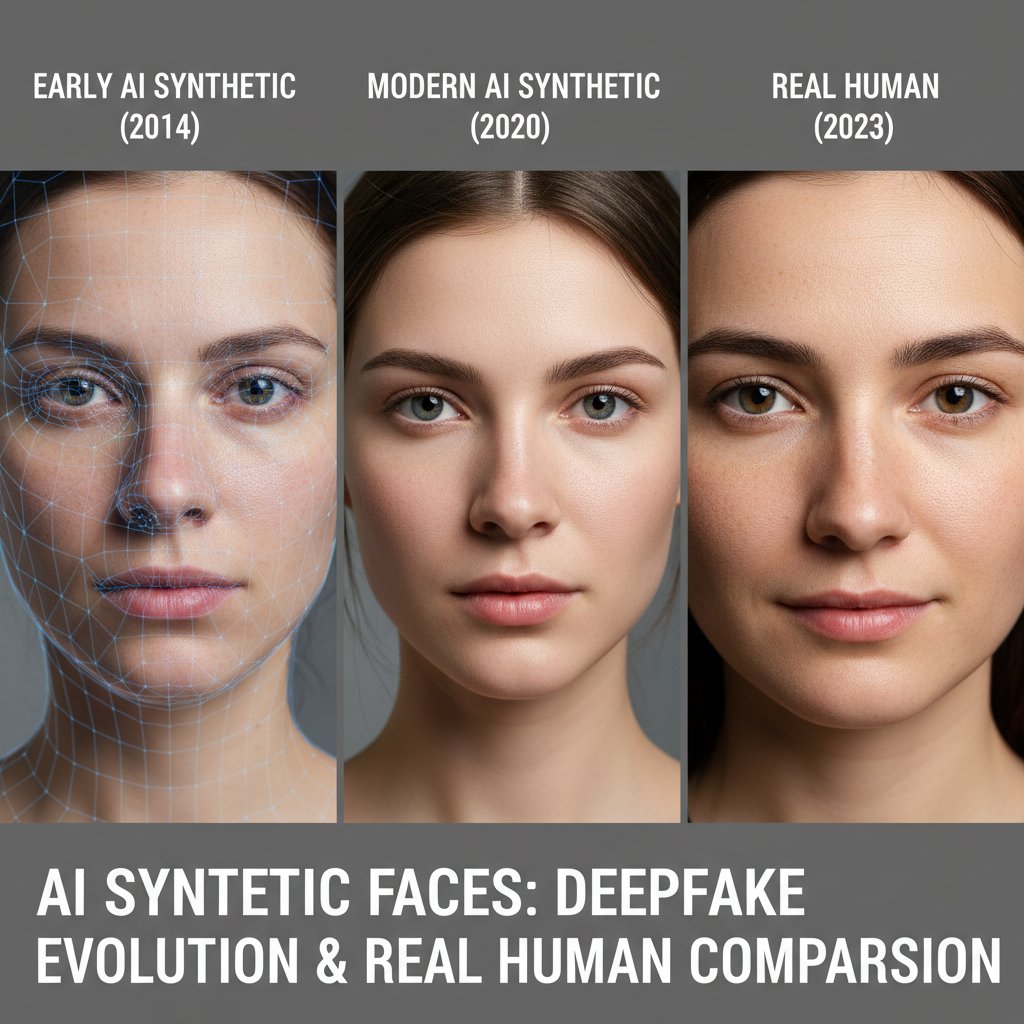
The techniques behind AI-generated misinformation have evolved at a breakneck pace. What began as clumsy, uncanny video forgeries has matured into a sophisticated arsenal: text, audio, video, and even synthetic data sets designed to slip through both human and algorithmic scrutiny. The generative adversarial network (GAN) is the shadow-artist; the transformer-based language model is the ghostwriter.
| Technique | Typical Use Case | Detection Difficulty |
|---|---|---|
| Deepfakes (video) | Political hoaxes, celebrity scandals | High |
| Synthetic news text | Fake news sites, viral stories | Moderate to high |
| AI-generated audio | Robocalls, fake interviews | High |
| Manipulated images | Viral memes, doctored evidence | Moderate |
Table 2: Common AI misinformation techniques and their detection difficulty. Source: Frontiers in Political Science, 2024
The evolution is relentless. Early deepfakes could be spotted by visual artifacts—flickering eyes, mismatched lip sync. Today’s creations are expertly tuned, leveraging massive data sets and reinforcement learning. AI-generated news text, once filled with telltale awkwardness, now passes as credible reporting to all but the most discerning reader.
This battle isn’t static. Each new detection tool spawns a new generation of fakes, often engineered specifically to evade that tool’s weaknesses.
- 2017-2019: Primitive deepfakes emerge, mainly on fringe platforms.
- 2020-2022: AI text generation enables fully automated fake news sites.
- 2023-2024: Cross-modal fakes (video, audio, text) go mainstream; detection becomes a cat-and-mouse game.
- Present: Hyper-realistic multimodal fakes bypass most automated detection, requiring human-AI collaboration.
How detection algorithms really work
AI-generated misinformation detection relies on a symphony of technical approaches. The core battle is algorithmic: models designed to identify statistical anomalies, linguistic inconsistencies, or digital fingerprints left by synthetic content. But here’s the rub—these systems are often less omniscient than they seem.
Many detection algorithms use supervised learning, trained on massive data sets of both real and fake content. They parse for subtle cues: unnatural sentence structure, repeated patterns, or artifacts in video frames. Others employ unsupervised anomaly detection, seeking outliers in a sea of “normals.” Advanced tools even use forensic analysis—reverse-searching images, checking metadata, or analyzing acoustic fingerprints in audio.

But every system has an Achilles’ heel. Supervised models can be fooled by novel fakes unrepresented in their training data. Forensic tools break down when media is stripped of metadata. And adversarial attacks—where fakes are specifically engineered to exploit algorithmic blind spots—are increasingly common.
The current landscape is less a fortress than a leaky sieve. No single detection method is bulletproof, and the smartest systems rely on human-AI collaboration to catch the outliers.
Key terms:
Software or model designed to identify signs of AI-generated or manipulated digital content, often using machine learning.
Training AI models on labeled examples of real and fake content, so they learn distinguishing features.
A method by which a fake is intentionally crafted to exploit specific weaknesses in a detection algorithm.
The use of metadata tracking, reverse image search, and acoustic analysis to unmask manipulated content.
The adversarial AI arms race: creators vs. detectors
Every time a detection tool is deployed, creators of AI-generated fakes study its behavior, probing for chinks in the armor. The battleground isn’t static—it’s an arms race, with both sides rapidly iterating.
On one side: creators wield generative AI to craft ever more convincing fakes, sometimes using the very detection tools designed to catch them as feedback loops. On the other: defenders deploy detection models, update training data, and scramble to keep up.
"AI tools alone cannot interpret nuanced misinformation; human fact-checkers remain essential." — Forbes, 2024
The arms race is asymmetric. For creators, success is a single viral hit. For detectors, perfection is the only acceptable standard—and that’s a moving target.
- Continuous improvement: Fake creators iterate faster than defenders can retrain models, exploiting every new blind spot.
- Resource disparity: Open-source tools mean anyone can become a misinformation artist, while detection often requires enterprise-grade computing power.
- Human element: The best fakes are tailored to exploit cultural nuance and emotional triggers, outwitting purely technical defenses.
- Feedback loop: Each failed detection cycle becomes training data for both sides, fueling an endless escalation.
The result? An ecosystem where the defenders are always one step behind, forced to patch holes faster than they can appear.
The limits of AI detection: uncomfortable truths
False positives, blind spots, and the myth of ‘perfect’ detection
Let’s puncture the myth: no AI-generated misinformation detection system is perfect. False positives—where legitimate content is flagged as fake—can erode trust just as much as undetected fakes. Blind spots persist for even the most advanced models.
| Detection Method | False Positive Rate | Notable Blind Spots |
|---|---|---|
| Supervised learning | 3-8% | New types of fakes |
| Forensic analysis | 2-5% | Metadata-stripped content |
| Crowd-sourcing | 5-10% | Coordinated disinformation |
Table 3: False positive rates and blind spots of AI detection methods. Source: Original analysis based on [Frontiers in Political Science] and [Genspark, 2024]
No method consistently outperforms others across all content types. Supervised learning stumbles with zero-day fakes. Forensic tools are only as good as their data trails. Crowd-sourcing helps, but is vulnerable to coordinated bad actors. The uncomfortable truth: even the best detection toolkit leaves gaps.
These blind spots aren’t just technical. Most detection research is biased toward English-language content and Western cultural contexts. Multilingual and cross-cultural fakes slip through the cracks, leaving entire communities vulnerable.
Complacency is dangerous. The mere presence of detection doesn’t guarantee protection—it’s a probabilistic shield, not an impenetrable dome. For users and platforms alike, humility and skepticism are essential.
The risks of overreliance on automated systems
There’s a seductive logic in outsourcing truth to machines. Automated detection is fast, scalable, and—on paper—objective. But the risks of overreliance are profound.

Automation can miss the forest for the trees. Nuanced context, sarcasm, and cultural references are often lost on even the most sophisticated models. Worse, automated systems can reinforce biases—flagging marginalized voices while missing coordinated in-group fakes.
“AI can only go so far before human judgment becomes necessary. We can’t automate trust.” — University of Florida Dean's Report, 2024
Humans pay the price for overconfidence in automation. False positives can silence dissent or independent journalism. Missed fakes can trigger real-world chaos. The lesson is clear: detection is a tool, not a replacement for human discernment.
A balanced ecosystem—where humans and AI collaborate, challenge, and double-check each other—is not a luxury, but a necessity in the age of synthetic content.
Case study: when detection failed (and why it matters)
Failure isn’t hypothetical. In 2023, a coordinated misinformation campaign in Bangladesh used AI to generate op-eds attributed to fake experts. Detection tools missed the scam for weeks, allowing the fake narratives to shape public discourse and policy. When the truth emerged, the damage was irreversible—debates had shifted, reputations were destroyed, and trust in media was further undermined.
Detection failed, not from lack of effort, but because the fakes were designed for the blind spots: local language, regional idioms, and subtle mimicry of expert tone.
- AI-generated op-eds appear on reputable sites.
- Detection algorithms, trained on English and Western media, miss subtle cues.
- Fake narratives influence real-world decisions before the scam is exposed.
The consequences are clear. Detection isn’t just about catching fakes; it’s about timing, context, and understanding the cultural terrain.
As more actors—from state agencies to lone wolves—adopt AI misinformation tactics, the cost of even a single detection failure grows. The only antidote is vigilance and humility: recognizing that every system has limits, and every new fake is a potential blind spot.
Who’s fighting back? Platforms, watchdogs, and the underground resistance
Big tech’s approach: progress, pitfalls, and PR games
Big tech platforms—Google, Facebook, Twitter—sit at the epicenter of the misinformation storm. Their detection efforts are headline-grabbing: algorithmic flagging, content labeling, and real-time removal of viral fakes. But beneath the surface, progress is uneven and fraught with contradictions.

Platforms invest billions in detection tech, but often prioritize PR wins over substantive change. Algorithms are tuned to catch the most egregious or visible fakes, leaving less viral but no less damaging content to slip through. Transparent reporting is rare; behind closed doors, detection thresholds and criteria remain proprietary.
| Platform | Detection Approach | Notable Successes | Ongoing Challenges |
|---|---|---|---|
| Automated + human reviewers | Removed viral fakes | Language, subtlety | |
| Algorithmic ranking + fact-checks | Demoted fake sites | Real-time response | |
| Crowd-sourced labels + AI | Instant flagging | Coordinated abuse |
Table 4: Big tech’s AI-driven misinformation detection efforts. Source: Original analysis based on CBC News/Google
The bottom line: Big tech’s detection is a patchwork, not a panacea. PR campaigns tout progress, but real gaps persist in less-monitored languages, regions, and platforms.
Users can’t afford to be complacent. Platform detection is a first line of defense, but for now, it’s only as strong as the next viral exploit.
Journalists, fact-checkers, and the role of human intuition
Journalists and fact-checkers are the last human firewall against AI-generated misinformation. Their tools: deep expertise, intuition for stories that “smell wrong,” and networks of trusted sources.
“Media literacy and human-AI collaboration are critical for effective detection.” — Divided We Fall, 2024
Human-led detection can outmaneuver even the best AI—spotting subtle shifts in context, or recognizing when a narrative doesn’t fit regional realities. But fact-checkers face an uphill battle: volume, speed, and, increasingly, threats from those who profit from the chaos.
- Contextual awareness: Journalists can detect when a story is “off” based on local customs or history.
- Network verification: Fact-checkers can call sources, triangulate claims, and cross-check with on-the-ground reporting.
- Emotional intelligence: Humans can sense manipulation in tone, word choice, or visual cues.
Journalists need support—AI tools to triage, highlight anomalies, and surface suspicious content. But in the end, it’s the blend of machine speed and human intuition that stands a chance against the tidal wave of fakes.
The rise of open-source and guerrilla detection tools
Outside the corporate world, guerrilla groups and open-source communities develop detection tools unfettered by bureaucracy. These tools—often shared on GitHub or niche forums—are built for speed, transparency, and adaptability.
Grassroots detection has distinct advantages: rapid iteration, local language targeting, and a culture of sharing. Volunteers build scrapers for new fake news domains, create browser plugins highlighting likely fakes, and teach communities how to spot anomalies.
- Open-source deepfake detectors for video and audio.
- Community-driven fact-checking databases updated in real time.
- Browser extensions flagging likely fake or AI-generated content.
- Localized detection models for underrepresented languages.
But these efforts face their own challenges: limited resources, volunteer burnout, and constant adaptation to evolving threats. Still, the ethos is contagious—transparency, collaboration, and a willingness to fight dirty against dirty fakes.
The underground resistance proves one thing: the battle against AI-generated misinformation is everyone’s fight, and the best ideas often come from the edge, not the center.
Real-world impact: how AI-generated misinformation detection is shaping society
Elections, crises, and the cost of getting it wrong
AI-generated misinformation detection is no academic exercise—it’s a live-fire test with real-world stakes. Nowhere is this more obvious than in elections and public crises. The cost of a single missed fake, or a false positive that silences a legitimate voice, can swing an election, incite violence, or erode public trust for years.

The 2024 global election cycle saw AI-generated robocalls, deepfaked candidate videos, and “news” sites created overnight to sway opinion. Detection systems, under unprecedented stress, caught many—but not all.
| Event | Misinformation Type | Detection Outcome | Impact |
|---|---|---|---|
| New Hampshire primary (2024) | AI robocalls | Detected late | Voter confusion |
| Bangladesh op-ed scandal (2023) | Fake expert articles | Undetected for weeks | Policy manipulation |
| Celebrity deepfakes (2024) | Synthetic images/videos | Mixed | Reputational damage |
Table 5: Real-world events shaped by AI-generated misinformation and detection outcomes. Source: Original analysis based on [AFP, 2023] and [Frontiers, 2024]
The lesson is brutal: detection lapses have real, sometimes irreversible consequences. The only defense is a culture of critical vigilance, backed by robust, adaptable detection systems.
It’s not just about elections. During public health crises, economic shocks, or civil unrest, synthetic rumors can spread panic or incite violence before authorities even realize a fake is in play.
When detection triggers backlash: censorship, free speech, and trust
Detection isn’t always hailed as a solution. In some contexts, it triggers fierce backlash—claims of censorship, bias, or political manipulation. When automation flags legitimate dissent as fake, or misses a coordinated smear, the system itself becomes a lightning rod for public anger.
False positives have silenced journalists, activists, and marginalized voices. In some countries, automated detection has been weaponized to suppress opposition rather than unmask fakery. The risk: detection becomes not a shield for truth, but a tool for soft authoritarianism.
“There’s a fine line between fighting disinformation and stifling dissent. Trust depends on transparency.” — Divided We Fall, 2024
The public’s trust in detection systems is fragile. The more opaque the process, the more suspicion it breeds. Transparency—clear criteria, public reporting, and accountability—is the only way to balance the imperative for detection with the rights of free expression.
Detection systems must walk the tightrope: aggressive enough to catch harmful fakes, careful enough to avoid trampling civil liberties.
Misinformation and marginalized communities: overlooked victims
Marginalized communities bear a disproportionate burden. Many detection systems, biased toward English and major cultural contexts, leave minority languages and subcultures exposed. Disinformation campaigns often target these groups, exploiting the very lack of detection coverage to sow division.
AI-generated fakes can inflame ethnic tensions, spread medical disinformation, or undermine community leaders. The cost of inaction is measured in fractured societies and deepening distrust.
- Language bias: Most detection tools are built for English, ignoring regional languages.
- Lack of context: Automated systems miss cultural references unique to minority communities.
- Resource gaps: Grassroots organizations often lack funding or technical expertise for detection.
- Targeted attacks: Disinformation actors exploit these blind spots to maximum effect.
The solution isn’t just technical—it’s political and cultural. Inclusion, investment in multilingual detection, and community-driven fact-checking are essential for a truly effective defense.
How to spot AI-generated misinformation: a practical guide
Red flags and subtle signals: what experts look for
You don’t need a supercomputer to spot AI-generated misinformation. Experts use a mix of hard-won intuition and research-backed techniques to pick apart fakes.
- Unnatural language or phrasing: Even advanced AI sometimes stumbles over idioms or delivers oddly formal prose in casual contexts.
- Visual artifacts: In images and videos, look for inconsistent lighting, mismatched shadows, or subtle distortions—especially around eyes and mouths.
- Metadata oddities: Files with missing or suspicious metadata may be synthetic.
- Source inconsistency: Cross-reference suspicious claims—AI fakes often lack credible, corroborating sources.
- Viral velocity: Fakes often spike in virality before detection can catch up—be suspicious of stories that seem to “come from nowhere.”
- Fact-check lag: If professional fact-checkers haven’t weighed in, be extra cautious before sharing.
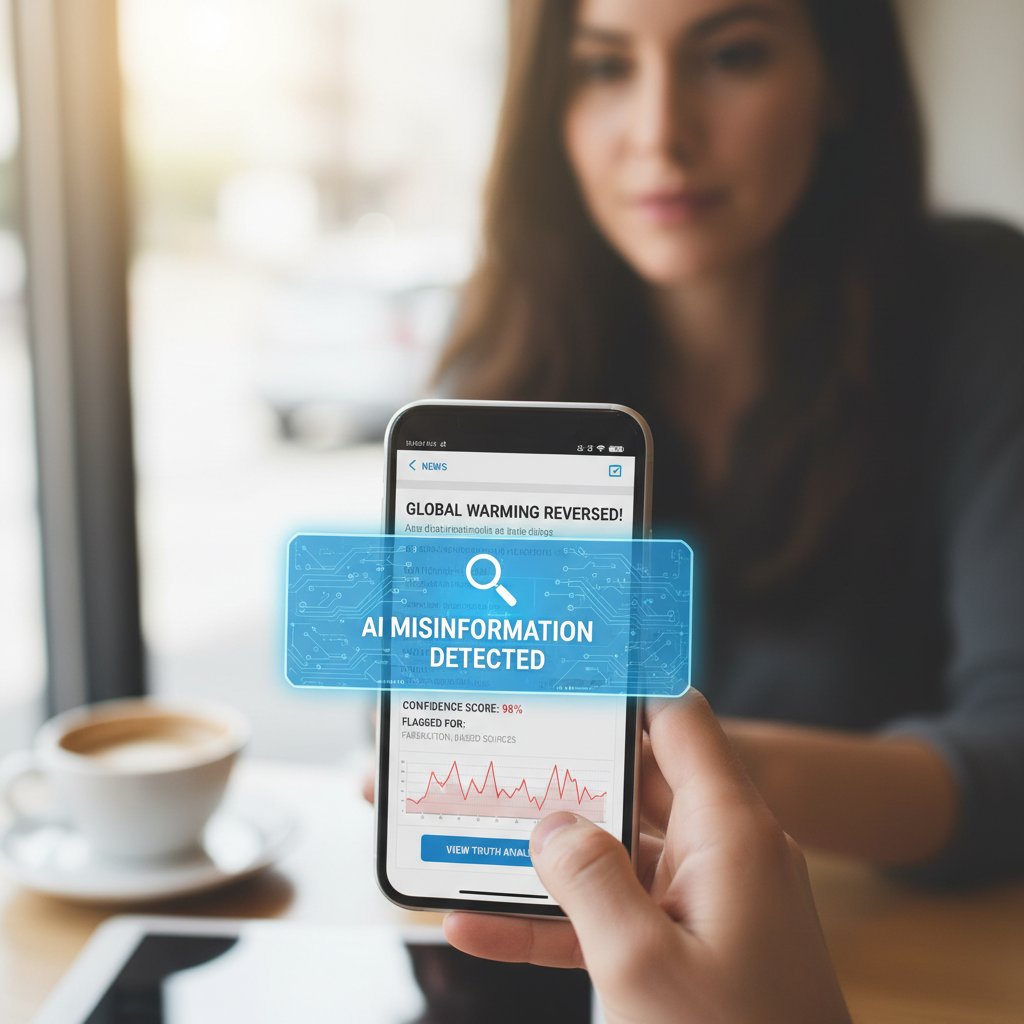
Developing a sixth sense for red flags is about pattern recognition and skepticism—learning to trust, but always verify.
Step-by-step: building your own detection workflow
Anyone can build a personal detection workflow. Here’s how to start:
- Pause before reacting: Don’t share or comment on sensational content immediately.
- Check the source: Investigate the publisher’s credibility and history.
- Cross-reference claims: Use trusted fact-checking sites or search for corroborating coverage.
- Analyze content features: Look for unusual phrasing, visual glitches, or odd file properties.
- Consult experts: Reach out to knowledgeable contacts or use reputable AI-detection tools.
- Report suspicious content: Flag or report fakes to platforms or professional fact-checkers.
Building this workflow takes practice, but the payoff is a heightened immunity to digital deception.
Definitions:
An online platform, often run by journalists or researchers, dedicated to verifying claims and debunking misinformation (e.g., Snopes, PolitiFact).
Software, often browser-based, designed to scan text, image, or video for signs of AI generation or manipulation.
The trustworthiness and reliability of a news source, based on reputation, transparency, and history.
Checklist: auditing your digital information diet
A healthy “information diet” is the best vaccine against AI-generated misinformation. Here’s a checklist for daily use:

- Diversify sources: Don’t rely on a single outlet—consult international, independent, and local news.
- Audit your feeds: Regularly review the sources in your social and news feeds for credibility.
- Practice skepticism: Treat all viral content as suspect until verified.
- Use detection tools: Install browser extensions or apps for real-time fact-checking.
- Educate yourself: Stay informed about new misinformation tactics and detection methods.
- Engage critically: Discuss suspicious content with peers—collective scrutiny is powerful.
Taking these steps transforms passive consumption into active defense.
The future of the arms race: new threats and emerging solutions
Multimodal detection: beyond text and images
The next front in AI-generated misinformation detection is multimodal—systems capable of analyzing text, audio, video, and even behavioral data in concert. The goal is to catch fakes that blend modes and evade single-channel detection.
Multimodal systems use ensemble models, cross-referencing clues across content types. For example, a deepfake video might be analyzed for both visual artifacts and inconsistencies in accompanying audio or text. This layered approach boosts detection accuracy, but also raises complexity—and the risk of new blind spots.

- Text-image cross-checks: Does the caption match the image content?
- Audio-video sync: Are lip movements and voice consistent?
- Contextual metadata: Do timestamps and locations align across formats?
- Behavioral analysis: Is the pattern of content sharing suspicious?
Multimodal approaches promise new accuracy, but also require massive data and thoughtful implementation to avoid reinforcing old biases in new forms.
Self-improving AI: can detectors ever stay ahead?
A new breed of detection tools use self-improving AI—models that learn from each detection cycle, updating themselves with every new fake encountered. These systems draw on reinforcement learning, adversarial training, and crowd-sourced feedback to adapt on the fly.
But can detectors ever truly stay ahead of the fakes? The arms race is perpetual, with each side now deploying machine learning to outwit the other.
| Generation | Detector approach | Strengths | Weaknesses |
|---|---|---|---|
| 1st gen (2017) | Manual forensics | Human intuition | Slow, not scalable |
| 2nd gen (2020) | Supervised AI | Speed, scale | Blind spots, bias |
| 3rd gen (2023) | Multimodal ensembles | Cross-channel accuracy | Data-hungry, complex |
| 4th gen (now) | Self-improving AI | Rapid adaptation | Adversarial feedback loop |
Table 6: Evolution of AI-generated misinformation detection tools. Source: Original analysis based on [Frontiers, 2024] and [University of Florida Dean's Report, 2024]
Self-improving AI helps, but the real advantage comes from diversity—different models, methods, and human oversight working together.
The arms race isn’t about winning outright, but staying resilient in the face of constant evolution.
Ethics and the wild frontier: open questions for 2025 and beyond
The ethical landscape of AI-generated misinformation detection is a minefield. Each new tool raises questions about privacy, free speech, and power. Who decides what counts as “fake”? How transparent should detection algorithms be? What happens when governments or corporations use detection as a pretext for surveillance or censorship?
“Ethics must keep pace with technology—otherwise, the cure risks becoming worse than the disease.” — Frontiers in Political Science, 2024
The wild frontier of AI-generated misinformation detection demands vigilance not just for fakes, but for overreach. Open debate, inclusive policy, and robust oversight are essential to ensure that detection serves the public good—not just the interests of those in power.
The only certainty is that the ethical debate will be as fierce as the technical arms race itself.
newsnest.ai and the new ecosystem of AI-powered news
How AI-powered news generators are changing journalism
Platforms like newsnest.ai are rewriting the DNA of journalism. By leveraging advanced AI to generate real-time, high-quality news, these systems offer unprecedented speed, scale, and personalization. Newsrooms can cover breaking stories in seconds, automate routine reporting, and tailor content to niche audiences—all without traditional overhead.

But the power to generate news at scale is double-edged. With automation comes the risk of accidental misinformation, echo chambers, and erosion of editorial standards.
- Speed vs. scrutiny: Automated systems can publish stories instantly, but require rigorous post-generation review.
- Personalization vs. filter bubbles: Tailored news feeds risk reinforcing biases if not carefully managed.
- Efficiency vs. editorial judgment: Scaling coverage can dilute the role of experienced journalists, putting more pressure on fact-checking systems.
The new ecosystem is dynamic, blending the strengths of AI with the irreplaceable value of human oversight and context.
Opportunities, risks, and the evolving role of trust
AI-powered news generation offers transformative opportunities—real-time updates, cost efficiency, and global reach. But new risks emerge: accidental amplification of fakes, algorithmic bias, and the challenge of maintaining trust.
| Opportunity | Risk | Mitigation Strategy |
|---|---|---|
| Real-time news generation | Accidental spread of AI-generated fakes | Human-AI editorial workflow |
| Customizable content | Echo chambers, filter bubbles | Diverse sources, transparency |
| Scalable output | Quality control, fact-checking pressure | Layered review, user feedback |
Table 7: Opportunities, risks, and mitigation strategies in AI-powered news. Source: Original analysis based on [newsnest.ai], [Frontiers, 2024]
Trust is the currency of modern journalism. For platforms like newsnest.ai, building and maintaining trust means transparency about AI use, rigorous editorial oversight, and open channels for user feedback.
The future of AI-generated news isn’t about automation replacing journalists—it’s about empowering them to do more, faster, with greater accuracy, while keeping the human element firmly in the loop.
Adjacent battlegrounds: law, education, and the global misinformation war
Regulation and the legal arms race
As AI-generated misinformation detection advances, law and regulation scramble to keep up. Governments worldwide debate new rules: disclosure mandates for synthetic media, platform liability for fakes, and criminal penalties for orchestrated disinformation.
But the legal arms race is fraught with complexity. Overbroad laws risk stifling legitimate speech; under-regulation invites chaos.
- Drafting clear definitions: What counts as AI-generated misinformation?
- Balancing free speech: Protecting dissent while punishing bad-faith actors.
- Enforcement mechanisms: Ensuring compliance across borders and platforms.
- Global coordination: Aligning standards amid international differences.
The legal battleground isn’t just technical—it’s ideological, a clash between security and liberty played out in real time.
How schools and universities are adapting
Educational institutions are on the front line of the misinformation war, training the next generation to spot fakes and think critically.
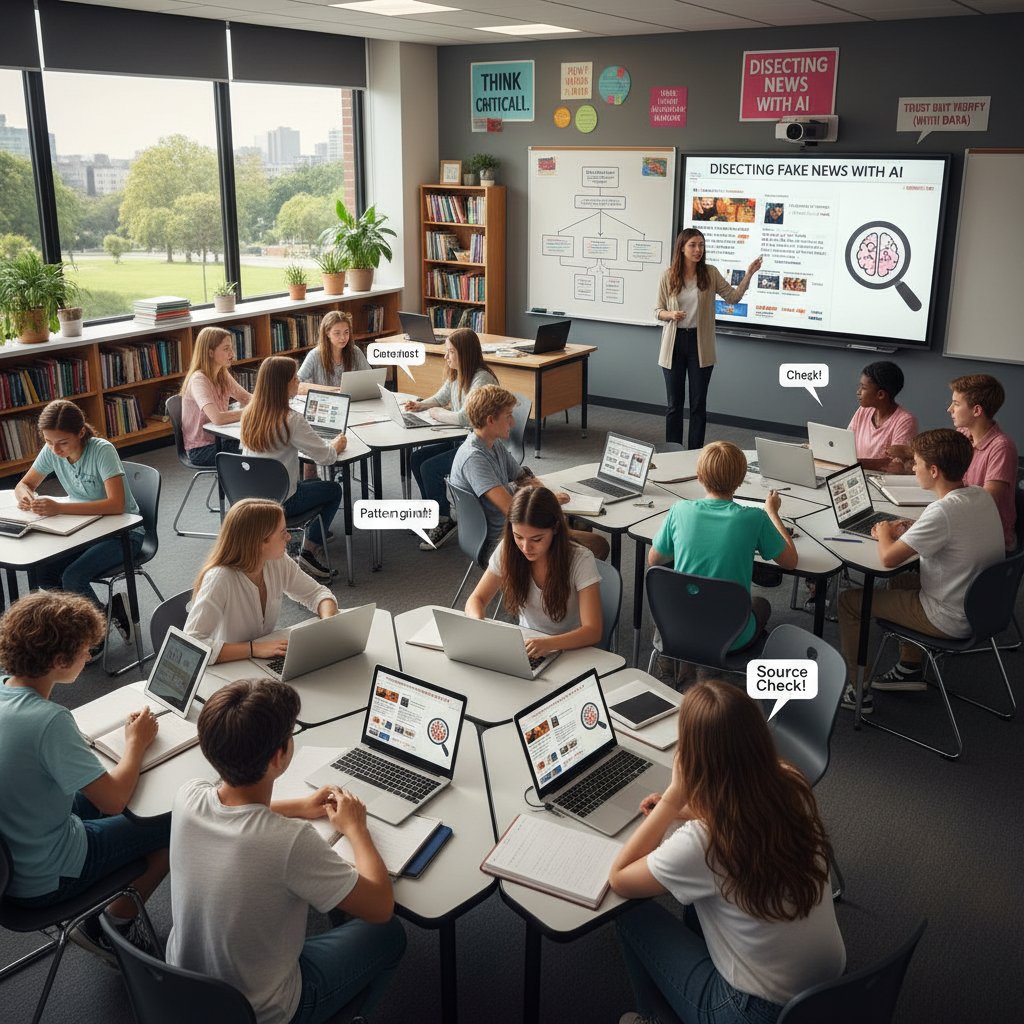
Teachers introduce media literacy curricula, run workshops on deepfakes, and teach students to use detection tools. Universities launch interdisciplinary research initiatives, blending computer science, journalism, and ethics.
- Critical thinking workshops: Training students to spot manipulation in text, audio, and video.
- Hands-on detection labs: Using AI tools to dissect and analyze synthetic media.
- Interdisciplinary research: Exploring the social, political, and technical implications of misinformation.
- Community outreach: Sharing best practices with parents, communities, and local organizations.
Education is the ultimate antidote—arming citizens with the skills to question, verify, and resist digital deception.
International perspectives: what works (and what doesn’t) abroad
Global perspectives on AI-generated misinformation detection reveal a patchwork of approaches. Some countries mandate disclosure of synthetic content; others rely on voluntary industry standards. Multinational cooperation is rare but growing.
| Country/Region | Detection Strategy | Challenges | Notable Outcomes |
|---|---|---|---|
| EU | Regulatory mandates + platform codes | Enforcement, harmonization | Some reduction in viral fakes |
| U.S. | Market-driven, patchy regulations | Political backlash | Mixed effectiveness |
| South Asia | Community-led fact-checking | Resource constraints | Improved local awareness |
| Africa | NGO-driven education campaigns | Language diversity | Uneven, but growing |
Table 8: International approaches to AI-generated misinformation detection. Source: Original analysis based on [Frontiers, 2024]
No silver bullet exists. What works in one context may fail in another. The lesson: innovation, collaboration, and context-sensitive policy are essential for global progress.
Global coordination—across borders, languages, and platforms—is the next great challenge. The stakes: nothing less than the health of democratic discourse worldwide.
Conclusion: brutal truths, bold questions, and what you can do
Key takeaways from the edge of AI-generated misinformation detection
The fight against AI-generated misinformation is ugly, messy, and nowhere near over. But clarity is possible.
- Detection matters now more than ever: The viral scale and speed of AI fakes demand constant vigilance.
- No tool is perfect: Every detection method has blind spots—human judgment remains essential.
- The arms race is perpetual: Creators and detectors will keep leapfrogging each other.
- Impact is real: From elections to marginalized communities, the cost of getting it wrong is profound.
- Trust is built, not given: Transparency, inclusiveness, and media literacy are the foundation of resilience.
Clarity, not certainty, is the currency in the misinformation arms race.
Critical reflection: can we ever really win?
Winning may be the wrong metaphor. The brutal truth: the war over digital truth is endless—an arms race with no finish line. But resilience is possible.
“The only way to win is not to give up the fight—to keep challenging, questioning, and demanding better from our tools and ourselves.” — Divided We Fall, 2024
The future belongs to the vigilant—those who question, cross-check, and collaborate. The tools may change, but the mission is eternal: defend trust, one headline at a time.
Next steps: building personal and collective resilience
Here’s your playbook for surviving—and thriving—in the AI misinformation era:
- Embrace skepticism: Question every viral story; trust is earned, not given.
- Build detection skills: Use and share AI detection tools, fact-checking sites, and best practices.
- Support transparency: Demand open reporting from platforms and news generators like newsnest.ai.
- Champion education: Teach others—at home, at school, in your community.
- Engage critically: Discuss, debate, and scrutinize digital content with peers.
Collective resilience is forged in community. By sharing tools, knowledge, and vigilance, we can hold the line—for truth, trust, and the future of digital culture.
Sources
References cited in this article
- Divided We Fall(dividedwefall.org)
- CBC News/Google(cbc.ca)
- Frontiers in Political Science(frontiersin.org)
- University of Florida Dean's Report(2024.jou.ufl.edu)
- DISA(disa.org)
- BISI(bisi.org.uk)
- Munich Security Conference(securityconference.org)
- Virginia Tech News(news.vt.edu)
- Reuters Institute(reutersinstitute.politics.ox.ac.uk)
- Forbes(cdotimes.com)
- HKS Misinformation Review(misinforeview.hks.harvard.edu)
- ACM(dl.acm.org)
- London Data Consulting(londondataconsulting.medium.com)
- NewsGuard(newsguardtech.com)
- Springer(link.springer.com)
- BOOM Annual Report(boomlive.in)
- NewsGuard AI Monitor(newsguardtech.com)
- New Scientist(newscientist.com)
- Forbes(forbes.com)
- Axios(axios.com)
- Common Dreams(commondreams.org)
- Columbia Law(cjel.law.columbia.edu)
- GIJN(gijn.org)
- SIGIR 2024 Tutorial(sigir24-llm-misinformation.github.io)
- Genspark(genspark.ai)
- AI Magazine(onlinelibrary.wiley.com)
- CNET(cnet.com)
- Full Fact Report 2024(fullfact.org)
- Penn State(psu.edu)
- AARP(aarp.org)
Instantly Generate Breaking News
NewsNest.ai delivers a revolutionary AI-driven news platform, empowering businesses and individuals by automatically generating timely, credible, and engaging news articles. With real-time coverage, deep accuracy, and customizability, you can effortlessly stay informed and ahead of the competition. Eliminate costly journalistic resources and gain instant access to quality content tailored specifically to your preferences and industry focus.
Get startedReady to revolutionize your news production?
Join leading publishers who trust NewsNest.ai for instant, quality news content
Frequently Asked Questions
What major events in 2023 and 2024 demonstrated the scale of AI-generated misinformation?
In 2023, there was a tenfold increase in AI-generated fake news sites according to NewsGuard. In 2024, more than 4 billion voters were exposed to synthetic election content, and viral AI deepfakes emerged including political robocalls in New Hampshire and manipulated celebrity images.
Why is detecting AI-generated misinformation more difficult than detecting traditional misinformation?
According to Genspark, AI misinformation often lacks human intent, making detection complex. Rather than catching intentional liars, detection systems must discern errors spawned in code, where the machinery behind the lies is indifferent but the consequences are still personal and political.
What was the pivotal deepfake event that highlighted the challenges of AI misinformation detection?
A hyper-realistic deepfake video of a world leader circulated hours before a pivotal election, with millions viewing and sharing it within minutes before detection systems could respond. This event demonstrated how quickly false narratives spread before they can be debunked.
What is at stake with the rise of AI-generated misinformation?
According to the article, truth, trust, and human perception are at risk. The consequences of unchecked deepfakes extend beyond clicks or views to eroded trust and fractured societies.
Keep Reading
See more from AI-powered news generator

Why AI-Generated Fake News Detection Is Failing

How AI-Generated Political News Shapes Election Outcomes

AI-Generated Fact-Checking: Who Really Controls the Truth?

AI-Generated News Credibility and the Spread of Fake Stories

AI-Generated News Verification in the Age of Synthetic Media


