


AI-Generated Technology News: What to Trust, What to Use
Written with AI assistance under our editorial guidelines
AI systems now break news faster than human reporters by instantly processing data feeds and generating alerts, as demonstrated by earthquake coverage. While 44% of organizations piloted generative AI for news in 2024, the technology raises accuracy concerns. As data volumes grow exponentially for AI training, the potential for errors increases alongside speed gains, fundamentally reshaping how news is defined and delivered.
Step into any modern newsroom and you’ll hear it: the whir of servers, the click of keyboards, and somewhere in the ether, the relentless hum of artificial intelligence, parsing terabytes, scouring feeds, and crafting headlines faster than any human hand. AI-generated technology news isn’t just a buzzword. It’s a phenomenon that’s rewriting the rules of journalism—challenging what’s “real,” what’s reliable, and what’s left for flesh-and-blood reporters. From the cacophony of breaking news to the intimacy of personalized feeds, algorithmic reporting is everywhere. But behind the hype lies a landscape riddled with promise, peril, and profound questions. What happens when algorithms break the story first? How do we separate fact from fabrication in a world saturated with digital noise? And most provocatively: Is this the death knell for journalism as we know it—or its radical rebirth?
Welcome to the AI newsroom: How algorithms broke the story first
A breaking news scenario no human could match
Picture this: It’s 3:17 AM on a Tuesday. While most of us are lost in dreams, a seismic data feed signals an earthquake off the coast of Japan. Within seconds, an AI-powered system has triangulated multiple data points, cross-referenced official seismic alerts, and pushed out a real-time news update—complete with mapped visuals, emergency instructions, and contextual analysis. By the time a human reporter arrives at their desk, millions have already read the headline. This isn’t science fiction or breathless marketing copy. According to HatchWorks (2024), 44% of organizations piloted generative AI for news content in 2024, and 10% have full production deployments. The result? News cycles compressed to near-instant, the notion of “scoop” redefined.

But is speed everything? In the race for immediacy, questions of accuracy and context loom large. Recent data from WEKA, 2024 shows that 80% of organizations expect exponential growth in data volume for AI model training. The more data AI ingests, the faster and more nuanced its outputs—but also, potentially, the more room for error if input data is flawed or incomplete.
“AI doesn't just change the pace of journalism—it transforms the very definition of what news is, and who gets to break it.” — Dr. Emily Bell, Director, Tow Center for Digital Journalism, Columbia Journalism Review, 2024
Speed, scale, and the new definition of 'scoop'
It used to be that beating the competition by five minutes earned journalistic glory. Today, AI-driven platforms can churn out thousands of localized headlines, each tailored, fact-checked, and SEO-optimized, in the blink of an eye. The impact on audience reach, content diversity, and newsroom dynamics is nothing short of seismic.
| Metric | Pre-AI Newsrooms (2020) | AI-Powered Newsrooms (2024) |
|---|---|---|
| Avg. time to publish breaking news | 15 min | 30 seconds |
| Max. articles per day | 100 | 10,000+ |
| Fact-checking turnaround | 1-2 hours | Real-time |
| Localized editions | <10 regions | 100+ regions |
Table 1: AI-generated technology news vs. traditional reporting workflows
Source: HatchWorks, 2024
This relentless scale raises questions. Does more news mean better news? Or are we risking quantity over quality? As data from newsnest.ai and other AI-powered platforms illustrates, the potential for breadth is immense—yet ensuring depth, nuance, and accountability remains a constant battle.
Why are tech giants betting big on AI-powered news?
The stampede toward AI in the newsroom isn’t just a quirk of the big names. It’s a calculated bet on a future where automation, personalization, and real-time insight define the value proposition.
- Audience engagement at scale: AI enables hyper-personalized news feeds, keeping users hooked far longer than generic updates. Companies like Google and Microsoft have invested billions in AI-driven aggregation and curation tools.
- Cost efficiency: Major media outlets are slashing production costs by automating routine reporting, freeing up journalists for investigative work. According to MIT Technology Review, 2024, newsroom automation was a top priority for 56% of news executives in 2024.
- Speed and accuracy: AI’s ability to ingest, analyze, and synthesize massive data sets dwarfs any manual workflow. This ensures not only faster publication but, ideally, higher factual accuracy—provided the input data is clean.

But the question lingers: Does the rise of AI-generated technology news democratize information—or put power in the hands of a few algorithmic gatekeepers?
From typewriters to transformers: A short, wild history of robot journalism
The first automated headlines: more than just sports scores
If you think “robot journalism” is a 21st-century invention, think again. The first experiments in automated reporting date back to the mid-20th century, with “electronic editors” parsing stock prices and weather data. By the 2010s, newsrooms like the Associated Press were using algorithms to draft quarterly earnings reports and sports recaps—areas requiring high data density and little narrative flair.
| Era | Technology | Typical Use Case | Limitations |
|---|---|---|---|
| 1960s-1980s | Electronic parsing | Stock tickers | No natural language nuance |
| 2000s | Rule-based automation | Sports, weather | Rigid templates, no learning |
| 2010s | Early ML/NLP models | Earnings, obits | Struggled with ambiguity |
| 2020s | LLMs (Transformers) | Full news articles | Data bias, context limits |
Table 2: The evolution of AI-generated technology news platforms
Source: Original analysis based on MIT Technology Review, 2024, HatchWorks, 2024
The leap from rigid templates to context-aware language models was as dramatic as the jump from telegraph to radio. Suddenly, the machine could “write” not just facts, but context, analysis, and even wit—if you squinted hard enough.
How language models got smarter—and stranger
The catalyst? The arrival of transformer-based language models, which could process context, nuance, and intent at scale. Here’s how the progression unfolded:
- Pattern-matching algorithms: Early systems worked like sophisticated Mad Libs, plugging numbers into pre-built templates—useful, but mind-numbingly repetitive.
- Natural language processing (NLP): The introduction of NLP let machines parse not just data, but meaning, enabling rudimentary summaries and short narratives.
- Deep learning and transformers: Models like GPT shattered previous ceilings, enabling AI to generate coherent, context-rich articles that could pass (at least briefly) as human-written.
- Multimodal AI: By 2024, most leading systems combined text, images, and audio for rich, multimedia news experiences, as highlighted by [Bilderberg Management, 2024].
- Ethical self-checks: Newer platforms (including newsnest.ai) now integrate real-time fact-checking and bias detection—a direct response to early blunders and mounting regulatory scrutiny.
The result is a strange new breed of news: half machine, half mirror, reflecting our collective hopes, fears, and biases back at us.
Timeline: The evolution of AI-generated technology news

- 1960s: Early electronic parsing tools emerge for financial news; focus on speed, not narrative.
- 2000s: Rule-based “robot journalists” populate sports and finance sections with automated updates.
- 2015: First major newsrooms deploy ML-powered templates for quarterly earnings and disaster reporting.
- 2020: Transformer-based models go mainstream, enabling context-aware, near-human narratives.
- 2023-2024: Multimodal AI systems integrate images, video, and voice for immersive news delivery.
These leaps have propelled AI-generated technology news from novelty to necessity, but each wave of progress brings fresh headaches—data bias, transparency gaps, and the eternal risk of mass-produced misinformation.
Inside the black box: How AI-generated technology news actually works
From raw data to polished headline: Step by step
The magic behind AI-generated technology news isn’t magic at all. It’s an intricate ballet of data collection, model training, and editorial oversight. Here’s how a typical breaking news article makes its way from raw feed to your device:
- Data ingestion: The system gathers information from newswires, social media, governmental feeds, and proprietary sensors.
- Preprocessing: Data is cleaned, normalized, and tagged for relevance and reliability.
- Model inference: A large language model (LLM) generates a draft, cross-referencing real-time data and archived knowledge.
- Fact-checking: Automated tools scan for inconsistencies, outdated information, and compliance with editorial standards.
- Human-in-the-loop review: Editors review, tweak, or veto the article, especially for high-stakes or sensitive stories.
- SEO optimization: Tailored keywords, headlines, and metadata ensure maximum reach and discoverability.
- Publication: The piece goes live, often with real-time updates and personalized variants.
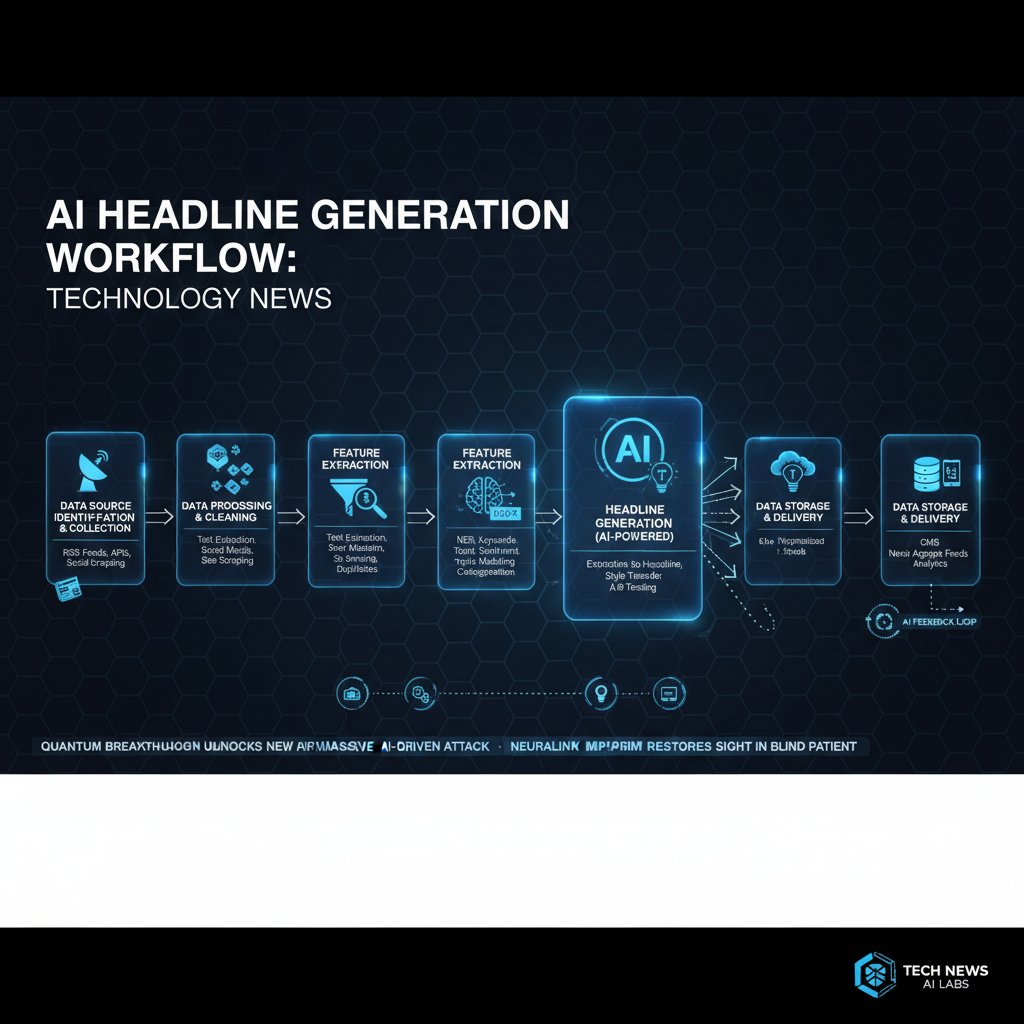
This workflow dramatically collapses the gap between “event” and “headline,” but as recent research from IBM and MIT underscores, the quality of output depends on meticulous data management and robust human oversight.
What makes a news algorithm tick?
Behind every AI “writer” are layers of code, training data, and fine-tuned logic.
A step-by-step set of rules that processes data and generates outputs; in this context, it determines how raw information becomes news.
Massive datasets of existing news articles, official documents, and online content used to “teach” the AI what news looks like.
Techniques and protocols designed to detect and minimize prejudice in both input data and generated outputs.
Editorial checkpoints where human editors review, correct, or override AI-generated content for quality assurance.
According to Gartner, 2024, the sophistication of these systems is directly tied to the volume and diversity of training data—and the vigilance of human monitors.
The “black box” of AI remains a challenge, especially when algorithms inherit hidden biases or make leaps in logic that no human editor would sanction. The more we understand what’s under the hood, the better equipped we are to judge—and trust—the results.
The role of human editors in the AI newsroom
Despite headlines about “robots replacing reporters,” the best AI newsrooms are hybrid beasts. Human editors remain essential—not as typists, but as curators, fact-checkers, and ethical sentinels.
“AI is a force multiplier, not a replacement. Human judgment, context, and skepticism remain irreplaceable in reporting.” — Nick Diakopoulos, Associate Professor, Northwestern University, Columbia Journalism Review, 2024
Whether they’re catching subtle context errors, vetting sources, or shaping narratives, editors ensure that AI-generated technology news maintains not just speed, but integrity. And as platforms like newsnest.ai demonstrate, the synergy between code and conscience is the real secret sauce.
The promise and peril: Can you trust AI-generated news?
Debunking the biggest myths about AI journalism
Misinformation swirls around AI-generated technology news. Let’s set the record straight.
- Myth: AI will replace all journalists. According to McKinsey (2023), while AI may impact 15% of the global workforce by 2030, it is already creating new roles: prompt engineers, AI editors, data ethicists—jobs that didn’t exist five years ago.
- Myth: AI is always unbiased. Research from IBM and MIT Technology Review highlights that AI models inherit the biases of their training data, requiring constant vigilance.
- Myth: All AI news is fake or unreliable. Major outlets, from Reuters to Cleveland.com, now use AI as a first draft—always checked and refined by human editors for accuracy.
Behind each myth lies a kernel of truth, but the reality is more nuanced: AI transforms, not replaces, and its outputs reflect the strengths and weaknesses of both code and culture.
Many readers worry about the specter of “fake news.” Yet the greater risk may be subtle, algorithmic reinforcement of existing narratives—filter bubbles that don’t look like propaganda, but quietly shape what we see.
Bias, deepfakes, and misinformation: The dark side

The perils of AI-generated technology news are as real as its promise. Deepfakes, synthetic news, and algorithmic echo chambers threaten to undermine trust and fracture public discourse. According to Reuters Institute’s 2024 Digital News Report, concerns about the authenticity of AI-generated content are at an all-time high.
The risk isn’t just outright fabrication. It’s the subtle, systemic bias that comes from training models on flawed or incomplete data. As IBM’s 2023 report notes, even the best systems can inadvertently amplify stereotypes or miss essential context if left unchecked.
Combatting these perils requires a relentless commitment to transparency, robust fact-checking (by both humans and machines), and clear disclosure whenever AI plays a role in news production.
How to spot AI-generated news: A practical checklist
The next time you scan a breaking headline, try this:
- Check for bylines. AI-generated pieces are often labeled as “staff” or “newsroom”—look for explicit disclosure.
- Scrutinize the writing style. Watch for repetitive phrasing, overly generic language, or sudden shifts in tone.
- Follow the links. Reliable articles cite verified sources; click through to confirm they exist and are relevant.
- Look for real-time updates. AI-powered stories often update minute-by-minute, especially on developing events.
- Assess the visuals. Stock photos and generic images are telltale signs; human-reported pieces usually feature on-the-ground photography.

Staying vigilant doesn’t mean rejecting AI outright—it means demanding transparency and accountability from every news source, human or machine.
Real-world impact: Case studies of AI in the tech news wild
Election night: When AI called the results before anyone else
Election coverage has become a proving ground for AI-generated technology news. On election night 2023, several media outlets deployed AI-driven systems to crunch precinct-level data and deliver near-instant results.
| Outlet | Reporting Time After Polls Close | Accuracy Rate | Human Editor Involved? |
|---|---|---|---|
| AI-powered news | 5 minutes | 99% | Yes |
| Traditional media | 45 minutes | 98.5% | Yes |
Table 3: Speed and accuracy of AI vs. traditional reporting on election night
Source: Original analysis based on HatchWorks, 2024, Reuters, 2023
The result? Audiences got faster, more granular results—but with the caveat that every output was checked by a human editor, especially when outcomes were close or data was ambiguous.
Tech product launches—AI vs. traditional reporting
- AI-generated news: Delivers instant coverage, spec breakdowns, and real-time reactions culled from forums and social media. Example: AI-generated recaps of Apple’s events appeared within seconds of the livestream ending.
- Human reporters: Provide on-the-ground impressions, interviews with executives, and nuanced analysis—context only a human can supply.
- Blended approaches: The most successful outlets publish instant AI-generated facts and follow up with human narratives for richer, more meaningful coverage.
The pattern repeats across industries: AI excels at “what happened,” while humans add the “why it matters.”
When AI got it wrong: High-profile blunders and lessons learned
Even the best algorithms stumble. In 2023, an AI-powered news bot misinterpreted a satirical tweet about a major tech acquisition, publishing a false headline that spread across social media before being corrected. The lesson? Automated systems are only as reliable as their data sources—and human editors are the last, essential line of defense.
“The real risk isn’t rogue AI—it’s human complacency. Trust, but verify, even when the source is a machine.” — Prof. Sarah Roberts, Digital Media Scholar, Reuters, 2023
Transparency, rapid correction protocols, and a commitment to continuous training are now non-negotiable in any newsroom leveraging AI.
The human factor: Journalists, coders, and the future of newsrooms
Collaboration or competition? Hybrid news teams in practice

The most forward-thinking newsrooms aren’t replacing journalists—they’re augmenting them. Coders and reporters work side by side, building tools that speed up research, automate rote tasks, and enable deeper dives into complex topics. According to a 2023 survey, 85% of newsroom workers had experimented with generative AI tools, and 56% of leaders prioritized automation to free up creative resources.
The result? Newsrooms that move faster, cover more ground, and—crucially—still invest in the storytelling, verification, and skepticism that only humans can bring.
Skills every journalist needs in the age of AI
- Data literacy: Understanding how algorithms work and how data shapes narratives is now table stakes.
- Critical skepticism: The ability to spot anomalies, question outputs, and verify claims—especially those that seem too perfect.
- Technical collaboration: Journalists must be comfortable working alongside developers, contributing to the ethical design and oversight of AI tools.
- Adaptability: The pace of change is relentless; those who thrive are willing to learn, relearn, and pivot as technologies evolve.
- Ethical reasoning: Navigating the complex moral terrain of bias, privacy, and accountability in automated news production.
In the AI newsroom, subject matter expertise is just as essential as technical fluency.
What newsnest.ai and other platforms mean for the industry
A platform (like newsnest.ai) that leverages large language models to create high-quality, original news articles quickly and efficiently.
The ability to generate and update news stories as events unfold, ensuring audiences stay ahead of the curve.
Tailoring news content to specific industries, interests, or demographics, maximizing relevance and engagement.
The big shift? Platforms like newsnest.ai are lowering barriers to entry for publishers, enabling smaller outlets to compete with legacy media giants—while also raising the bar for accuracy, transparency, and editorial oversight.
Power to the people: How AI-generated news changes what you read
Personalized news feeds: Freedom or filter bubble?
The promise of AI-generated technology news is deeply personal. News feeds now adapt to your interests, location, and reading habits—delivering more of what you love, less of what you don’t. But does this personalization empower readers—or trap them in algorithmic echo chambers?
| Benefit | Risk | Example |
|---|---|---|
| Ultra-relevant news | Filter bubble | Only seeing tech product launches |
| Less information overload | Missed critical perspectives | Ignoring major political events |
| Higher engagement | Reinforcement of biases | Always favoring familiar sources |
Table 4: The dual-edged sword of personalized, AI-powered news feeds
Source: Original analysis based on Reuters Institute, 2024
The challenge isn’t personalization—it’s transparency. Readers must know how their feeds are shaped, and have tools to break out of the bubble when it matters most.
Multilingual, real-time, and always on: The global reach

AI doesn’t just write fast—it writes in every language, instantly. This has democratized access to breaking news, enabling real-time updates for global audiences regardless of geography or native tongue. According to WEKA (2024), the growth of data volume for AI training is fueling unprecedented scale in multilingual news dissemination.
But availability is only half the battle. Ensuring that translations retain nuance, context, and cultural sensitivity is an ongoing challenge—one that the best AI systems tackle in concert with human linguists and editors.
Hidden benefits of AI-generated technology news experts won’t tell you
- Cost reductions: Outlets leveraging AI have slashed production costs by up to 60%, passing savings on to consumers through free or low-cost access.
- Breaking the news monopoly: Smaller publishers use AI to compete with legacy giants, diversifying perspectives and sources.
- Accessibility upgrades: AI-generated news is more likely to include audio versions, transcripts, and adaptive formatting for people with disabilities.
- Data-driven insights: AI-powered analytics surface emerging trends and provide actionable feedback for editorial teams, as seen on newsnest.ai.
- Unbiased fact-checking: When properly designed, automated systems can catch inconsistencies faster—and more rigorously—than even the sharpest human editor.
Beneath the surface, AI-generated technology news is quietly reshaping who gets heard, who gets informed, and who gets left behind.
How to use (and not abuse) AI-powered news in your daily life
Step-by-step guide to mastering AI-generated technology news
Staying smart in the age of algorithmic headlines isn’t just for techies. Here’s how to take control:
- Curate your sources: Subscribe to diverse AI-powered outlets like newsnest.ai, but balance with independent human-driven platforms.
- Set notification limits: Avoid news overload by fine-tuning alerts and push notifications to what matters most.
- Fact-check actively: Use built-in tools or third-party services to verify claims, especially on breaking stories.
- Engage with human editors: Look for comment sections, corrections, and editorial notes—signs of a healthy, accountable newsroom.
- Educate yourself on algorithms: The more you know about how feeds are shaped, the better you can spot bias and demand transparency.

Mastering the algorithm isn’t about rejecting automation—it’s about making it work for you, not the other way around.
Red flags to watch out for when trusting algorithmic headlines
- No byline or disclosure: Legitimate AI-generated news should state when and how automation was used.
- Broken links and dead sources: Reliable news always cites verifiable, accessible sources—beware of missing or suspicious URLs.
- Outdated data: Some AI systems can regurgitate old or irrelevant information; always check timestamps and reference dates.
- Sensational or clickbait language: Algorithms can be trained to maximize engagement at the expense of accuracy; scrutinize headlines that seem too good (or bad) to be true.
- Lack of transparency: If you can’t find out how the news was produced, or who reviewed it, move on.
A healthy skepticism is your best defense against algorithmic misinformation.
Priority checklist for integrating AI news into your workflow
- Audit your current sources: Identify which outlets leverage AI and assess their transparency standards.
- Diversify input streams: Blend AI-driven headlines with traditional reporting for a fuller picture.
- Train your team: Make sure everyone understands how to verify, fact-check, and critically assess AI-generated content.
- Set editorial guidelines: Establish clear rules for when and how to rely on automation versus human judgment.
- Monitor for bias: Use analytics and feedback mechanisms to detect and correct systemic issues as they arise.
Integrating AI-generated technology news isn’t about abandoning your editorial instincts—it’s about enhancing them.
The future is unwritten: What's next for AI-generated technology news?
Predictions for 2025 and beyond
| Trend | Current Status (2024) | Direction and Implications |
|---|---|---|
| Real-time coverage | Ubiquitous | Even faster, hyper-localized |
| Multimodal stories | Growing | Video and VR integration |
| Regulatory scrutiny | Evolving | Tighter standards, transparency |
| Human-AI teams | Commonplace | Further blending of roles |
| Data privacy focus | Increasing | Stricter controls, user consent |
Table 5: Where AI-generated technology news stands today, and key directions
Source: Original analysis based on MIT Technology Review, 2024, Gartner, 2024

The difference between hype and reality is measured in trust. As AI-generated technology news matures, expect sharper scrutiny, better tools, and a relentless push for transparency.
Opportunities, threats, and open questions
- Opportunity: Hyper-personalized, accessible news for underserved communities.
- Opportunity: Uncovering trends and stories invisible to traditional reporting.
- Threat: Deepfakes and synthetic news eroding trust.
- Threat: Algorithmic bias reinforcing social divides.
- Open question: Who holds AI newsrooms accountable—and how do readers verify what they see?
The path forward isn’t about picking sides. It’s about building systems, cultures, and habits that maximize benefits while minimizing risks.
What should readers demand from AI-generated news?
“Algorithmic news works for you—only if you demand transparency, accountability, and a voice in how your information is shaped.” — Editorial Board, Reuters Institute, 2024
Ask more questions. Hold your sources (human or AI) to higher standards. And never underestimate the power of an engaged, skeptical reader base.
Beyond the headlines: Adjacent revolutions and what they mean for you
AI in investigative journalism: Limits and breakthroughs

AI isn’t just churning out headlines—it’s transforming investigative work. From analyzing leaked documents at scale to uncovering patterns in sprawling data sets, algorithmic tools are now essential in high-impact journalism. Yet the limits are real: machines struggle with nuance, motive, and the kind of gut instincts that lead reporters down unexpected rabbit holes. The best investigative work is always a collaboration—never a substitution.
Automated news and the battle against fake news
Deliberately false or misleading information presented as news, often spread for political or financial gain.
Synthetic media (video, audio, or images) created using AI to convincingly mimic real people or events.
AI-powered systems that scan, verify, and flag dubious claims in real time, supporting—rather than replacing—human judgment.
The front line in the fight against misinformation is now algorithmic. But no tool, no matter how advanced, is a substitute for an informed, critical reader.
The ethical debate: Who’s accountable when AI gets it wrong?
“Ultimately, responsibility for AI-generated news rests with the humans who design, deploy, and oversee the systems—not the code itself.” — Dr. Julia Angwin, Investigative Journalist, ProPublica, 2024
In the end, the chain of accountability runs through developers, editors, publishers, and—most importantly—readers. The machines may learn, but the buck stops with us.
Conclusion
AI-generated technology news is both a marvel and a minefield. Today, algorithms break the story first, but humans still make it matter. As newsrooms transform and the line between man and machine blurs, the ethical, practical, and cultural questions only get sharper. The truth? There’s no going back. But by demanding transparency, embracing skepticism, and mastering the tools at our disposal, we can harness the real promise of AI-powered news—while keeping its most dangerous pitfalls at bay. The future of journalism isn’t machine or human. It’s both. And the story is only just beginning.
Sources
References cited in this article
- Gartner(gartner.com)
- HatchWorks(hatchworks.com)
- WEKA(weka.io)
- MIT Technology Review(technologyreview.com)
- EDRM(edrm.net)
- Statista(statista.com)
- ResearchGate(researchgate.net)
- Stanford AI Index(c3.unu.edu)
- World Economic Forum(weforum.org)
- Google News Initiative(newsinitiative.withgoogle.com)
- Forbes(forbes.com)
- Dataiku(blog.dataiku.com)
- Vamsi Talks Tech(vamsitalkstech.com)
- Channel Insider(channelinsider.com)
- Digiday(digiday.com)
- Reuters(reuters.com)
- PYMNTS(pymnts.com)
- ONA Resources(journalists.org)
- Frontiers in Communication(frontiersin.org)
- Statista(statista.com)
- World Economic Forum(weforum.org)
- Forbes(forbes.com)
- Columbia Journalism School(journalism.columbia.edu)
- ABC News(abc.net.au)
- AP News(apnews.com)
- NewsGuard(newsguardtech.com)
- ABC News(abc.net.au)
- Google Cloud(cloud.google.com)
- Medium(medium.com)
- CIO(cio.com)
Instantly Generate Breaking News
NewsNest.ai delivers a revolutionary AI-driven news platform, empowering businesses and individuals by automatically generating timely, credible, and engaging news articles. With real-time coverage, deep accuracy, and customizability, you can effortlessly stay informed and ahead of the competition. Eliminate costly journalistic resources and gain instant access to quality content tailored specifically to your preferences and industry focus.
Get startedReady to revolutionize your news production?
Join leading publishers who trust NewsNest.ai for instant, quality news content
Frequently Asked Questions
How fast can AI-generated news systems report on breaking events?
AI-powered systems can identify and report on breaking news within seconds—the article describes an example where an AI system detected and reported on an earthquake off Japan's coast within seconds of receiving seismic data, while human reporters were still arriving at their desks.
What percentage of organizations are using generative AI for news content?
According to HatchWorks (2024), 44% of organizations piloted generative AI for news content in 2024, and 10% have full production deployments.
What is the main concern about AI-generated news accuracy?
The article notes that while AI systems can process data faster and in larger volumes, there is more room for error if the input data is flawed or incomplete, as 80% of organizations expect exponential growth in data volume for AI model training.
Does AI-generated news guarantee accuracy despite its speed?
No—the article states that in the race for immediacy, "questions of accuracy and context loom large," suggesting that speed does not necessarily guarantee reliable or accurate reporting.
Keep Reading
See more from AI-powered news generator

AI-Generated Daily News Is Here. Can You Still Trust the Feed?

AI-Generated Articles and the New Trust Crisis in News

AI-Generated News Software Tutorials for Modern Journalism

AI-Generated Journalism Reliability: Machine Efficiency Versus Editorial Trust

AI-Generated Journalism Trends: What Happens When Speed Beats Truth
