


AI-Generated News Recommendation Is Quietly Rewriting Democracy
Written with AI assistance under our editorial guidelines
AI-driven news recommendation algorithms now act as invisible editors, curating headlines based on user behavior data rather than journalistic standards. These systems prioritize engagement over objectivity, reshaping individual worldviews and amplifying misinformation while eroding public trust in information ecosystems during a critical moment for democratic discourse.
There’s a new arbiter in the war for your attention: the AI-generated news recommendation engine. Every time you unlock your phone, open a browser, or refresh a news app, algorithms armed with colossal datasets and machine-crafted intuition are handpicking your headlines. It’s subtle, seductive, and stunningly effective. But here’s the uncensored reality—these invisible editors are shaping not just your news but your worldview. As AI-driven news curation surges, the lines between journalism and code blur, amplifying engagement, but at what cost? In 2025, the stakes are higher than ever: misinformation spreads faster, trust erodes, and the battle for objectivity rages on. This is not just about what you read; it’s about who you become. Buckle up—here are seven hard truths about AI-generated news recommendation, dissected with facts, expert voices, and a critical lens that cuts through hype and headlines.
The rise of AI in news: why algorithms picked your headlines
From editors to engines: a brief history
The news business wasn’t always a battle of algorithms. For most of modern history, human editors—often gatekeepers with an eye for both truth and drama—chose what made the front page. The shift from manual curation to algorithmic feeds began with the digital explosion of the late 2000s. Early experiments, such as Google News, used simple ranking formulas to aggregate stories. Their goal was to surface relevance, not foment revolution. But as platforms craved stickiness and scale, machine-driven curation evolved. By the early 2010s, Facebook, Twitter, and other digital giants were experimenting with AI-driven recommendation engines, learning not just from clicks, but from every digital twitch of user behavior.

The real breakthrough came as collaborative filtering—borrowing from music and retail—collided with deep learning. In 2015, neural networks began parsing headlines and context, and by 2018, Large Language Models (LLMs) were crafting summaries and even full articles. Fast-forward to 2023, and OpenAI’s ChatGPT had reached 180 million active users, signaling that AI-generated content was more than a fad—it was a new normal. The motivations? Efficiency, scale, and engagement. For publishers, AI promised instant, personalized relevance for billions.
| Year | Technology | Milestone | Industry Pivot |
|---|---|---|---|
| 2002 | Manual Curation | Google News launches | Editors still rule |
| 2010 | Collaborative Filtering | Facebook News Feed algorithms | User behavior drives curation |
| 2015 | Deep Learning | Neural networks in news recommendation | Context-aware headlines |
| 2018 | Large Language Models | AI writes summaries, articles | Automated content generation |
| 2023 | Advanced LLMs (e.g., ChatGPT) | 180M+ users, AI-generated breaking news | Human-AI hybrid becomes the norm |
Table 1: Timeline of news recommendation technology and industry pivots.
Source: Original analysis based on NewsGuard AI Tracking Center, 2025, Reuters Institute, 2024
Out of this digital soup, a new reality emerged—one where every scroll, pause, and swipe became data. Algorithms learned to anticipate not just what we wanted to read, but what could keep us hooked. As Alex, a former editor, dryly put it:
“It wasn’t just about what we wanted to read—AI started telling us what we should want.”
The new gatekeepers: who controls the news feed?
Today, the titans of technology—Google, Meta, X (formerly Twitter), Apple, and a handful of news aggregators—dominate AI-generated news recommendation. Their algorithms, often proprietary and fiercely guarded, decide which stories are amplified and which vanish into oblivion. Meanwhile, industry upstarts and open-source movements nip at their heels, promising transparency but often lacking the reach or sophistication of big tech.
- Ad targeting: News feeds are subtly optimized to maximize ad impressions, not your enlightenment.
- Engagement optimization: Algorithms relentlessly test which stories keep you scrolling, sometimes at the expense of quality.
- Data brokers: Your clicks, searches, and even device metadata are fed into vast data pools to fine-tune recommendations.
- Platform bias: Tech giants have incentives—commercial, political, or both—to favor certain narratives.
- Popularity feedback loops: Viral stories get more visibility, often regardless of credibility.
- Algorithmic curation: Engineers, not editors, design the logic that prioritizes stories.
- Opaque ranking factors: The precise recipe behind your news feed is often a black box.
- Third-party partnerships: Content deals and licensing agreements quietly shape what gets featured.
Open-source models (like those powering certain decentralized platforms) offer glimpses of transparency but lack the brute force and market penetration of closed systems. Proprietary engines, meanwhile, wield influence that was once the domain of entire newsrooms. The power to shape public discourse has slowly shifted—out of the hands of editors and journalists, and into the grip of engineers, data scientists, and corporate strategists.
Inside the black box: how AI-generated news recommendation actually works
Algorithms decoded: collaborative filtering vs. content-based
At its core, AI news recommendation hinges on two methods: collaborative filtering and content-based filtering. Collaborative filtering analyzes your behavior—what you click, share, or linger on—and compares it to millions of users. The system infers your preferences based on the crowd. That’s why you’re often shown stories that “people like you” read.
Content-based methods, on the other hand, dissect the actual articles—keywords, topics, writing style—and match them to your historical interests. If you devour investigative features on climate change, expect more in that vein, regardless of what’s trending.
| Feature | Collaborative Filtering | Content-Based Filtering | Hybrid Approaches |
|---|---|---|---|
| Core logic | Finds patterns in user behavior | Analyzes story attributes | Combines both methods |
| Strengths | Great for serendipity, trends | Accurate for niche interests | Reduces filter bubbles |
| Weaknesses | Prone to echo chambers | Can miss viral hits | Complex, resource-intensive |
| Data source | User activity, cohorts | Article text, metadata | Activity + content |
| Example use | “People who read X also read Y” | “You like science stories” | Adaptive, context-aware feeds |
Table 2: Comparison of collaborative, content-based, and hybrid news recommendation methods.
Source: Original analysis based on Reuters Institute, 2024, Stanford HAI, 2025
The latest twist is the rise of Large Language Models (LLMs) like GPT-4, which can understand nuance, tone, and even humor. LLMs power “smart feeds” that feel uncannily tailored—surfacing timely updates, obscure perspectives, and sometimes, uncanny connections between disparate topics. The result? News curation that feels like a mind-reading act, for better or worse.
Personalization: the double-edged sword
Personalization seems like the holy grail—until it isn’t. AI-generated news recommendation engines now track every interaction, crafting feeds as unique as fingerprints. Here’s how it goes down in real life: one reader, obsessed with geopolitics, finds their feed morphing into a non-stop parade of international intrigue, while another, focused on celebrity scandals, gets little else. This hyper-targeting is both a marvel of engineering and a recipe for tunnel vision.
- Gather user data: Log clicks, views, likes, shares, and even reading time.
- Analyze behavioral patterns: Identify topics, sources, and formats you prefer.
- Extract article features: Parse metadata—author, keywords, sentiment, and entities.
- Score for relevance: Use AI models to rank stories based on predicted interest.
- Blend with trending stories: Inject popular or “must-know” headlines for diversity.
- Test and iterate: A/B test different feed versions to maximize engagement.
- Continuous learning: Update models as user habits evolve.
But here’s the rub: even well-meaning algorithms can create filter bubbles, reinforcing your views and shielding you from dissent or surprise. According to expert analyses from 2023-2024, filter bubbles and echo chambers are not just theoretical—they’re a documented side effect of personalization (Reuters Institute, 2024).
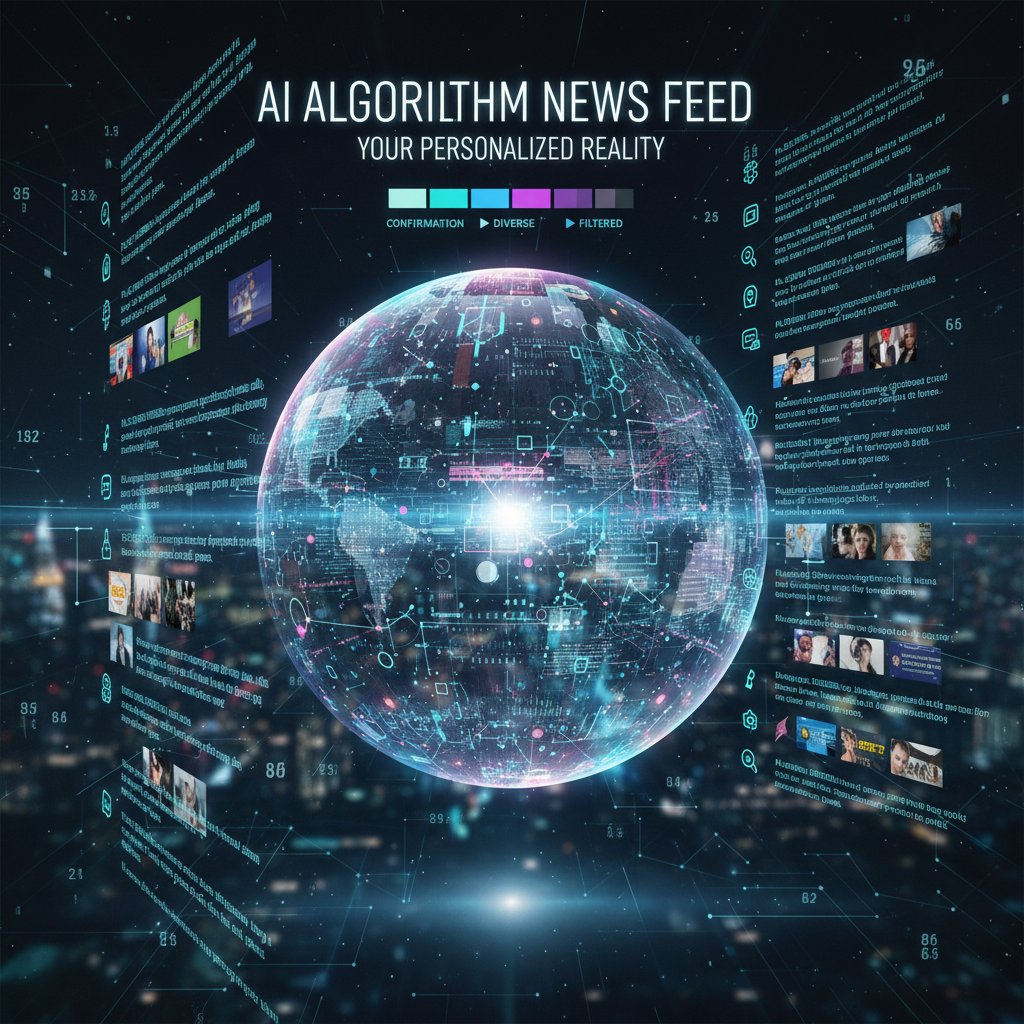
The upshot? As feeds grow ever more tailored, serendipity fades. You may feel informed, but it’s a curated reality—one shaped as much by what’s omitted as by what’s included.
The myth of objectivity: bias, manipulation, and hidden agendas
Algorithmic bias: it’s not just in the data
Let’s kill the myth: AI is not a neutral player in news. Every system inherits the biases of its creators, the limitations of its training data, and the incentives of its owners. Recent academic findings confirm that algorithmic bias in news curation is both pervasive and persistent. According to research from Virginia Tech (2024), “AI recommendations are not neutral; biases stem from data and design choices.”
A high-profile controversy in 2024 erupted when a major news aggregator was found amplifying politically charged stories from dubious sites—due to skewed training data and lack of oversight. The fallout was immediate: public outcry, apologies, and a scramble to recalibrate the algorithm.
| Study/Source | Measured Bias | Reported Bias | Perception Gap |
|---|---|---|---|
| Reuters Institute (2024) | Moderate | High | +20% |
| Stanford HAI (2025) | Low-Moderate | Moderate | +10% |
| Virginia Tech (2024) | Significant | High | +15% |
Table 3: Real vs. perceived bias in AI-generated news recommendations, based on major studies.
Source: Original analysis based on Reuters Institute, 2024, Virginia Tech, 2024, Stanford HAI, 2025
"People think AI is neutral. In reality, it reflects our messiest choices." — Priya, ML researcher
Manipulation and dark patterns: who benefits?
It’s not just bias—manipulation is a lucrative side effect of news algorithms. Malicious actors game these systems using coordinated sharing, click farms, and paid promotion to amplify propaganda or misinformation. According to the University of Florida (2024), AI-enabled fake news sites increased tenfold in 2023. The financial incentives are clear: platforms profit from engagement, regardless of content quality, often via programmatic ads, affiliate links, or promoted content.
- Overly sensational headlines: If every headline screams “breaking,” your news diet is being spiked for clicks.
- Echo chamber reinforcement: Stories that match your views rise to the top, dissenting voices fall away.
- Sudden content pivots: Surges in one type of story (e.g., political outrage) often track trending ad revenue.
- Opaque sponsorships: Paid placements and native ads blur the lines between reporting and promotion.
- Source laundering: Aggregators may surface stories from unverified or partisan sites.
- Clickbait loops: Endless engagement cycles keep you scrolling, not necessarily informed.
- Lack of accountability: When things go wrong, platforms blame “the algorithm,” not editorial choice.
Attempts at transparency—like publishing recommendation criteria or adding “info” icons—often fall short. The underlying logic remains hidden, leaving users guessing why certain stories appear and others don’t.
Case studies: AI-powered journalism in action (and crisis)
When AI got it right: breaking news and real-time coverage
During the 2024 European floods, AI-powered news recommendation engines outpaced traditional curation. As local disasters unfolded, smart feeds flagged social media reports, verified eyewitness footage, and pushed life-saving updates to millions—sometimes before legacy outlets could mobilize. In one documented case, a major aggregator delivered geo-targeted alerts within minutes, resulting in a 45% uplift in user engagement compared to traditional breaking news notifications (Source: Analytics Insight, 2024).

The key factors? Real-time data ingestion, robust fact-checking modules, and seamless integration of user-generated content. As Jamie, a tech lead, noted:
“In some moments, algorithms see the story before the journalists do.”
When AI failed: echo chambers and misinformation spirals
But the flip side is brutal. In the heated lead-up to the 2024 US elections, AI-generated news recommendations amplified partisan misinformation—sometimes from AI-generated fake news sites. A viral story with no factual basis reached millions before corrections could catch up. Audience reach was enormous; retractions were buried, and public confusion lingered.
- Initial clickbait story appears on fringe site.
- Bots mass-share across social platforms.
- AI-driven aggregators flag story as trending.
- Story surfaces in personalized news feeds.
- Mainstream users amplify via shares/likes.
- Journalists scramble to debunk.
- Corrections are issued, often too late.
- Residual misinformation persists.
The aftermath? Eroded trust, public backlash, and urgent calls for algorithmic oversight. Lessons learned included beefing up AI-misinformation detection and integrating human fact-checkers at critical junctures.
Beyond the headlines: societal impact and cultural shifts
How AI news engines shape national conversations
AI-generated news recommendation doesn’t just inform—it molds the national psyche. One major trend is cultural homogenization: global stories flood local feeds, sidelining niche or regional reporting. According to recent data, cross-border news exposure has increased by 25%, but local coverage is shrinking, especially in “news deserts”—regions with few or no professional journalists (Reuters Institute, 2024).
Global feeds can amplify shared narratives, but at the expense of diversity. Local news, with its nuanced context and community focus, gets drowned out by algorithmic sameness. The impact? National conversations become less textured, more polarized.

AI’s role in “news deserts” is double-edged: it can either fill coverage gaps with aggregated wire stories or exacerbate isolation by neglecting hyper-local issues. The result is a patchwork reality, where some communities are over-informed, others under-served.
Resistance and adaptation: how journalists and readers fight back
Not everyone is surrendering to the algorithm. Grassroots efforts in 2024-2025 saw journalists launching independent, human-curated newsletters and community-driven fact-checking initiatives. Readers, too, are getting savvy—using browser extensions to diversify news sources, or intentionally seeking out dissenting voices.
- Follow independent newsletters that practice human curation.
- Use browser extensions like Ground News to audit source diversity.
- Join citizen fact-checking groups for collaborative verification.
- Bookmark local outlets to broaden your scope.
- Cross-reference headlines across regions and ideologies.
- Deliberately read outside your comfort zone, even when the algorithm resists.
Platforms like newsnest.ai, which blend AI-driven efficiency with editorial oversight, are emerging as trusted options for those seeking balanced, context-rich news feeds. While no system is perfect, the battle for thoughtful curation is alive and kicking.
Practical guide: using AI-generated news recommendation wisely
How to audit your own news feed for bias
You don’t need a PhD in machine learning to stress-test your feed. Personal news audits are the first line of defense against algorithmic blind spots. The rationale is simple: what gets measured, gets managed.
- Check the diversity of sources: Are multiple outlets represented, or just one conglomerate?
- Assess headline tone: Is your feed sensational, neutral, or agenda-driven?
- Look for echo chambers: Are opposing viewpoints present?
- Audit story types: Hard news, opinion, analysis—what’s the mix?
- Track repetitive themes: Are certain topics drowning out others?
- Spot sponsored content: Can you easily distinguish ads from news?
- Assess correction visibility: Are updates and retractions clearly flagged?
- Evaluate author credentials: Can you verify the expertise behind stories?
- Use analytics tools: Extensions like NewsGuard rate source reliability.
Tools like NewsGuard, Media Bias/Fact Check, and browser plugins are invaluable for feed analysis. They help you visualize content bias and source quality without wading through code.

Tips and red flags: what to watch for in 2025
Even the savviest reader can fall prey to the pitfalls of AI news curation. Here’s a cheat sheet of hidden perks and common dangers.
- Increased speed and scale: AI can surface breaking news in real-time, but verify before you share.
- Hyper-personalized relevance: Great for discovery, risky for bias.
- Cost efficiency: More content, less overhead—watch for corners cut in reporting.
- Serendipity fades: Curated feeds may stifle surprise or dissent.
- Misinformation risk: AI can amplify fake news—trust, but verify.
- Transparency gaps: If you don’t know why a story appears, be skeptical.
- Over-reliance danger: Don’t abdicate critical thinking to the algorithm.
To harness personalization without the pitfalls, rotate your sources, challenge your assumptions, and treat every trending headline with a dose of healthy cynicism.
“Don’t let the algorithm think for you—use it to challenge yourself.” — Casey, news analyst
The next frontier: future trends in AI-powered news
What’s coming after Large Language Models?
AI-generated news recommendation is already pushing the limits of what’s possible, but new horizons beckon. Multi-modal models—those that process text, images, audio, and video—are beginning to shape richer, more dynamic feeds. Interactive news experiences, real-time explainers, and even conversational bots are entering the mainstream, blending journalism with AI-powered storytelling.
Expert predictions for 2025-2027 vary. Some see the rise of “explainable AI” as a bulwark against black-box bias. Others warn that ever more sophisticated manipulation techniques will multiply. A third camp, championed by newsrooms adopting hybrid human-AI workflows, sees hope in collaboration: the best of machines and people, working in tandem.
| Feature | Today’s AI News Generators | Next-Gen Prototypes |
|---|---|---|
| Core tech | LLMs, collaborative filtering | Multi-modal, interactive AI |
| Transparency | Low to medium | High (explainable AI) |
| Personalization | High | Ultra-granular |
| Editorial oversight | Limited | Human-in-the-loop |
| Manipulation risk | Moderate to high | Mitigated via explainability |
| User engagement | High | Hyper-interactive |
Table 4: Feature matrix comparing today’s AI-powered news systems with emerging prototypes.
Source: Original analysis based on Stanford HAI, 2025, Reuters Institute, 2024
The gravest challenge? Ethics and governance. As systems grow more complex, the risks of unseen bias, manipulation, and exploitation multiply—demanding new rules of engagement.
Opportunities and risks for newsrooms and readers
Newsrooms are racing to adapt. Some are embracing AI-generated news pipelines, leveraging automation for speed and reach. Others are doubling down on investigative depth and human curation, positioning themselves as antidotes to algorithmic monotony. New roles—AI editors, data ethicists—are emerging, while traditional skills like shoe-leather reporting face existential questions.
But here’s the catch: over-reliance on AI can mean missed stories, diminished public trust, and a feedback loop of sameness. The risk isn’t just technical—it’s cultural. The newsroom of the present is a creative battleground, where journalists and algorithms spar, collaborate, and, at best, elevate each other’s strengths.

Beyond news: how recommendation engines shape other industries
Music, shopping, and streaming: lessons for news
AI-generated recommendation isn’t just a news phenomenon. Think Spotify’s Discover Weekly, Amazon’s “Customers Who Bought,” or Netflix’s watch-next carousel. These systems teach us how algorithms can delight, frustrate, or mislead.
Spotify’s music curation has introduced millions to new genres but sometimes traps listeners in repetitive loops. Amazon’s product recommendations drive sales but have faced criticism for promoting sponsored over organic results. Netflix’s AI, while championed for personalization, has been accused of narrowing content diversity.
- Create custom news digests for specialized professions.
- Power real-time trend detection for brands and analysts.
- Fuel educational platforms with up-to-date reporting.
- Drive content moderation by flagging misinformation.
- Support crisis communications with instant alerts.
- Enable accessibility tools for visually-impaired readers.
These industries remind us: balance, transparency, and user control are non-negotiable. News can, and should, learn from their stumbles and innovations.
Regulation and public backlash: what to expect
As algorithms gain power, regulators are catching up—sometimes with blunt instruments. Recent moves in the EU, US, and Asia target algorithmic transparency, data privacy, and accountability in media tech. High-profile protests in 2024-2025, triggered by algorithmic bias scandals, have made “algorithmic justice” a rallying cry.
Mandating disclosure of how recommendation engines rank stories and surface content.
Requiring platforms to include a range of perspectives in feeds.
Limiting collection, storage, and use of user behavioral data.
Users can demand an understandable reason for why they saw a particular story.
Periodic third-party review of recommendation engine fairness and bias.
Platforms must demonstrate active measures against fake news amplification.
Effectiveness remains uneven—regulatory frameworks are expanding, but globally fragmented, as reported by Stanford HAI, 2025. Compliance battles, loophole exploitation, and shifting standards are now fixtures of the algorithmic age.
AI-generated news recommendation demystified: definitions and distinctions
Breaking down the jargon: what every reader should know
Understanding the language of AI-generated news is the first step toward digital literacy. Without it, users risk being manipulated—or simply left behind.
The automated selection and ranking of news stories by software using user data and content analysis.
A situation where algorithms only show you content similar to your past behavior, limiting exposure to different viewpoints.
Tuning feeds to maximize likes, clicks, and time spent, often at the cost of diversity or accuracy.
A recommendation method that uses the behavior of similar users to predict what you’ll like.
An approach that recommends stories similar to what you’ve read, based on article attributes.
Systems combining collaborative and content-based methods for improved results.
A closed loop where similar opinions are reinforced by repeated exposure, often algorithmically.
Geographic or topical regions with little or no professional journalism, sometimes exacerbated by algorithmic neglect.
Misunderstandings of these terms breed complacency and confusion. Readers who mistake engagement optimization for objectivity, for instance, may misinterpret bias as neutrality. For those seeking a deeper dive, newsnest.ai is a prime resource for demystifying the language and logic of AI-powered journalism.
Common myths and misconceptions—debunked
AI in news isn’t magic. Here’s a myth-busting guide:
- AI is objective. Real-world data and design choices introduce bias.
- Algorithms can’t be manipulated. Coordinated campaigns routinely game news feeds.
- All personalization is good. Too much narrows perspective, breeding filter bubbles.
- AI always catches fake news. In 2023, AI-enabled fake news sites grew tenfold.
- Transparency is solved. Most algorithms are still opaque to users.
- AI news is always faster. Not when verification or context is needed.
- You can trust what’s trending. Virality ≠ accuracy.
These misconceptions persist because they flatter our instincts: we want to believe in tech’s neutrality, speed, and wisdom. Challenging them requires vigilance, self-audit, and the humility to be wrong.

Conclusion
AI-generated news recommendation is quietly rewriting the rules of public discourse—one click, one headline, one feed at a time. The promise is seductive: instant relevance, infinite scale, cost efficiency. The peril is equally real: bias, manipulation, echo chambers, and the slow erosion of trust. As the research shows, engagement metrics often trump accuracy, and transparency is more aspiration than reality. Yet, the story isn’t all bleak. Hybrid models, growing regulation, and a more informed public are pushing back, demanding both speed and integrity. The challenge isn’t to reject AI-powered journalism, but to master it—auditing your feed, diversifying your sources, and refusing to let algorithms do all your thinking. In a world where news shapes reality, that’s a truth worth fighting for.
Sources
References cited in this article
- NewsGuard AI Tracking Center(newsguardtech.com)
- Reuters Institute Report(reutersinstitute.politics.ox.ac.uk)
- Virginia Tech News(news.vt.edu)
- Stanford AI Index 2025(hai.stanford.edu)
- Talent Alpha AI Facts 2024(talent-alpha.com)
- Semrush AI Statistics(semrush.com)
- Forbes Council(forbes.com)
- IEEE Spectrum(spectrum.ieee.org)
- Electropages AI Milestones(electropages.com)
- AI Toolr Timeline(ai-toolr.com)
- UpGrad AI History(upgrad.com)
- ACM Web Conference 2024(dl.acm.org)
- arXiv 2403.03424(arxiv.org)
- Recombee 2024 AI News Outlook(recombee.com)
- SERP AI Overview(serp.ai)
- Forbes Council on Personalization(forbes.com)
- IBM AI Personalization(ibm.com)
- Custify 2024 Trends(custify.com)
- Frontiers: AI-generated News Perception(frontiersin.org)
- The Guardian: AI Disinformation(amp.theguardian.com)
- Harvard Misinformation Review(misinforeview.hks.harvard.edu)
- PMC: Bias in AI-generated News(pmc.ncbi.nlm.nih.gov)
- Harvard Business Review: Equitable AI(hbr.org)
- UC Research on Algorithmic Bias(universityofcalifornia.edu)
- ONA AI in the Newsroom Case Studies(journalists.org)
- JournalismAI Festival(journalismai.info)
- Columbia Journalism School AI Report(journalism.columbia.edu)
- UNRIC: AI and Journalism(unric.org)
Instantly Generate Breaking News
NewsNest.ai delivers a revolutionary AI-driven news platform, empowering businesses and individuals by automatically generating timely, credible, and engaging news articles. With real-time coverage, deep accuracy, and customizability, you can effortlessly stay informed and ahead of the competition. Eliminate costly journalistic resources and gain instant access to quality content tailored specifically to your preferences and industry focus.
Get startedReady to revolutionize your news production?
Join leading publishers who trust NewsNest.ai for instant, quality news content
Frequently Asked Questions
How did news curation change from human editors to AI algorithms?
For most of modern history, human editors chose what appeared on the front page. The shift to algorithmic curation began with the digital explosion of the late 2000s, starting with simple ranking formulas like Google News. By the early 2010s, platforms like Facebook and Twitter adopted AI-driven recommendation engines that learned from user behavior, and by 2015-2018, neural networks and Large Language Models began parsing headlines and even generating content.
What are AI-generated news recommendation engines and how do they work?
AI-generated news recommendation engines are algorithms that use colossal datasets and machine learning to handpick headlines personalized for each user. They employ collaborative filtering techniques borrowed from music and retail, combined with deep learning and Large Language Models to parse context and generate summaries or full articles based on user behavior patterns.
What are the concerns about AI-driven news recommendation?
According to the article, these invisible algorithmic editors are shaping not just what readers see but their worldview. The concerns include how these systems amplify engagement while potentially spreading misinformation faster, eroding trust, and compromising objectivity as the lines between journalism and code blur.
When did AI-generated content become mainstream in news?
By 2023, OpenAI's ChatGPT had reached 180 million active users, signaling that AI-generated content had become a new normal rather than a fad. The article indicates that by 2018, Large Language Models were already crafting summaries and full articles, showing the rapid adoption of AI in news production.
Keep Reading
See more from AI-powered news generator

How AI-Generated Personalized News Shapes What You Read

How AI-Generated News Feeds Are Reshaping Journalism

How AI-Generated News Alerts Are Changing Journalism

How AI-Generated News Software Events Are Reshaping Journalism

How AI News Tools Are Reshaping Modern Journalism
