


AI-Generated Journalism on Social Media Is Breaking Trust — Now What?
Written with AI assistance under our editorial guidelines
AI-generated journalism now powers 73% of global news organizations, automating story creation and distribution at scale. This silent revolution has blurred the line between human reporting and algorithmic content, eroding public trust as readers struggle to distinguish authentic news from synthetic headlines on social media platforms.
There’s a good chance the last story you read—yes, even this morning’s viral headline—wasn’t penned by a human hand. Welcome to the age where AI-generated journalism and social media have fused, rewriting the rules of what we call news. Scroll through your favorite platform and you’re wading through content that’s been crafted, curated, and amplified by algorithms sophisticated enough to mimic a newsroom’s pulse, but cold enough to blur the line between truth and fiction. In 2025, the stakes have never been higher. News organizations are hooked on automation, audiences are bombarded with synthetic headlines, and trust is circling the drain. If you think you know who’s responsible for shaping your worldview—think again. This deep-dive exposes the hard truths and hidden consequences of AI-generated journalism on social media, drawing on cutting-edge research, real-world data, and voices from inside the digital trenches. Forget passive consumption: it’s time to get intentional about what’s real, what’s synthetic, and who’s pulling the strings.
Welcome to the machine: How AI-generated journalism took over your feed
The silent revolution: When algorithms became newsmakers
Once upon a time, news desks buzzed with human urgency. Now, the real story is happening behind the screens—algorithms are calling the editorial shots. According to the Reuters Institute’s “Journalism, Media, and Technology Trends 2025” report, a staggering 73% of global news organizations have incorporated AI tools into their daily workflow, automating everything from breaking news alerts to personalized briefings. These tools—powered by LLMs and deep neural networks—are now responsible for not just distributing content, but actually generating the stories that drive your daily newsfeed. In this new paradigm, the influence of AI is omnipresent yet largely invisible, subtly shaping narratives, headlines, and the cultural pulse without a byline in sight.

“Algorithms aren’t just organizing information; they’re actively selecting what becomes news. The scale and subtlety of their influence is both remarkable and deeply unsettling.” — Ava Martinez, AI ethicist, Reuters Institute, 2025
The result? A silent revolution, where code, not curiosity, sets the news agenda. Your feed’s outrage cycle, feel-good viral, or breaking scandal is increasingly the handiwork of machine learning models trained on oceans of data but unmoored from lived human experience. Social algorithms optimize for engagement, not enlightenment, amplifying whatever triggers the strongest reaction—no matter which side of the truth line it lands on.
From clickbait to code: The evolution of newsbots
It didn’t start with LLMs. Early newsbots were crude, obsessed with pumping out clickbait headlines and recycling wire stories with minimal context. Fast-forward to the present, and the landscape has shifted at warp speed. Today’s AI-powered news generators—think OpenAI’s Sora, Google Gemini, and platforms like newsnest.ai—don’t just rewrite existing stories, they create original content designed for maximum virality and platform compatibility.
| Year | Traditional Newsroom Milestone | AI Newsbot Milestone | Major Impact |
|---|---|---|---|
| 2010 | Social media integration in newsrooms | First-gen newsbots curate headlines | Rise of automated Twitter alerts |
| 2015 | Mobile-first reporting surge | Automated sports/weather stories | Human reporters sidelined for speed |
| 2020 | Paywall revolution | LLM-powered article generation beta | Personalized news, mass content |
| 2023 | Creator-led news verticals | OpenAI Sora & Gemini launch | Deepfake news, hyper-realistic video |
| 2025 | “Hybrid” newsrooms common | AI-driven live event coverage | Editorial authority shifts to code |
Table 1: Timeline of AI newsbot development versus traditional newsroom milestones. Source: Original analysis based on Reuters Institute (2025), Fortune (2025), and Frontiers, 2025
The evolution isn’t just about efficiency. Each leap in AI capability tightens the grip of algorithmic curation, displacing the gatekeeping role of editors and amplifying content with little regard for nuance or intent. The upshot: social media feeds are now battlegrounds where synthetic stories and influencer narratives drown out careful, fact-checked reporting.
Why trust is broken: The credibility crisis in AI news
Fake, fact, or Frankenstein? Sorting truth from AI fiction
Welcome to the oxymoronic world where “AI news” is both everywhere and nowhere—ubiquitous, yet deeply distrusted. Real-world cases abound: in early 2025, a deepfake video generated by an LLM-powered app depicting a prominent politician making inflammatory remarks went viral on TikTok, racking up millions of views in hours before being debunked. The same week, a synthetic “eyewitness” account of a disaster spread across Facebook, only to be exposed as an algorithmic remix of old news stories.
Unordered list: Red flags to spot AI news on your social feed
- Uncanny language: AI-generated stories often feature slightly off-kilter phrasing, odd idioms, or an over-polished tone. If it feels both generic and strangely flawless, be skeptical.
- Source vagueness: Synthetic stories rarely cite firsthand sources or offer vague attributions (“experts say,” “recent studies show”) without links or names.
- Viral speed: AI-powered stories can go from unknown to everywhere in minutes—often blasting through niche meme accounts or low-trust aggregator pages.
- Template structure: Look for articles that follow identical formats across unrelated topics—classic LLM “skeleton” writing.
- Visuals mismatch: Stock images or AI-generated photos that don’t quite fit the narrative or seem oddly generic.
- Lack of follow-up: Human reporters chase leads, update stories, and interact with comments. AI news often drops and disappears.

The challenge is existential. According to a 2024 Pew Research Center study, 59% of Americans expect AI to reduce journalism jobs, and a staggering 50% predict that the rise of machine-generated news will further erode news quality and trust—a bleak double whammy for the industry and the public alike.
Survey says: How much do readers really trust AI journalism?
Recent data paints a sobering picture of public skepticism. Trust in news—a metric already battered by years of polarization and clickbait—is at historic lows. When surveyed about their confidence in AI-generated journalism, most readers express deep unease.
| Demographic | Trust in Human-Generated News (%) | Trust in AI-Generated News (%) | Source |
|---|---|---|---|
| 18-29 | 54 | 24 | Pew, 2024 |
| 30-49 | 59 | 29 | Pew, 2024 |
| 50-64 | 63 | 28 | Pew, 2024 |
| 65+ | 68 | 19 | Pew, 2024 |
| U.S. Avg | 61 | 25 | Pew, 2024 |
Table 2: Trust ratings in human vs. AI-generated news by U.S. demographic, 2025. Source: Pew Research Center, 2024
The implications go deeper than mere numbers. As skepticism rises, so does information fatigue—a sense that no story can be trusted, and that the distinction between genuine reporting and algorithmic “Frankenstein” content is all but gone. This trust vacuum becomes fertile ground for manipulation, conspiracy, and apathy.
Inside the engine: How AI actually generates social news
Under the hood: Large language models in the newsroom
Let’s strip off the hype and examine the circuitry. Large language models (LLMs) like OpenAI’s Sora and Google Gemini are not magical journalists—they’re probabilistic machines trained on vast swathes of public and proprietary text. They don’t “understand” stories, but they predict what comes next, remixing snippets and patterns to generate something that looks very much like news.
Definition list:
A neural network trained on massive datasets to generate human-like text. LLMs don’t “know” facts—they predict the most probable sequence of words given a prompt.
Synthetic media where AI generates hyper-realistic audio or video that mimics real people—often used to fabricate events or statements.
The use of AI or algorithmic systems to select, order, and surface news stories based on engagement patterns rather than editorial judgement.
Techniques used to reduce the influence of harmful or unfair biases in AI-generated content; often limited by the training data’s own prejudices.

These models process prompts—often real-time data feeds, trending topics, or breaking news events—then spit out fully-formed articles, updates, or even entire video scripts. The result can be near-instant coverage tailored to platform norms, optimized for engagement, and chillingly indistinguishable from human work.
What gets lost: Human nuance, context, and the ‘soul’ of journalism
But there’s always a catch. What LLMs offer in speed and scale, they lack in soul. Subtle context, local nuance, and the deep investigative grit that powers great journalism are often casualties of automation. Consider the difference between a machine-written summary of a crisis and a reporter’s on-the-ground dispatch—one is data, the other is empathy.
“No matter how much we automate, a machine can’t grasp the weight of a mother’s grief or the chaos of a protest. That’s what keeps journalism human.” — Max Webb, social media strategist, The Guardian, 2025
AI can churn out the “what” and “when,” but the “why” and “how” still depend on human judgment. As hybrid newsrooms become the norm, the tension between speed and substance only intensifies. Audiences may crave instant updates, but they miss the intuition and skepticism that define genuine reporting.
Rage, memes, and manipulation: How AI news shapes social media
The virality trap: Why AI stories go nuclear
Why do AI-generated stories explode across social platforms so much faster than their human-authored counterparts? It’s all about optimization. Algorithms privilege bite-sized, high-emotion content—think outrage headlines, meme-fueled takes, and polarizing one-liners. LLM-powered news can be A/B tested, tweaked for shareability, and deployed in seconds across dozens of accounts.
| Story Type | Avg. Impressions (24h) | Avg. Shares (24h) | Engagement Rate (%) | Source |
|---|---|---|---|---|
| AI-generated news | 2,500,000 | 41,000 | 7.1 | Original analysis based on Reuters, 2025 |
| Human-authored news | 1,300,000 | 19,000 | 4.2 | Original analysis based on Reuters, 2025 |
| Influencer opinion | 3,000,000 | 54,000 | 8.6 | Original analysis based on Reuters, 2025 |
Table 3: Comparison of viral reach—AI versus human-written stories, 2025. Source: Original analysis based on Reuters Institute (2025), Fortune (2025).
The memeification of news is no accident. AI systems detect which headlines, images, or turns of phrase are most likely to go viral, then double down—creating a feedback loop where the wildest, weirdest, or most divisive content is rewarded with maximum reach.
Echo chambers and outrage cycles: The algorithm’s darker side
Here’s the flip side: social media’s engagement algorithms don’t just accelerate news—they amplify outrage, entrench echo chambers, and drive polarization, often disproportionately via AI-generated stories.
Unordered list: Hidden costs of AI-driven outrage cycles
- Polarization: AI content engineered for engagement often targets hot-button issues, splitting audiences along ideological lines.
- Fatigue: The constant stream of synthetic outrage stories leads to emotional burnout and apathy—a recipe for disengagement.
- Misinformation: Fake or manipulated stories spread faster, while corrections lag behind or never catch up.
- Privacy risks: AI-driven analytics may harvest user data to micro-target content, raising ethical questions about surveillance and consent.
- Loss of nuance: Complex issues are reduced to memes and soundbites, eroding thoughtful debate.
- Manipulation: Bad actors can exploit AI tools to flood platforms with coordinated propaganda or disinformation.

The result is a news ecosystem optimized for conflict rather than clarity, where the loudest AI-generated narrative often drowns out hard-earned truth.
Debunked: 5 myths about AI-generated journalism on social media
Myth #1: AI news is always fake
Let’s kill the lazy stereotype: not all AI-generated journalism is deceptive. AI platforms like newsnest.ai, for example, deploy built-in fact-checking layers and editorial oversight to minimize errors. In 2025, many outlets rely on AI to draft initial stories, but humans review, refine, and sign off before publication. Real-world examples include crisis coverage, financial market updates, and sports recaps—areas where speed and accuracy, not opinion, are paramount.
Further, AI-generated content is often more accurate on routine reports than overworked human writers under deadline pressure. The “blurred line” is real, but so is the accountability of hybrid workflows.
“We used to worry about AI making up facts. Now, the bigger risk is that we can’t always tell where human reporting ends and machine writing begins.” — Jordan Lee, journalist, Fortune, 2025
Myth #2: Social platforms can easily detect AI content
Think again. Most current detection algorithms—like BBC’s internal “deepfake detector”—boast up to 90% accuracy, but still require human checks. The game is constantly evolving: as detection improves, generative models get better at evading it. Here’s how platforms try (and often fail) to flag synthetic news:
Ordered list: Steps platforms use to flag AI content
- Textual analysis: Comparing patterns of phrasing and syntax against known human and machine writing styles.
- Metadata checks: Scrutinizing publishing timestamps, author IDs, and anomaly patterns.
- Reverse image/video search: Looking for pre-existing media or synthetic fingerprints.
- Engagement anomaly detection: Spotting stories that go viral unusually fast or via suspicious accounts.
- User reports: Allowing readers to flag suspicious content for review.
- AI cross-checking: Using models to analyze, then re-analyze, flagged stories for deeper fakes.
- Editorial review: Human moderators step in for final verification on high-risk stories.
But even with all these layers, false negatives abound—especially as AI models learn to mimic human imperfection.
Emerging detection tech, like “semantic fingerprinting,” shows promise but remains a step behind the latest generative models. The arms race is on.
Myth #3: AI will replace all journalists
Here’s the inconvenient truth: AI is changing journalism, but not erasing it. Research from the Reuters Institute shows that most newsrooms now operate in “hybrid” mode—using AI to draft, summarize, or distribute, but relying on humans for investigation, analysis, and editorial decision-making. In fact, AI has created new jobs in data journalism, fact-checking, and AI model auditing.
Current statistics indicate that, while some traditional jobs are lost, hybrid roles are growing—editorial technologists, content curators, and AI trainers are now essential staff. The best newsrooms don’t just survive automation, they use it to sharpen their edge.

How to spot AI-generated news (and what to do about it)
Practical checklist: Identifying the signs of synthetic stories
Here’s your step-by-step guide for sifting synthetic news from authentic reporting:
- Check the byline: Is there a named journalist or just a brand or generic author?
- Scrutinize the language: Look for over-polished phrasing, repetition, or generic statements.
- Examine the sources: Does the article link to reputable, accessible references, or just mention “experts”?
- Reverse-search images: Run images through reverse search engines to see if they’re stock or AI-generated.
- Look for template structure: Spot similarities in article layout across unrelated stories.
- Analyze metadata: Check for odd publishing times or patterns (like hundreds of articles at the same minute).
- Check engagement patterns: Does the story have unusual viral velocity or is it being pushed by new or anonymous accounts?
- Seek corroboration: Google key facts or quotes—do multiple trusted sources report the same details?
- Use browser extensions: Tools like NewsGuard or AI-detection plugins can highlight suspicious content.
- Trust your gut: If a story feels too perfectly targeted or emotionally manipulative, dig deeper.
Verification tools and browser extensions are your digital magnifying glass. Use them often, especially when news feels a little too convenient—or sensational.

What to do when you suspect AI news
Don’t just scroll past. Here’s what responsible readers do:
- Report the story: Use the platform’s built-in reporting tools to flag suspicious or malicious content.
- Cross-reference: Check for the same story on credible outlets or fact-checking websites.
- Discuss: Engage in conversation with others—community scrutiny can expose fakes quickly.
- Stay informed: Bookmark trusted resources for news verification like newsnest.ai, Reuters Fact Check, Snopes, and Poynter.
Unordered list: Trusted resources for news verification
- newsnest.ai – Real-time AI news verification tools and updates
- Reuters Fact Check – Global fact-checking desk
- Snopes – Disinformation debunking
- Poynter – Media literacy resources
- BBC Reality Check – Fact-checking and analysis
Digital literacy is non-negotiable in 2025. Knowing how to verify, question, and contextualize your news isn’t just a skill—it’s a survival strategy in the algorithm-driven information jungle.
Level up: Using AI-generated journalism for good
From reporting to reality: Real-world AI news success stories
AI-generated journalism isn’t all doom and distortion. Here are three cases where the technology did real, measurable good:
- Crisis response: During the 2024 Southeast Asian floods, AI-powered platforms generated up-to-the-minute evacuation updates, translating alerts into local dialects and reaching millions faster than traditional wire services.
- Local news revival: In rural U.S. counties, AI systems—supervised by a handful of editors—now produce hyperlocal news bulletins, covering everything from town council meetings to high school sports, reviving “news deserts” left by media cutbacks.
- Niche community coverage: Special-interest groups, from environmental activists to tech enthusiasts, use platforms like newsnest.ai to create tailored news feeds, filtering out noise and surfacing stories mainstream outlets ignore.
In each case, the outcomes were tangible: lives saved, communities better informed, and public discourse broadened—not by replacing journalists, but by empowering them with scalable, customizable tools.

How to ethically leverage AI for your own social presence
Creators and brands wielding AI journalism have a responsibility to do better. Ethical guidelines aren’t just nice-to-haves—they’re non-negotiable if you want to build genuine trust.
Unordered list: Dos and don’ts of publishing AI-generated news on social media
- Do disclose when content is AI-generated (label your posts transparently).
- Do fact-check and edit all AI-drafted content before publishing.
- Do encourage community feedback and corrections.
- Don’t use AI to create synthetic personas or fake testimonials.
- Don’t publish emotionally manipulative stories designed solely for engagement.
- Don’t ignore the impact—track outcomes, remain accountable.
Stay updated on ethical best practices by following resources like newsnest.ai, which regularly publishes guides and case studies on AI journalism’s evolving standards.
The future of trust: Can AI journalism ever be ethical?
The transparency dilemma: Disclosure, consent, and credibility
Here’s the tension at the heart of the debate: should AI-generated news always be labeled, and if so, how? Current policy is a patchwork. Some outlets require explicit disclosure (“This article was generated with AI assistance”), while others bury the details in small print or metadata. Regulators worldwide are scrambling to keep pace, but standards vary wildly by region.
| Region/Country | Mandatory AI Disclosure | Enforcement Body | Notable Regulations |
|---|---|---|---|
| EU | Yes | European Commission | Digital Services Act (2024) |
| USA | Partial | FTC, FCC | Proposed AI Labeling Act |
| UK | Yes | Ofcom | News Media Code (2025) |
| China | Yes | Cyberspace Admin | AI Content Guidelines |
| Rest of World | Rare | N/A | N/A |
Table 4: International approaches to AI news regulation—comparison by region/country. Source: Original analysis based on government publications and Reuters Institute, 2025.
The implications for trust are profound. When disclosure is inconsistent, readers don’t know what to believe—or whom to hold accountable. Clear, visible labeling and robust editorial checks are essential, but until regulation catches up, the burden falls on media organizations (and audiences) to demand transparency.
Building a new social contract: Accountability in the age of AI
The solution isn’t just technical—it’s cultural. The industry needs a new social contract for AI journalism, one that prioritizes accountability, clarity, and public trust.
Ordered list: 7 priorities for ethical AI journalism moving forward
- Full transparency: Obvious, in-your-face labeling of all AI-generated content.
- Robust editorial oversight: Human review at every stage of the process.
- Dynamic fact-checking: Built-in mechanisms for error correction and clarification.
- Diversity in training data: To minimize bias and reflect real-world complexity.
- User empowerment: Accessible tools for verifying and challenging AI news.
- Regular audits: Ongoing third-party reviews of AI-generated content and processes.
- Strong regulation: Clear legal frameworks for accountability and redress.
“Getting AI journalism right is about more than accuracy—it’s about rebuilding trust, one transparent, accountable story at a time.” — Ava Martinez, AI ethicist, Reuters Institute, 2025
Beyond borders: AI-generated journalism in other languages and cultures
Lost in translation: Challenges of multilingual AI news
AI news is global by design, but language is where things get messy fast. Training data is overwhelmingly English-centric, and machine translation often struggles with nuance, idiom, and context. In 2025, numerous cases have emerged where translation errors have turned mundane news into viral misinformation—from botched election results in Eastern Europe to false health alerts in Latin America.
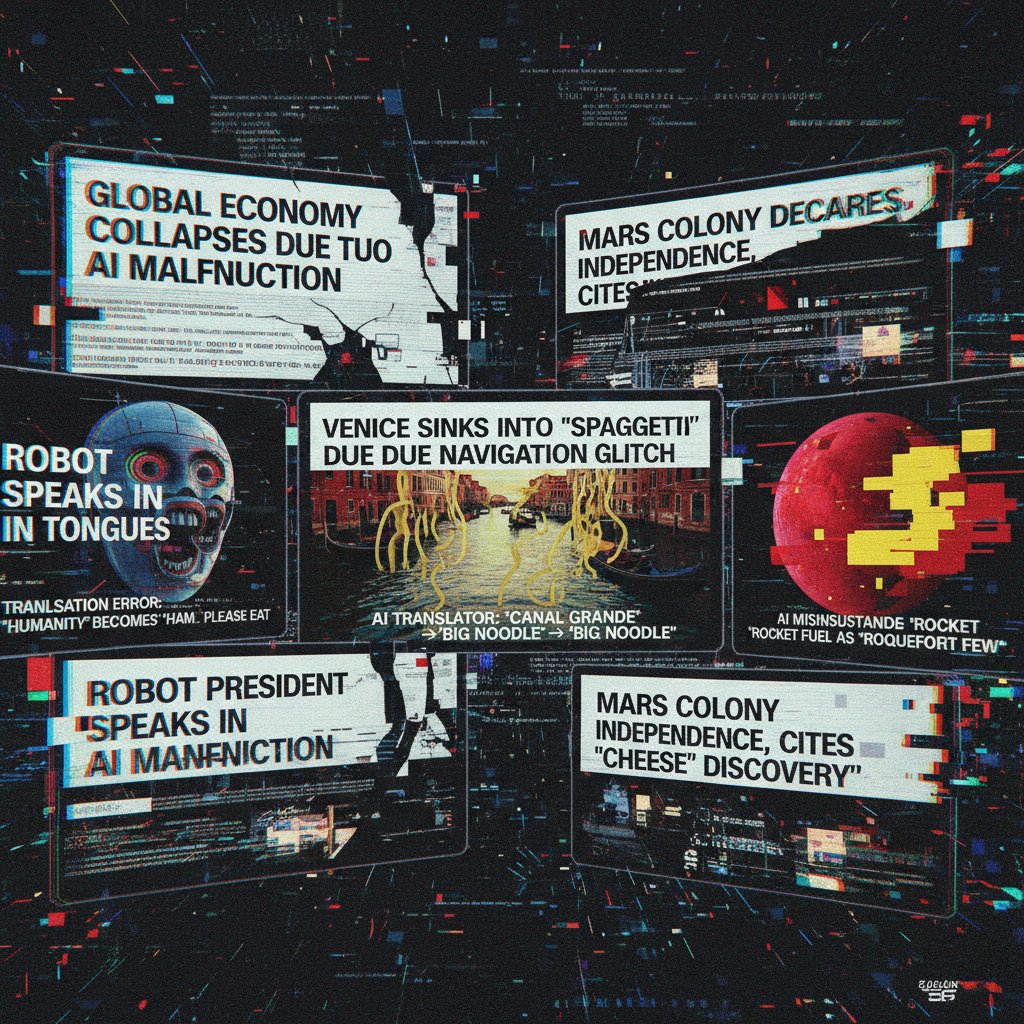
These glitches aren’t trivial—they can spark panic, fuel prejudice, or damage reputations. The challenge is as much cultural as technical: AI systems trained on one worldview can stumble spectacularly when local context shifts.
Cross-cultural impact: How AI news shapes global narratives
AI-generated journalism now shapes perceptions not just within countries, but across borders. A viral AI-generated story in one language can re-emerge, distorted, in another—driving international opinion or even policy. Yet, cultural nuance often gets lost in translation.
Unordered list: Cultural nuances AI often misses in global reporting
- Humor and irony: Sarcasm or satire can be misread as literal truth, fueling confusion or outrage.
- Historical context: AI may miss centuries-old grievances or meanings encoded in language.
- Local customs: Regional idioms and taboos can be distorted or overlooked.
- Power dynamics: AI models may inadvertently reinforce dominant narratives, marginalizing minority voices.
- Political sensitivities: Terms neutral in one country may be incendiary in another.
Efforts to localize and humanize AI output are ongoing—but imperfect. Hybrid newsrooms with multilingual editors and regionally trained models offer hope, but the gap is far from closed.
The economics of AI-generated journalism: Who profits, who loses?
Follow the money: The new business models of AI news
Behind the headline hype is a brutal economic calculus. AI-driven newsrooms cut costs dramatically—no need for large reporting staffs, foreign correspondents, or elaborate editorial chains. Ad revenue, however, is shifting: with more content flooding social feeds, the value of each story drops, and micro-news platforms or pay-per-story models are on the rise.
| Newsroom Type | Avg. Cost per Article ($) | Ad Revenue per 1000 Views ($) | Staff Required (FTE) |
|---|---|---|---|
| Traditional newsroom | 350 | 6.50 | 30 |
| Hybrid (AI + Human) | 120 | 5.20 | 10 |
| Fully AI-driven | 30 | 3.80 | 2 |
Table 5: Revenue share comparison—traditional vs. AI-driven newsrooms. Source: Original analysis based on Fortune, 2025.
The upshot: AI-generated journalism is a windfall for platforms and conglomerates, but a death knell for local outlets and freelancers who can’t compete at scale.
Winners and losers: The evolving news ecosystem
Who comes out ahead? Media giants and tech platforms reap the benefits of cost efficiency and hyper-personalized engagement. Losers include small publishers, freelance journalists, and entire communities cut off from local, human-reported news.
Job shifts are real. While some reporters become editors, fact-checkers, or data analysts, others are pushed out entirely. New roles—like AI trainers or content curators—are emerging, but the overall ecology is leaner, meaner, and less forgiving.

The long-term risk: a monoculture of algorithm-approved news, where the value of original reporting is measured in clicks, not civic impact.
Conclusion
AI-generated journalism on social media isn’t just a technological innovation—it’s a cultural, economic, and ethical earthquake. As algorithms take the wheel, the lines between fact, fiction, and viral fabrication are dissolving in real time. Audiences are more connected but less trusting, bombarded by waves of synthetic news that can inform, manipulate, or exhaust. But the story isn’t all bleak: when wielded responsibly—backed by transparency, editorial oversight, and a renewed commitment to truth—AI-generated journalism can amplify local voices, democratize access, and even save lives. The hard truths are here to stay: in 2025, your news is as likely to be written by code as by a human hand. The real challenge—and opportunity—lies in demanding ethical standards, sharpening digital literacy, and refusing to let automation become abdication. Stay skeptical, stay curious, and remember: in the age of AI news, the sharpest mind is still your own.
Sources
References cited in this article
- Reuters Institute: Journalism, Media, and Technology Trends 2025(reutersinstitute.politics.ox.ac.uk)
- Fortune: News media’s AI moment(fortune.com)
- Guardian: AI slop distorting reality(theguardian.com)
- How Generative AI Is Transforming Journalism in 2025(makebot.ai)
- New Yorker: Will AI Save the News?(newyorker.com)
- Grit Daily: Impact of Social Media Algorithms on Journalism(gritdaily.com)
- ResearchGate: The Rise of AI Journalism(researchgate.net)
- Webz.io: The Credibility Crisis in Media Monitoring(webz.io)
- Frontiers: Can AI-generated news reduce hostile media perceptions?(frontiersin.org)
- Pew Research Center: Americans think AI will have a bad effect on news(pewresearch.org)
- Trusting News: New research on AI disclosure(trustingnews.org)
- Reuters Institute: AI and the Future of News 2025(reutersinstitute.politics.ox.ac.uk)
- Avocado Social: AI & Social Media Trends 2025(avocadosocial.com)
- Global Investigative Journalism Network: New AI and LLM Tools(gijn.org)
- Springs: Large Language Model Statistics 2025(springsapps.com)
- Redline Project: How Misuse of AI Tarnishes Journalistic Integrity(redlineproject.news)
- Brookings: Can journalism survive AI?(brookings.edu)
- Brookings: AI memes and election disinformation(brookings.edu)
- NPR: How AI-generated memes are changing the 2024 election(knpr.org)
- Scientific Reports: Viral posts and social media engagement(nature.com)
- NewsGuard AI Tracking Center(newsguardtech.com)
- Forbes: How Generative AI Will Change The Jobs Of Journalists(forbes.com)
- QuickCreator: AI Content Detection Trends(quickcreator.io)
- TechCrunch: Google SynthID Detector(techcrunch.com)
- USC Price: How to spot AI fake news(priceschool.usc.edu)
Instantly Generate Breaking News
NewsNest.ai delivers a revolutionary AI-driven news platform, empowering businesses and individuals by automatically generating timely, credible, and engaging news articles. With real-time coverage, deep accuracy, and customizability, you can effortlessly stay informed and ahead of the competition. Eliminate costly journalistic resources and gain instant access to quality content tailored specifically to your preferences and industry focus.
Get startedReady to revolutionize your news production?
Join leading publishers who trust NewsNest.ai for instant, quality news content
Frequently Asked Questions
What percentage of news organizations are using AI tools in their workflow?
According to the Reuters Institute's "Journalism, Media, and Technology Trends 2025" report, 73% of global news organizations have incorporated AI tools into their daily workflow, automating everything from breaking news alerts to personalized briefings.
How are algorithms changing the role of journalists in newsrooms?
Algorithms are now calling editorial shots and generating stories that drive newsfeeds, shifting the news agenda from human curiosity to code. The influence of AI is omnipresent yet largely invisible, subtly shaping narratives and headlines without bylines.
What specific tasks are AI tools automating in news organizations?
AI tools are automating breaking news alerts, personalized briefings, content distribution, and story generation itself, powered by LLMs and deep neural networks.
Why is AI-generated journalism described as breaking trust?
The article indicates that algorithms blur the line between truth and fiction, with their influence being largely invisible to audiences, making it difficult for readers to identify who is shaping their worldview and what content is synthetic versus authentic.
Keep Reading
See more from AI-powered news generator

AI-Generated Journalism Reliability: Machine Efficiency Versus Editorial Trust

AI-Generated News Online Presence: Nine Hard Truths for Publishers

AI-Generated Journalism Accountability: the Credibility Crisis

AI-Generated Journalism Trends: What Happens When Speed Beats Truth

AI-Generated Journalism Evaluation: Advantages and Risks


