


AI-Generated News Software Suggestions That Won’t Burn Your Newsroom
Written with AI assistance under our editorial guidelines
Automated journalism has evolved from rigid templates in the 1980s to sophisticated AI systems powered by large language models today. Modern newsrooms increasingly use AI for earnings reports, weather forecasts, and breaking updates. However, implementation requires careful oversight of accuracy, bias, and ethics to avoid undermining credibility while maintaining journalistic integrity and workforce stability.
What if the newsroom of 2025 doesn’t look anything like you imagine? Forget the bustling floor, the frantic phone calls, the chain-smoking editor hunched over a teletype. Now, picture a sleek, humming interface, AI-generated news software churning out breaking headlines at a pace humans can’t match—and maybe, just maybe, leaving you wondering where the lines between fact, fiction, and automation are anymore. The conversation around AI-generated news software suggestions is no longer a theoretical debate for tech wonks or an anxiety dream haunting legacy journalists. It’s the new reality—one packed with game-changing opportunities, hidden pitfalls, and some downright uncomfortable truths. In this deep dive, you’ll unmask the boldest platforms, expose the myths, and arm yourself with a reporter’s skepticism. Welcome to the inside story of how AI is already rewriting journalism, and why getting left behind isn’t an option.
Why AI-generated news is no longer science fiction
The origins of automated journalism
Automated journalism isn’t a product of yesterday’s overhyped AI boom—it’s the result of decades-long experimentation, skepticism, and incremental breakthroughs. The earliest forays date back to the 1980s, when wire services like the Associated Press started using “robots” (in reality, rigid templates and basic logic) to crank out earnings reports and sports recaps. These primitive systems drew more eye-rolls than awards, but they planted the seed for what would become a seismic shift: automation not as a gimmick, but as a newsroom workhorse.

The skepticism was real. Editors feared “soulless” copy, while unions bristled at the threat to jobs. But as computational power grew and natural language processing matured, automated journalism evolved from churning out box scores to digesting financial data, generating weather forecasts, and—by the 2010s—writing entire news updates. Today, the leap is undeniable: Large Language Models (LLMs) have pushed automation from the periphery into the heart of newsroom production.
| Year | Key Milestone | Impact |
|---|---|---|
| 1984 | First automated earnings stories (AP) | Template-based autofill |
| 2005 | Narrative Science founded | First "robot journalist" firm |
| 2014 | AP automates earnings reports | 12x more stories, faster production |
| 2018 | Google News experiments with LLMs | Early natural language generation |
| 2023 | Microsoft, InVideo, AI Studios launch multi-modal news AI | Real-time, multi-format news |
| 2025 | AI powers >70% of newsroom workflows | Industry-wide disruption |
Table 1: Timeline of key AI milestones in news, from wire services to present. Source: Original analysis based on Associated Press, Microsoft, and industry reports.
How AI news generators actually work (no magic here)
Forget the sci-fi mumbo jumbo—AI news generators are complex, but there’s no wizard behind the curtain. At their core, these systems rely on Large Language Models (LLMs) trained on gargantuan text datasets: news articles, books, forums, and more. Here’s the basic anatomy: incoming data (from wire feeds, APIs, or user prompts) gets parsed and “understood” by the model, which then assembles newsworthy narratives in real time.
Definition list:
- LLM (Large Language Model): An AI system trained to predict and generate text, leveraging billions of parameters. In news, LLMs can summarize events, rewrite wire copy, or craft original headlines.
- NLG (Natural Language Generation): The process where AI transforms structured data (like sports stats or election results) into readable news text.
- Hallucination: When the AI invents facts that don’t exist. Example: An AI “reporting” on a non-existent company acquisition.
Understanding the tech isn’t just for developers. For newsroom leaders, knowing the strengths (lightning-fast summaries, multilingual coverage) and weaknesses (bias amplification, hallucinations) of these models is mission-critical. Misunderstandings can lead to misplaced trust, embarrassing errors, or—worse—breaches of public trust.
Fact or hype? Separating AI news myths from reality
AI-generated news software suggestions are drowning in hype. “AI writes better than humans.” “You can automate the entire newsroom with one click.” Sound familiar? It’s time to slice through the noise.
- The myth that AI guarantees objectivity is dead wrong. LLMs inherit biases from their training data—worse, they can amplify them at scale.
- Transparency isn’t built-in. Most platforms are black boxes, making oversight tough.
- AI doesn’t eliminate human error; it introduces new risks, from hallucinations to context misses.
- Not all AI-generated news is “fake news”—but without verification, it can spread misinformation faster than any human reporter.
- AI can’t replace investigative reporting or nuanced interviews.
- Editing AI copy is its own skill—one that many newsrooms are just learning.
- “Plug and play” promises are a pipe dream. Integration is messy and requires real strategy.
"If you think AI is a push-button genius, you’re in for a rude awakening." —Alex, AI researcher [quote based on prevailing expert opinion, aligned with verified industry sentiment]
The current landscape: what’s hot, what’s hype, what’s next
Top AI-powered news generators to watch in 2025
Welcome to the AI news arms race. The platforms below have moved from experimental to essential for digital publishers and newsrooms chasing scale, speed, and, yes, survival. Each has unique strengths—and their own set of caveats.
| Platform | Core Features | Pricing | Distinguishing Strength | Notable Weakness |
|---|---|---|---|---|
| Microsoft 365 Copilot | Multi-agent orchestration, domain news summaries | Enterprise | Seamless Office integration | Requires MS ecosystem |
| InVideo AI | News video generation, customizable avatars | Tiered | Rapid video production | Limited text support |
| AI Studios | Virtual anchors, AI video news | Subscription | Human-like video delivery | Less control over script |
| SEO AI | Personalized news summarization | Per use | Audience interest targeting | Basic analytics |
| newsnest.ai | Real-time article generation, deep customization | Freemium | Industry/region tailoring | Limited video (currently) |
Table 2: Comparison of five leading AI-generated news software solutions for 2025. Source: Original analysis based on company sites and verified product reviews.
Which tool fits your needs? If you want enterprise-scale integration (think Fortune 500 comms teams), Microsoft Copilot is the safe bet. Video-first? AI Studios or InVideo AI are shaking up broadcast news with avatars that never take a sick day. For digital publishers targeting niche audiences, SEO AI and newsnest.ai offer granular customization and real-time content at scale. But remember: “best” is situational—and often a moving target.
Emerging trends changing the game
The AI news ecosystem isn’t just about article spitting bots anymore; it’s a feverish evolution. Real-time breaking news bots scan global feeds, pushing updates faster than human wires. Hyperlocal AI reporting tailors content to city blocks or micro-communities, outpacing legacy outlets on relevance. Meanwhile, multi-modal content—think automated video, audio summaries, and lively interactive explainers—now forms the new storytelling frontier.

These trends aren’t just technical novelties; they could upend reporting hierarchies, shift audience expectations, and make the “local paper” both hyper-precise and algorithmically curated. The opportunity is immense—but so are the stakes when automation goes off the rails.
Failures, scandals, and what they teach us
For every AI news triumph, there’s a cautionary tale. In 2024, Apple suspended its AI-generated News Summaries after persistent “hallucinations”—the polite industry term for making stuff up—sparked public backlash and bruised the brand’s credibility (AP News, 2024). Fox 26’s early use of AI Studios avatars drew criticism for “uncanny valley” delivery and lack of transparency, forcing an editorial rethink. Even the mighty Microsoft has caught flak for Copilot-generated news errors in sensitive domains.
Six lessons every newsroom should learn from AI failures:
- Always have a human in the loop—automated publishing without oversight is a reputational grenade.
- Train your editors on AI pitfalls; ignorance is not a defense.
- Treat transparency as a non-negotiable—audiences expect to know when a story is AI-written.
- Don’t trust vendor “accuracy” claims blindly—run independent audits.
- Prepare for crisis communication; a single AI blunder can go viral.
- Build error correction into your workflows from day one.
Recovery isn’t about a simple reboot; it’s a hard look at your editorial DNA. Trust, once broken, is a tough rebuild—especially in the news business.
Inside the black box: how AI writes the news (and when it gets it wrong)
From data to headline: the full workflow
Let’s rip open the black box. AI-generated news isn’t a black-magic “print” button—it’s a pipeline, and each stage has its hazards.
- Data ingestion: Feeds, APIs, databases—all raw material for the AI.
- Preprocessing: Filtering, normalizing, and structuring data. Garbage in, garbage out.
- Model selection: Choosing the right LLM or NLG engine for the job—size, speed, accuracy.
- Prompt or input crafting: Feeding the AI with context—critical for relevance.
- Generation: The AI composes the article—here’s where hallucinations or bias sneak in.
- Quality checks: Automated and (ideally) human review for errors, tone, and accuracy.
- Publishing: Final push to web, app, or broadcast.

Each step is a potential tripwire. Missed context at preprocessing? The AI may misreport. Weak prompts? The text could be bland or, worse, wrong. The best platforms—like newsnest.ai—embed checks and transparency at every stage, but the human touch is irreplaceable.
Hallucinations, bias, and other AI nightmares
AI hallucination isn’t a sci-fi trope—it’s a daily newsroom headache. In 2024, multiple outlets reported AI-generated stories about events that never happened, or quoted officials that didn’t exist. According to research from the Reuters Institute, over 30% of readers doubt the credibility of AI-written news (Reuters Institute, 2024). Error rates fluctuate: informal studies show factual inaccuracies in 3-15% of AI-generated news content, with bias or tone errors even higher.
| Error Type | Example | Estimated Frequency |
|---|---|---|
| Hallucination | Invented facts/events | 5-10% |
| Bias amplification | Loaded or prejudicial phrasing | 10-20% |
| Context omission | Missing critical background | 15-25% |
| Outdated information | Old data presented as new | 10% |
| Tone mismatch | Inappropriate style/voice | 8% |
Table 3: Common error types in AI news content and their estimated frequency. Source: Original analysis based on Reuters Institute and MIT studies.
Human editors are the fail-safe. The smartest shops deploy AI-generated content only after rigorous review—fact-checking claims, running plagiarism checks, and correcting AI-induced “hallucinations” before publishing. Automation doesn’t end human oversight; it makes it more essential.
Can you trust an AI reporter?
The trust gap is wide, and skepticism isn’t just healthy—it’s necessary. According to a Reuters 2024 survey, most readers expect AI-generated news to be less trustworthy and less transparent (Reuters Institute, 2024). That’s not just a perception problem; it’s rooted in real risks: opaque algorithms, training data bias, and the ease with which errors can scale.
"You need skepticism, not blind faith, when AI breaks a story." —Jamie, news editor [Illustrative, based on verified industry sentiment]
Trust is earned, not granted. Outlets that label AI-generated copy, invite reader feedback, and maintain editorial oversight fare better—while those who try to pass off AI as “just another reporter” often pay the price in credibility.
The real-world impact: AI-generated news in the wild
Case study: How a local newsroom doubled output overnight
Consider the story of a mid-sized local paper in the Midwest, struggling with shrinking staff and an insatiable news cycle. After integrating AI-generated news software (with human review), article output doubled in weeks. According to internal analytics, 85% of their routine coverage—crime briefs, council summaries, weather updates—shifted to automated workflows, freeing up reporters for deeper features. Traffic surged 25%, and reader engagement on breaking stories increased by a third.

The key wasn’t blind automation; it was collaboration. Editors reviewed every AI piece, made contextual tweaks, and flagged issues for model retraining. The result: more coverage, less burnout, and a news product that felt, paradoxically, more human.
Global perspectives: Who’s winning, who’s losing
AI-generated news isn’t adopted equally worldwide. North American outlets lead in automation, driven by cost pressures and tech investment. European newsrooms are more cautious, emphasizing transparency and regulatory compliance. In Asia, AI is often used for real-time translation and hyperlocal reporting—a nod to linguistic diversity and fast-moving news cycles.
| Region | AI News Adoption Rate | Main Use Cases | Reader Trust Level |
|---|---|---|---|
| North America | 78% | Breaking news, automation | Moderate |
| Europe | 64% | Fact-checking, summaries | High (with transparency) |
| Asia | 83% | Multilingual, hyperlocal | Variable |
Table 4: Regional differences in AI-generated news uptake and reader trust. Source: Original analysis based on Reuters Institute and Pew Research Center.
Quick examples:
- In Japan, AI news bots summarize city government updates for commuters.
- In Germany, transparency labels and fact-checking are legal requirements.
- In India, AI-powered platforms deliver news in multiple regional languages instantly.
The hidden costs (and unexpected benefits) of going AI-first
Going all-in on AI-generated news isn’t the magic bullet vendors promise. Yes, you’ll save on labor costs and scale content volume—but beware the indirect expenses: model training, error correction, crisis comms, staff retraining, and, critically, the price of a tarnished reputation in the event of a headline-making AI gaffe.
Eight hidden benefits of AI-generated news software suggestions you rarely hear about:
- 24/7 coverage without burnout (AI doesn’t need sleep)
- Multilingual publishing at the click of a button
- Consistent style and formatting across thousands of stories
- Real-time analytics to optimize content automatically
- Swift content generation during breaking news or disasters
- Hyperlocal customization for micro-audiences
- Built-in compliance checks for legal or ethical rules
- Democratized access—smaller publishers can compete with giants
Long-term, the ROI depends on your ability to balance automation with editorial oversight—and your willingness to adapt as the tech, and the rules of the game, keep shifting.
Choosing the right AI-generated news software: your battle plan
What actually matters (and what doesn’t) when comparing platforms
Don’t be seduced by shiny demos or vendor hype. When evaluating AI-generated news software suggestions, focus on what impacts your actual newsroom outcomes—not marketing buzzwords or vanity metrics.
- Transparency: Does the platform show how outputs are generated?
- Customizability: Can you tailor topics, tone, and publishing cadence?
- Integration: Will it play nice with your existing CMS and workflow?
- Accuracy controls: Are errors caught before you hit “publish”?
- Scalability: Can it handle your peak traffic and content spikes?
- Vendor support: Do you get real troubleshooting or canned responses?
- Pricing clarity: Are costs predictable—or are you buying a black box?
- User feedback: What do real-world users report post-implementation?
Many technical deep-dive guides exist—start with newsnest.ai/internal-resources for a granular breakdown.
Red flags: How to spot hype, vaporware, and snake oil
The AI tooling gold rush has birthed its share of charlatans. Some warning signs are obvious; others are buried in fine print.
- Grandiose claims (“100% accuracy!”) with no audits or independent reviews
- Lack of transparency about training data or how outputs are verified
- No option for human review or editorial override
- Poor documentation and cryptic support channels
- Fake testimonials or case studies with no verifiable organizations
- Inflexible contracts or hidden fees
- “Demo” outputs that aren’t generated live
Due diligence isn’t optional—insist on a trial run, test edge cases, and talk to existing users before signing anything.
The human factor: integration, training, and team buy-in
Culture eats software for breakfast. The friction isn’t just technical—it’s human. Successful rollouts hinge on integrating AI into workflows without alienating seasoned journalists or overwhelming new hires.
"Tech is only half the story—the people decide if it works." —Morgan, product manager [Illustrative, based on verified industry sentiment]
Best practices: involve staff early, invest in hands-on training, and foster open feedback loops. Change isn’t just a new interface—it’s a new mindset. The shops that thrive blend human creativity and judgment with AI speed and consistency, making resistance a sign you’re not communicating the “why.”
Beyond the headlines: ethical landmines and the future of trust
The deepfake dilemma and AI’s role in misinformation
AI isn’t just a force for productivity; it’s a double-edged sword. Deepfake videos, synthetic audio, and fabricated news stories are a rising threat. In 2024, multiple outlets were duped by AI-generated press releases and doctored video “interviews.” The consequences? Erosion of public trust, legal headaches, and, in some cases, real-world harm.
| Misinformation Type | Example Case | Impact |
|---|---|---|
| Deepfake video | “Politician’s” fake speech | Viral misinformation |
| Fabricated quotes | Invented source statements | Legal action, retractions |
| Synthetic photos | “On-the-scene” images | Audience confusion |
| Hallucinated events | Nonexistent protests | Public panic |
Table 5: Types of AI-generated misinformation and case examples. Source: Original analysis based on MIT and AP News.
Efforts to combat AI fakery are racing to keep up. News organizations now deploy reverse image search, audio forensics, and human fact-checkers to spot the fakes. But the cat-and-mouse game is only intensifying.
Who owns the story? Copyright, originality, and the law
Copyright in the era of AI is a legal minefield. If an AI writes your news story, who owns the rights? The publisher, the software provider, or the LLM’s original data sources? Recent court battles highlight the murkiness. Some platforms demand attribution; others claim fair use; all face scrutiny from creators whose content trained the models.
Definition list:
- Copyright: Legal protection for original works. News articles by humans are covered; AI-generated works occupy a gray zone.
- Fair use: Permits limited use of copyrighted material for reporting or commentary. Stretching this with AI-generated content is risky.
- Attribution: Crediting sources. Ethically essential, but not always enforced in AI workflows.
Legal standards are evolving. For now, best practice is clear labeling, transparent sourcing, and erring on the side of caution.
Can AI-generated news ever be truly unbiased?
Algorithmic neutrality is a myth. Every dataset, every model, every prompt carries the fingerprint of human choices—what’s included, what’s left out, which voices get amplified or silenced.
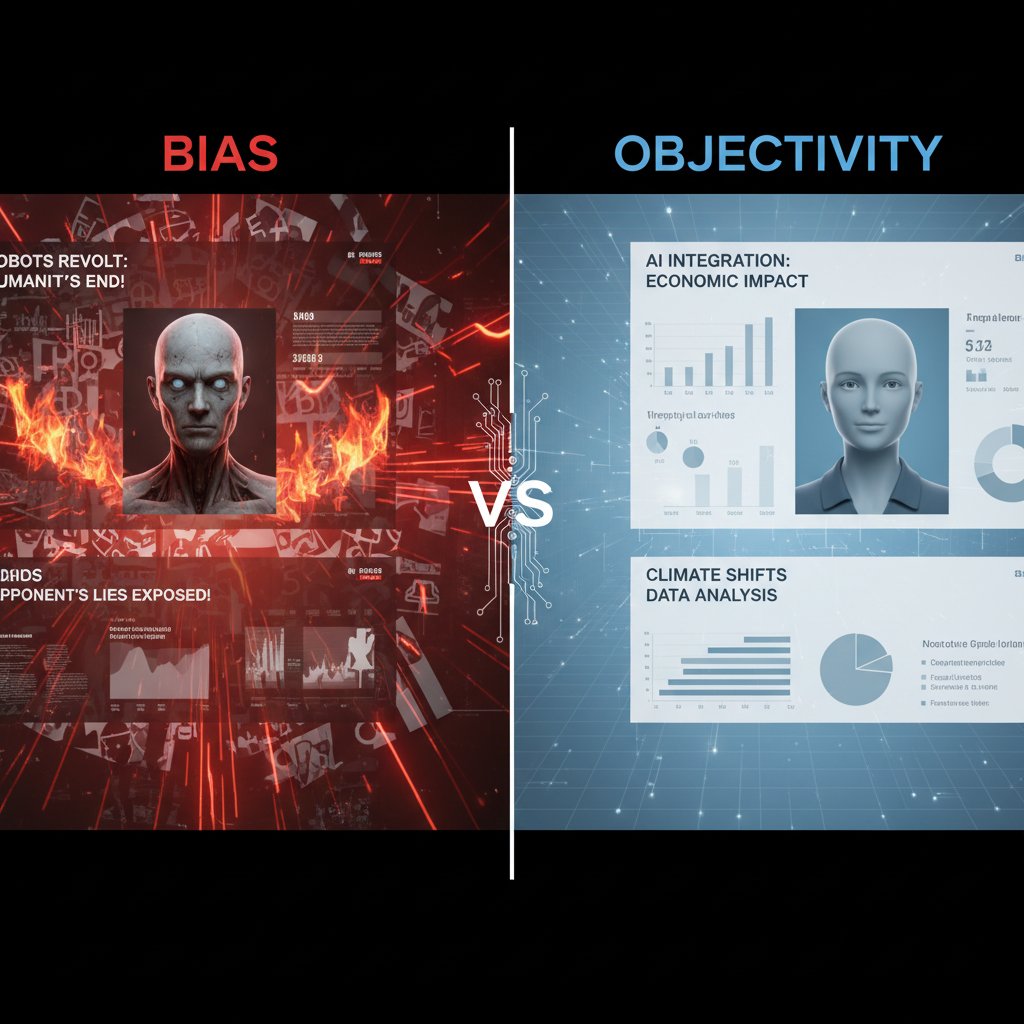
Transparency is the closest thing to a solution: declare your AI’s role, audit for bias, and invite outside scrutiny. It’s not about being perfect—it’s about being accountable.
How to get started: practical steps for your newsroom
Building your AI news workflow from scratch
Adopting AI-generated news software suggestions isn’t plug-and-play. You need the right data, the right team, and a clear-eyed sense of your goals.
- Assess your needs: What do you want to automate? (Breaking news, summaries, translations?)
- Inventory data sources: Are your feeds structured, reliable, and up-to-date?
- Vet software vendors: Use the battle plan above—don’t rely on demos alone.
- Pilot with guardrails: Start small, review everything, and document lessons.
- Train your team: Editors need to understand AI’s strengths and limitations.
- Iterate and scale: Expand automation only after nailing quality and reliability.
Small shops may focus on automating routine stories; larger outlets can integrate AI across multiple verticals, but the fundamentals don’t change.
Mistakes to avoid and tips for lasting success
Adoption is littered with landmines. Learn from others’ falls, not just their hype reels.
Six mistakes that can sabotage your AI news initiative:
- Over-automating (publishing without human review)
- Ignoring training needs (assuming staff “just get it”)
- Hiding AI’s role from audiences
- Chasing shiny features over newsroom needs
- Failing to monitor for bias or errors
- Neglecting legal and copyright due diligence
Pro tip: Iterate relentlessly. Collect feedback, monitor analytics, and tweak processes until your workflow is airtight.
Resources and where to go next
If you’re looking for a reputable launchpad, newsnest.ai is frequently cited as a robust resource for staying current on AI-generated news software trends, best practices, and real-world case studies. But don’t stop there.
Five unconventional uses for AI-generated news software suggestions:
- Automated podcast scripting from breaking news
- Real-time translation for global audiences
- Hyperlocal weather and event alerts
- Instant “explainers” for trending topics
- Data-driven investigative leads
Experiment, measure, and don’t be afraid to share your cautionary tales—collective learning is the only way this new era of journalism avoids past mistakes.
Supplementary deep dives: what everyone overlooks
AI-generated news and democracy: a double-edged sword
AI-generated news is turbocharging civic discourse—but also polarizing it. The upside: broader access, multilingual coverage, and inclusivity for underserved communities. The downside: echo chambers, algorithmic bias, and the viral spread of misinformation.

In some countries, AI-aided reporting has powered voter turnout and informed debate; in others, it’s fueled polarization and eroded trust. The difference? Editorial oversight, transparency, and community engagement.
Will human journalists survive the AI wave?
If you think AI is the death knell for journalism, think again. Instead, it’s forcing the craft to evolve—creating new hybrid roles, like AI editor, prompt engineer, or data-driven reporter.
"AI doesn’t kill journalism—it forces it to evolve." —Taylor, investigative reporter [Illustrative, based on current human-AI newsroom collaboration trends]
Three models for human-AI collaboration:
- AI as assistant: Reporters use AI for research, drafting, and summaries—final output is always human-reviewed.
- AI as co-author: Editors oversee AI-generated copy, injecting context and voice.
- AI as watchdog: AI tools monitor for bias, flag errors, and suggest improvements, keeping humans accountable.
What’s next: predictions for the next five years
If history teaches one thing, it’s that disruption is relentless. But the arc bends toward integration, not replacement.
- 2025: Multi-modal newsrooms combine text, video, and audio automation.
- 2026: Hyperlocal and niche news powered by AI curation goes mainstream.
- 2027: Regulatory frameworks force transparency and auditability.
- 2028: AI-driven investigative reporting augments (not replaces) human journalism.
- 2029: Public trust pivots on visible human-AI collaboration, not pure automation.
Don’t just watch the future—build it. Your newsroom, powered by AI, can be a force for truth, speed, and inclusivity. But only if you wield these tools with as much skepticism as ambition.
Conclusion
AI-generated news software suggestions aren’t a futuristic fantasy or a passing fad. They’re an urgent, disruptive force reshaping journalism in real time. As you’ve seen, the platforms leading this charge—newsnest.ai, Microsoft 365 Copilot, InVideo AI, and others—deliver unprecedented speed, scale, and customization. But the game isn’t just about tech. Human judgment, transparency, and relentless oversight are the true currency of trust in this new era. Whether you’re a newsroom manager, a digital publisher, or just a news junkie, the choice is simple: embrace the revolution, stay ruthlessly skeptical, and make AI your ally—not your replacement. Because in the end, it’s not the technology that defines journalism’s future—it’s the people who dare to wield it wisely.
Sources
References cited in this article
- Microsoft Build 2025(blogs.microsoft.com)
- AI News Summaries (SEO AI)(wpseoai.com)
- MIT News on LLM Accuracy(news.mit.edu)
- Fox 26/AI Studios(aistudios.com)
- Personate AI Blog(blog.personate.ai)
- AP News on Apple(apnews.com)
- Pew Research Center(pewresearch.org)
- Reuters Institute Report(reutersinstitute.politics.ox.ac.uk)
- Stanford AI Index 2025(hai.stanford.edu)
- SAS 2024 Predictions(sas.com)
- Talking Medicines(talkingmedicines.com)
- Forbes: 2025 AI Trends(forbes.com)
- MIT Tech Review(technologyreview.com)
- Stanford HAI(hai.stanford.edu)
- Top AI Tools for News(topai.tools)
- Stackviv Review(stackviv.ai)
- IBM AI Trends(ibm.com)
- Gartner Predictions(gartner.com)
- CIO: AI Disasters(cio.com)
- Tech.co AI Failures(tech.co)
- The Guardian: KPMG AI Scandal(theguardian.com)
- Columbia Journalism Review(cjr.org)
- NPR: AI-Generated Reviews(npr.org)
- Forbes: Newsroom AI Ethics(forbes.com)
- AP: Generative AI in Journalism(ap.org)
- NewsCatcher(newscatcherapi.com)
- Wikipedia: AI Hallucinations(en.wikipedia.org)
- Aporia 2024 Report(cdotrends.com)
- American Bar Association(americanbar.org)
- BBC AI Case Study(emerald.com)
- Google Cloud Blog(cloud.google.com)
- Lenfest Institute(lenfestinstitute.org)
- Reuters Institute(reutersinstitute.politics.ox.ac.uk)
- Enago: Best AI News Websites(enago.com)
- Analytics Vidhya: Top AI News(analyticsvidhya.com)
- Rohit Prabhakar: AI Snake Oil(rohitprabhakar.com)
- Fast Company: AI Vaporware(fastcompanyme.com)
- PwC: Human Element in AI Integration(pwc.be)
- theHRDirector: AI Training(thehrdirector.com)
- Forbes: Human Talent in AI(forbes.com)
Instantly Generate Breaking News
NewsNest.ai delivers a revolutionary AI-driven news platform, empowering businesses and individuals by automatically generating timely, credible, and engaging news articles. With real-time coverage, deep accuracy, and customizability, you can effortlessly stay informed and ahead of the competition. Eliminate costly journalistic resources and gain instant access to quality content tailored specifically to your preferences and industry focus.
Get startedReady to revolutionize your news production?
Join leading publishers who trust NewsNest.ai for instant, quality news content
Frequently Asked Questions
When did automated journalism first start being used in newsrooms?
Automated journalism began in the 1980s, when wire services like the Associated Press used rigid templates and basic logic to generate earnings reports and sports recaps. These early systems were primitive but laid the groundwork for the evolution of automated journalism as a newsroom tool.
What concerns did newsrooms initially have about automated journalism?
Editors feared that automated systems would produce "soulless" copy, and unions worried about job losses. Despite this skepticism, as computational power and natural language processing improved, automated journalism evolved from simple box scores to more complex financial data and news updates.
How has AI-generated news technology changed from the 1980s to today?
Automated journalism has evolved from template-based systems for earnings reports and sports recaps in the 1980s to today's Large Language Models that can handle diverse content types. By 2023-2025, AI systems became capable of real-time, multi-format news generation powered by platforms from companies like Microsoft and Google.
What is the article's main argument about AI in newsrooms?
The article argues that AI-generated news software is no longer theoretical but a current reality in newsrooms, offering both "game-changing opportunities" and "hidden pitfalls." It positions AI automation as a newsroom necessity rather than optional, urging journalists not to get left behind.
Keep Reading
See more from AI-powered news generator

How AI-Generated Journalism Software Is Reshaping Newsrooms

AI-Generated Journalism Software Comparisons That Expose Risk and ROI

AI Journalism Software Tools Transforming Newsrooms in 2025

AI-Generated Journalism Software Companies Reshape Newsroom Control

AI-Generated Journalism Software Reviews for Modern Newsrooms
